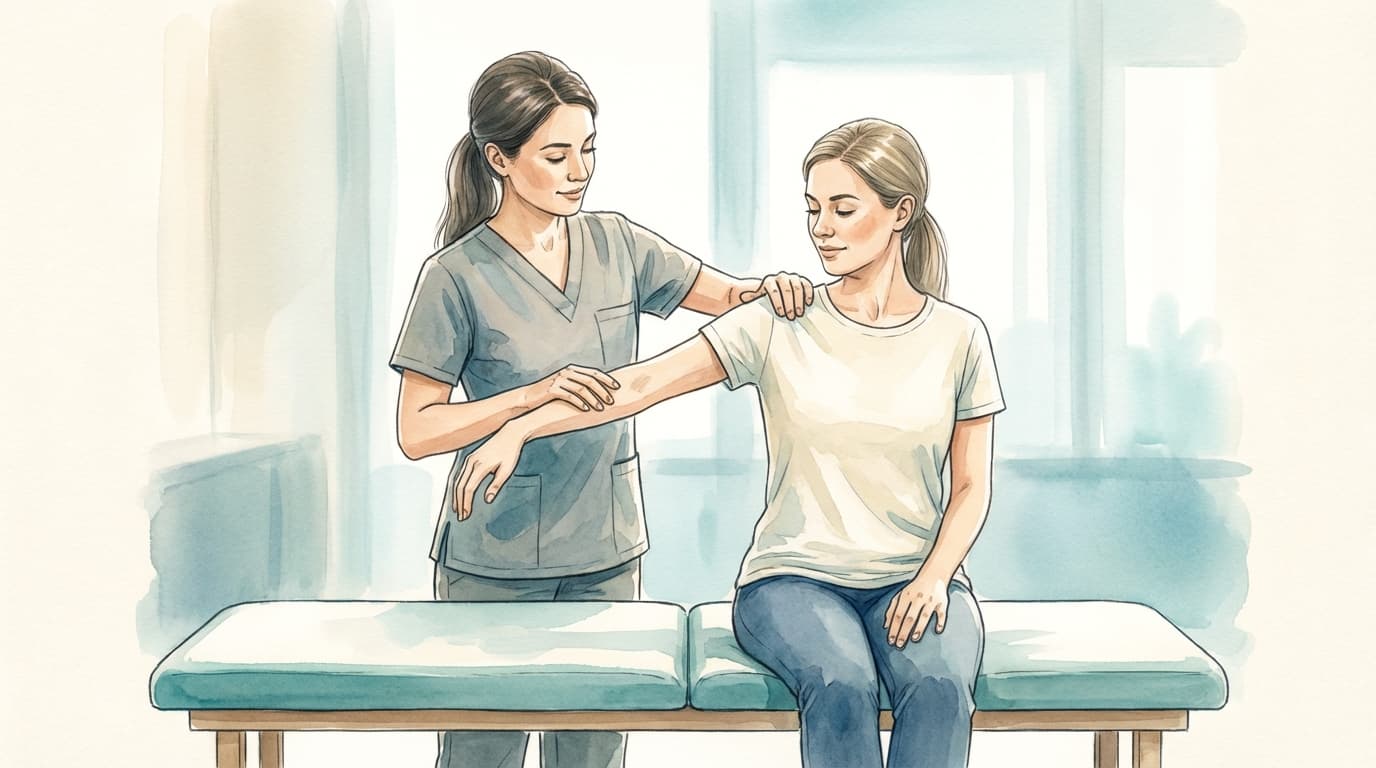
Bowen Technique (Bowen Therapy)
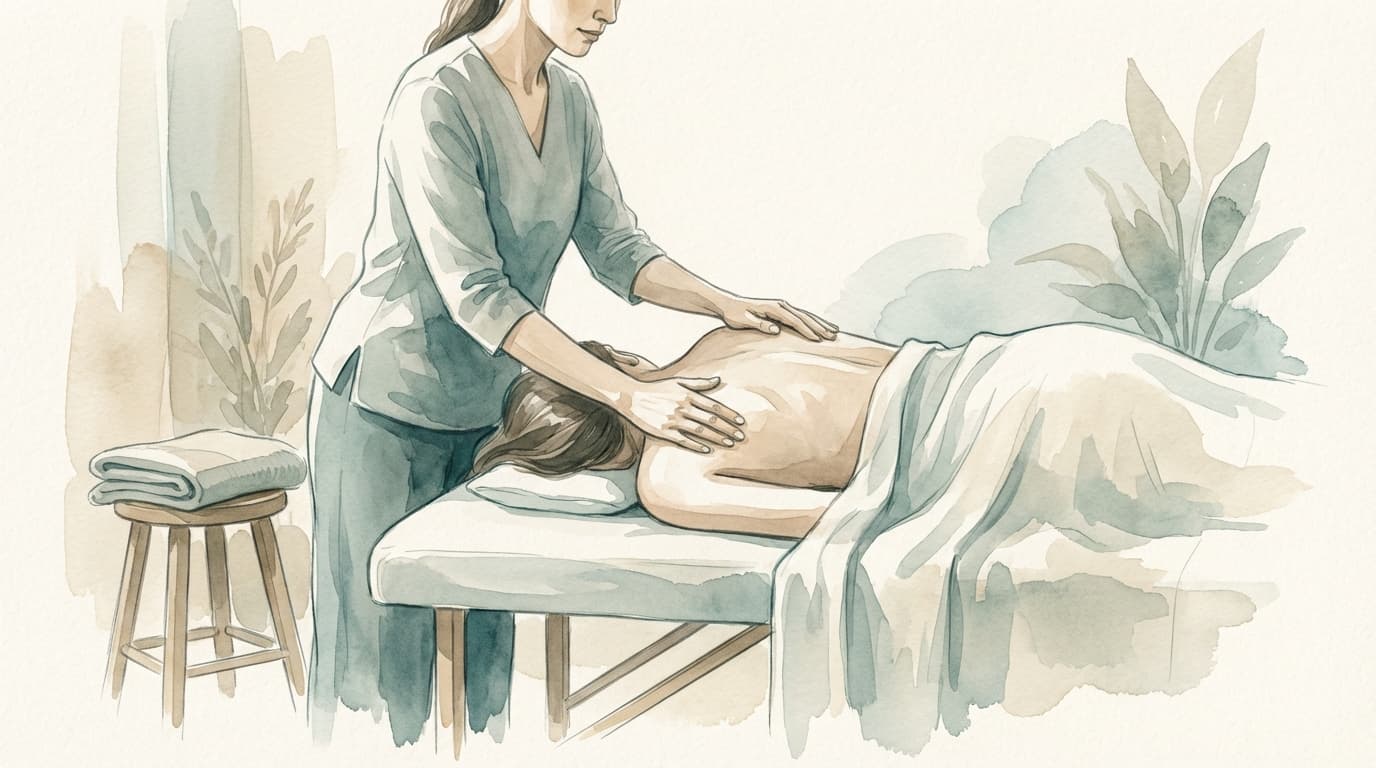
Gentle Australian therapeutic approach developed by Tom Bowen, using precise rolling movements on muscles, tendons and fascia, followed by essential pauses to allow the nervous system to initiate self-healing.
177 articles
Gentle Australian therapeutic approach developed by Tom Bowen, using precise rolling movements on muscles, tendons and fascia, followed by essential pauses to allow the nervous system to initiate self-healing.
Somato-psychic method developed by Milton Trager combining gentle rocking and oscillating movements of the limbs and trunk, aiming to release chronic neuromuscular tension patterns and re-educate the central nervous system toward light, fluid movement patterns.
Wrist-ankle acupuncture is a simplified technique using only 12 points located at the wrists and ankles to treat pain and functional disorders throughout the body, without seeking De Qi.
Jiao Shunfa's scalp acupuncture is a system of stimulating linear scalp zones corresponding to cerebral cortical areas, particularly effective for neurological rehabilitation.
Traditional body acupuncture is the foundational form of Chinese acupuncture, based on stimulating precise points along meridians to restore Qi circulation and rebalance the body's energy.
Somatic educational approach developed by Moshé Feldenkrais aimed at improving body awareness and movement efficiency by reprogramming motor habits through the nervous system.
Osteopathic system developed by William Garner Sutherland based on rhythmic mobility of cranial bones, dura mater and sacrum within the Primary Respiratory Mechanism (PRM).
Physiotherapy specialty dedicated to rehabilitation of balance disorders and dizziness of vestibular or central origin, combining otolith repositioning maneuvers (Epley, Semont), gaze stabilization exercises and vestibular desensitization protocols.
Gentle therapeutic approach derived from Sutherland's cranial osteopathy, popularized by John Upledger, focused on releasing restrictions of the craniosacral system.
Ancient form of Japanese therapeutic massage founded on Traditional Chinese Medicine principles (meridians, acupressure points), historically practiced by blind practitioners in Japan, aimed at harmonizing Ki (vital energy) flow through rhythmic pressures, percussions and stretches.
Japanese finger pressure technique on meridians and acupressure points aimed at rebalancing the flow of vital energy (Ki) in the body according to Oriental medicine principles.
Auriculotherapy, codified by Dr. Paul Nogier, uses the ear auricle as a somatotopic microsystem to diagnose and treat pathologies throughout the body by stimulating auricular reflex points.
YNSA is a craniopuncture system developed by Dr. Toshikatsu Yamamoto, using frontal and occipital somatotopic scalp zones to treat pain and neurological disorders.
Set of cranial osteopathic techniques working directly on the reciprocal tension membranes (falx cerebri, falx cerebelli, tentorium cerebelli, diaphragma sellae) via precise bony contacts on the skull and sacrum, to normalize intracranial membranous tensions and restore the Primary Respiratory Mechanism.
Electro-acupuncture combines traditional acupuncture with low-intensity electrical stimulation, amplifying the analgesic and regulatory effects of classical needling.
Set of therapeutic techniques using water in different forms (baths, jets, showers, rehabilitation pool) at various temperatures and pressures to treat musculoskeletal, rheumatic, neurological and dermatological conditions, exploiting the mechanical, thermal and chemical properties of water.
Gait and balance rehabilitation in physiotherapy: management of locomotion disorders in geriatrics, post-stroke, neurological and traumatological contexts. Gait analysis, postural reprogramming, fall prevention and functional retraining.
The most widely taught and practiced chiropractic technique worldwide, using precise manual HVLA adjustments on the spine and peripheral joints to correct vertebral subluxations.