Laughter Yoga
Laughter Yoga, created by Dr. Madan Kataria in 1995, combines voluntary laughter exercises with yogic breathing. The body cannot distinguish between simulated and spontaneous laughter: physiological benefits (endorphins, cortisol reduction, immune boost) are identical.
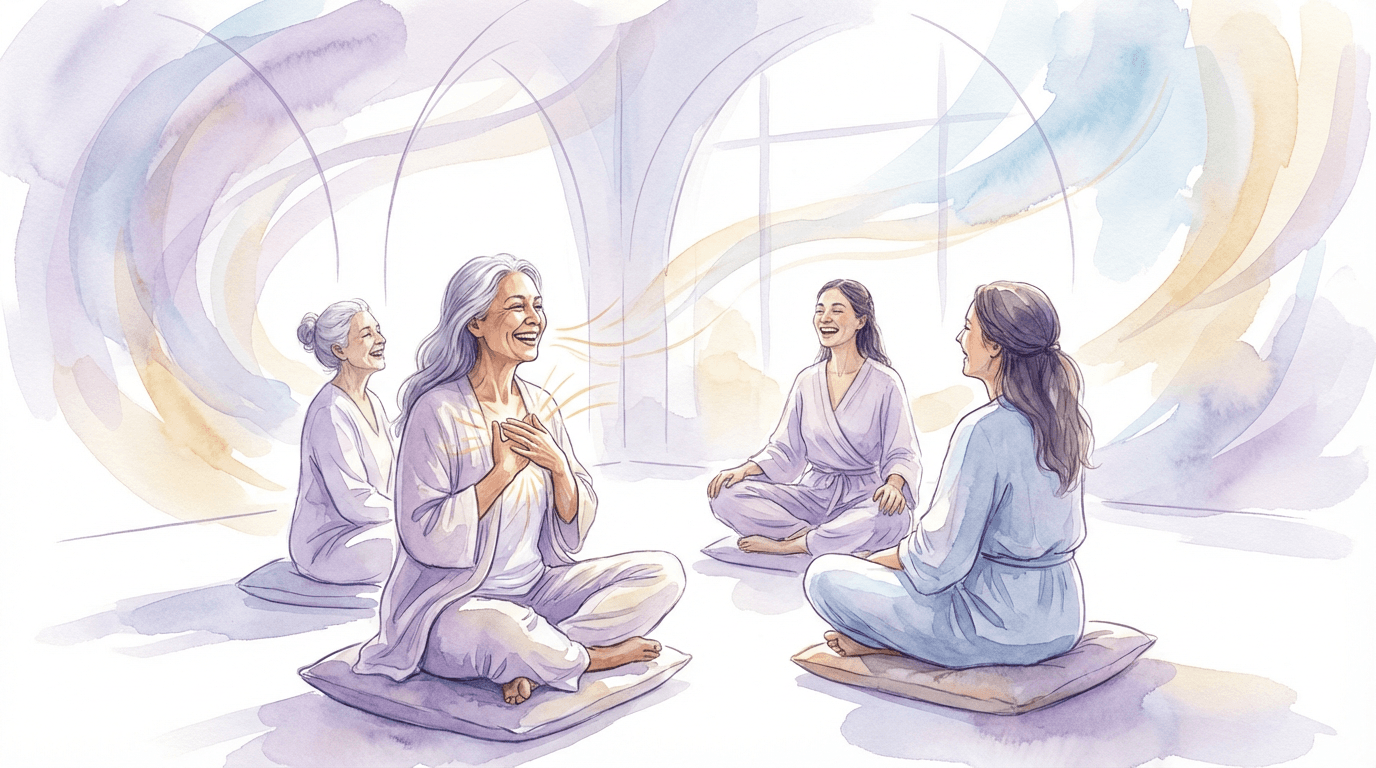
Laughter Yoga, created by Dr. Madan Kataria in 1995, combines voluntary laughter exercises with yogic breathing. The body cannot distinguish between simulated and spontaneous laughter: physiological benefits (endorphins, cortisol reduction, immune boost) are identical.
Overview
Laughter Yoga was created in 1995 by Dr. Madan Kataria, combining voluntary laughter exercises with yogic breathing. Over 16,000 laughter clubs exist in 110 countries. The body produces identical physiological responses to simulated and spontaneous laughter: endorphins, serotonin, cortisol reduction, NK cell activation, and improved lung ventilation.
Core Principles
- Laughter without reason: voluntary laughter as physical exercise, not emotional reaction
- Simulated becomes real: eye contact and group dynamics transform fake laughter into genuine
- Yogic breathing: deep breaths between exercises
- Playful spirit: mime, games, and interaction to bypass the critical mind
- Ho ho ha ha ha: rhythmic chant with clapping between exercises
Main Indications
- Chronic stress and burnout
- Mild to moderate depression
- Social isolation
- Chronic pain
- Respiratory issues
- Corporate team building
- Elderly in care facilities
Session Structure
30-60 minutes in groups: warm-up clapping, 15-20 themed laughter exercises, free laughter meditation (10 min), guided relaxation (10 min).
Variations
Corporate format (30-45 min), hospital therapeutic laughter, elderly care adaptations, online sessions. Leader training: 2 days; Teacher training: 5 days.
Contraindications
- Recent abdominal surgery
- Abdominal/inguinal hernia
- Severe urinary incontinence
- Uncontrolled epilepsy
- Advanced glaucoma
- Severe cardiac problems
Medical Disclaimer
The information presented in this article is provided for educational and informational purposes only. It does not constitute medical advice, diagnosis, or treatment prescription. If in doubt, always consult your physician or a qualified healthcare professional. The techniques described do not replace conventional medical treatment.