Therapeutic Cryotherapy
Set of therapeutic cold applications, ranging from classic local applications (ice, cold packs, cryomassage) to whole-body cryotherapy (WBC) in cold chambers at -110°C, used for their analgesic, anti-inflammatory, antispastic and sports recovery effects.
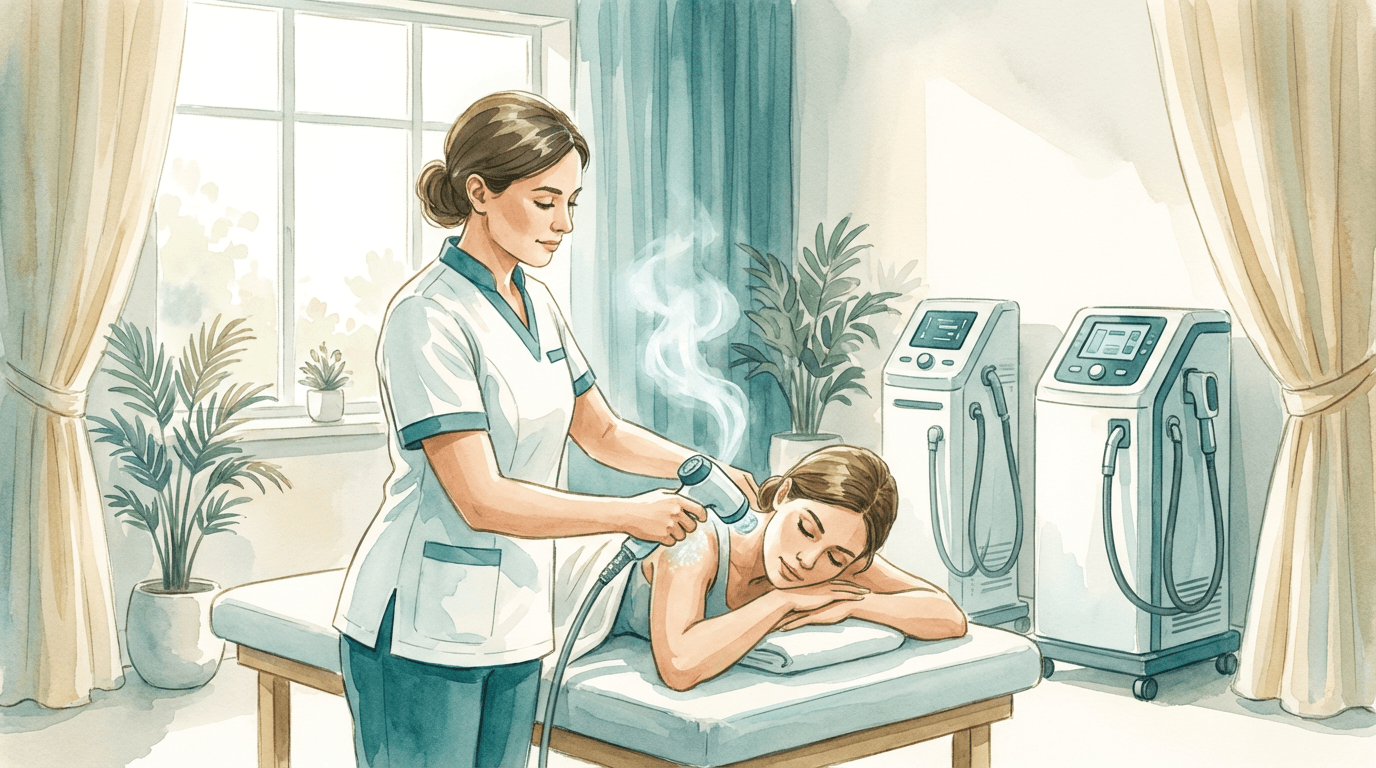
Set of therapeutic cold applications, ranging from classic local applications (ice, cold packs, cryomassage) to whole-body cryotherapy (WBC) in cold chambers at -110°C, used for their analgesic, anti-inflammatory, antispastic and sports recovery effects.
Presentation
Cryotherapy (from Greek kryos, cold) refers to the use of cold for therapeutic purposes. It is one of the oldest and most widely used physiotherapy techniques. Cold causes local vasoconstriction, reduces nerve conduction velocity (analgesia), decreases cellular metabolism (anti-edematous) and inhibits pro-inflammatory enzymatic activity.
Whole-body cryotherapy (WBC) is a modern technique developed by Japanese rheumatologist Toshima Yamauchi in 1978 to treat rheumatoid arthritis. It consists of 2-3 minute exposure in a cold chamber between -110°C and -196°C. It spread in Europe in the 1990s for elite sports.
Whole-body cryotherapy: Dr Toshima Yamauchi (1978), Japan
Main Indications
- Acute sports trauma (sprains, contusions, tears)
- Chronic tendinopathies
- Rheumatoid arthritis and spondyloarthritis
- Fibromyalgia (WBC)
- Spasticity (neurology — WBC)
- Post-competition sports recovery
- Refractory chronic pain
Contraindications
- Raynaud's syndrome and acrocyanosis
- Cryoglobulinemia
- Impaired skin sensitivity (frostbite risk)
- Uncontrolled hypertension (WBC)
- Heart failure (WBC)
- Claustrophobia (WBC chamber)
- Pregnancy
Medical Disclaimer
The information presented in this article is provided for educational and informational purposes only. It does not constitute medical advice, diagnosis, or treatment prescription. If in doubt, always consult your physician or a qualified healthcare professional. The techniques described do not replace conventional medical treatment.