
Adaptation of lifestyle, diet and care according to six Ayurvedic seasons to prevent seasonal doshic imbalances and maintain year-round health.
Read more
Encyclopedia of Ayurveda: constitutional diagnosis (Prakriti/Vikriti), Panchakarma, subsidiary therapies, Marma therapy, Rasayana, Ayurvedic dietetics and lifestyle.
Adaptation of lifestyle, diet and care according to six Ayurvedic seasons to prevent seasonal doshic imbalances and maintain year-round health.
Complete presentation of the three fundamental Ayurvedic principles — Vata (movement), Pitta (transformation), Kapha (structure) — governing all physiological and psychological functions.
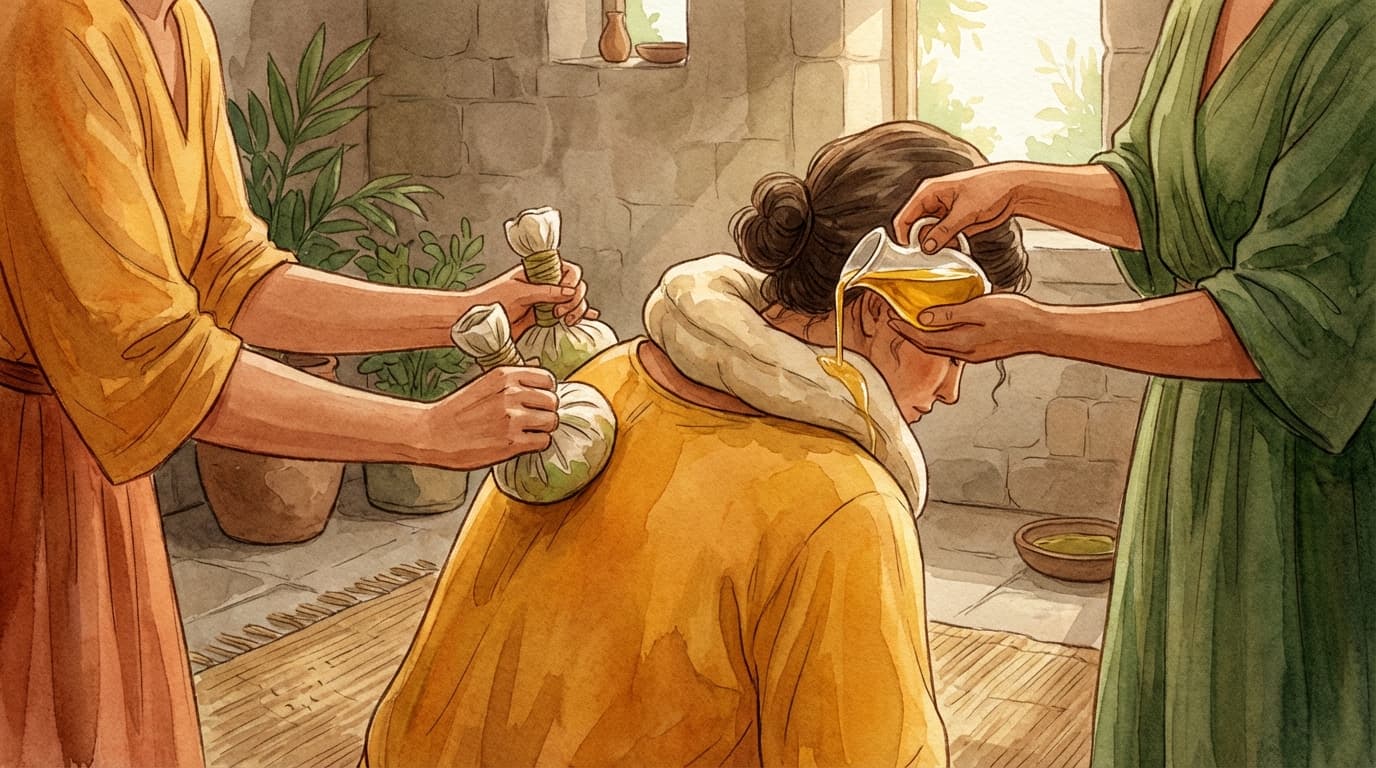
Localized treatment identical to Kati Basti but applied to the cervical area, using a warm medicinal oil bath to treat cervicalgia and neck stiffness.

Yoga practice adapted to Ayurvedic principles, personalizing postures (asanas), breathing (pranayama) and meditation according to individual doshic constitution.

Ayurvedic branch dedicated to rejuvenation, longevity and immunity strengthening, using adaptogenic herbs, minerals and lifestyle protocols to optimize Ojas.

Ancestral Ayurvedic healing art through stimulation of 107 vital points (Marma) located at anatomical structure crossroads, regulating prana and restoring health.

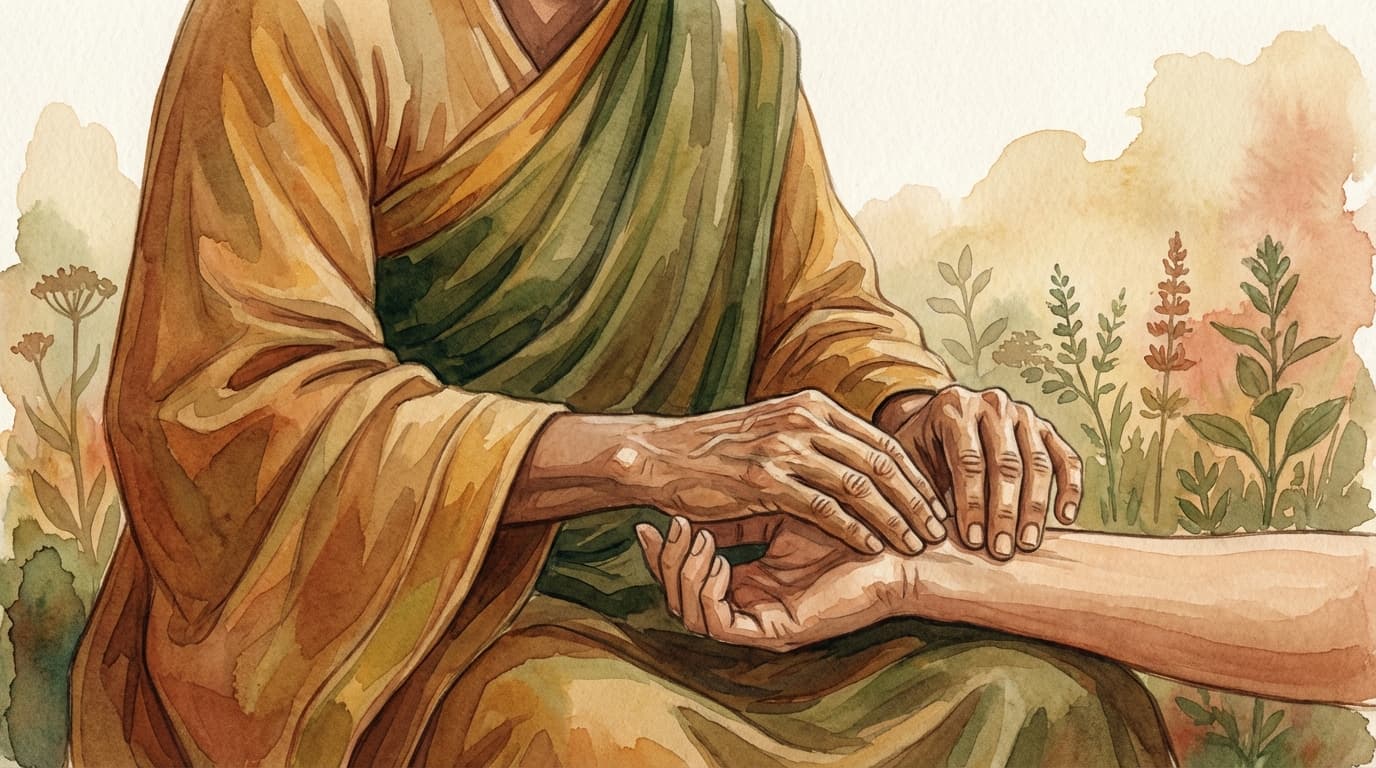
Ancestral art of Ayurvedic diagnosis through radial pulse palpation, allowing assessment of dosha states, organs and vital energy with remarkable precision.

Presentation of main Ayurvedic adaptogenic and rejuvenating herbs: Ashwagandha, Shatavari, Brahmi, Amalaki, Guduchi and Haritaki, pillars of Rasayana therapy.
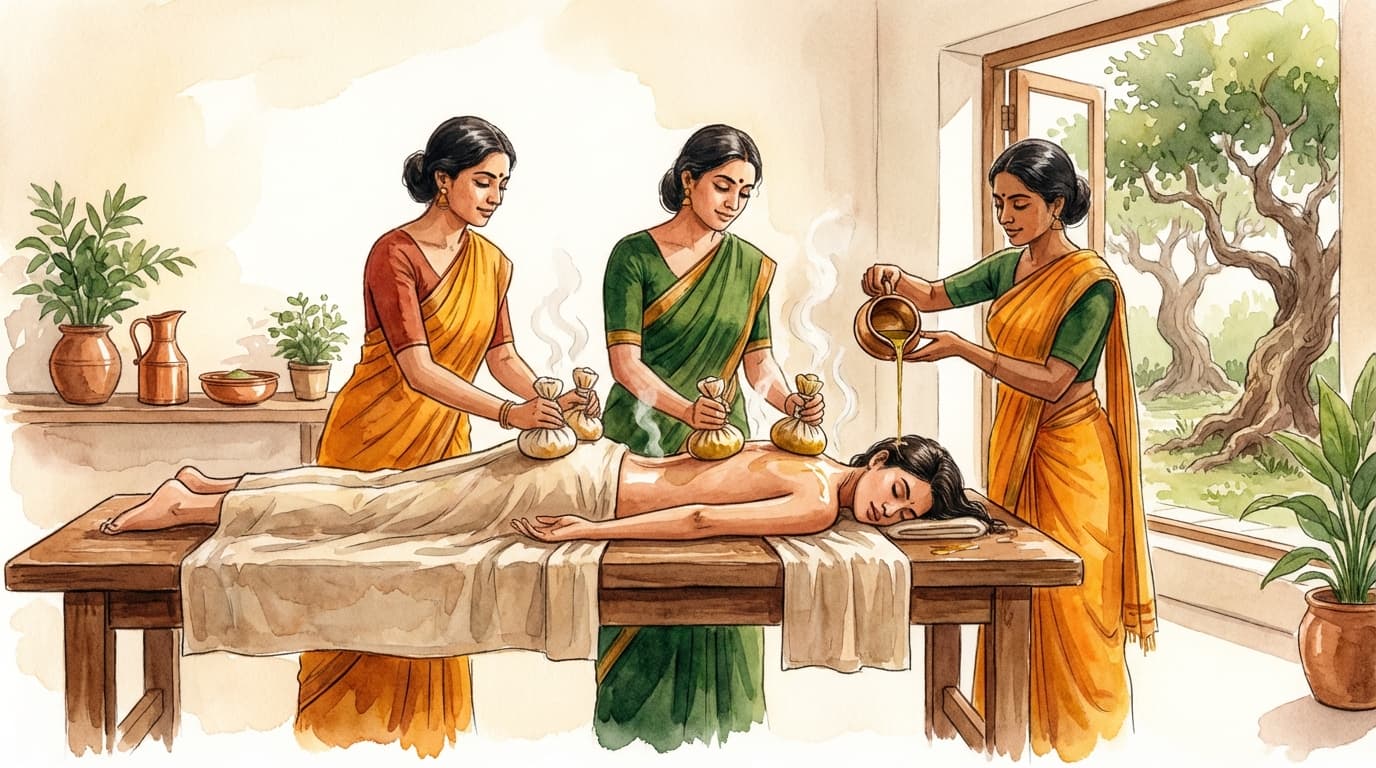
Luxurious Kerala tradition treatment combining massage and continuous pouring of warm oil over the entire body, nicknamed the 'treatment of kings' for its powerful rejuvenating effects.
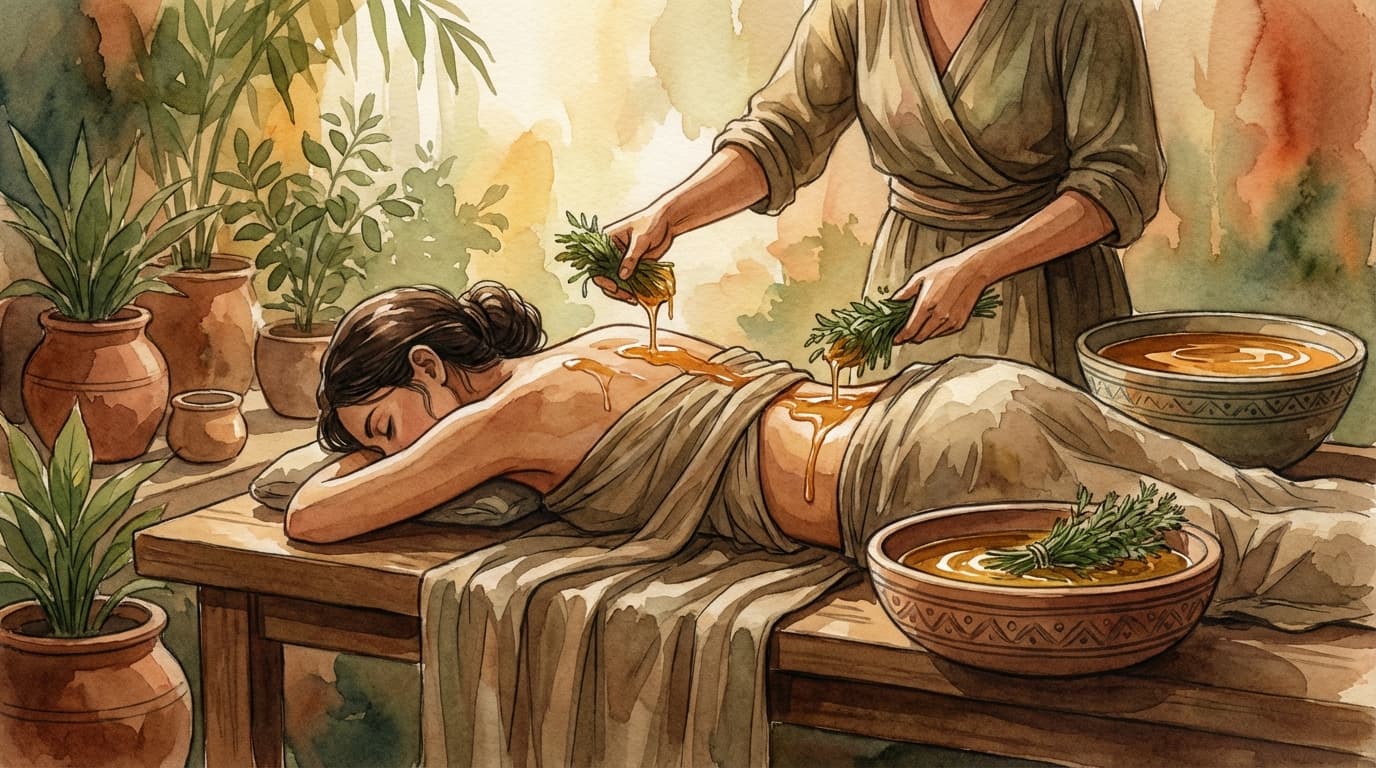
Second major Panchakarma procedure using controlled medicinal purgation to eliminate excess Pitta dosha and toxins accumulated in the liver and small intestine.

Personalized dietary system based on Ayurvedic constitution, using six tastes (Rasa), food qualities (Guna) and dietary rules to maintain doshic balance.
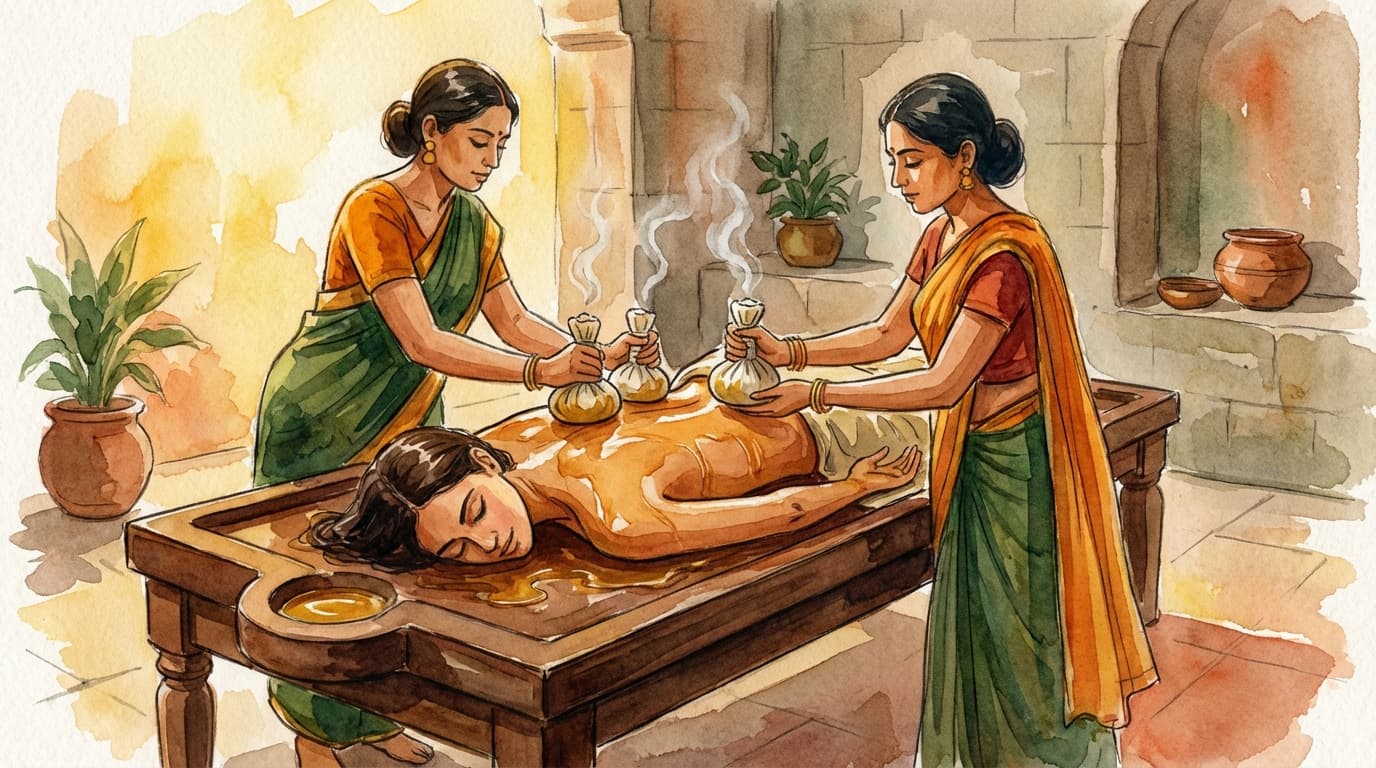
Full-body massage with warm medicinal oils, fundamental Ayurvedic pillar practiced daily to nourish tissues, calm Vata and maintain overall health.

Ayurvedic eye treatment bathing the eyes in warm medicinal ghee retained in a dough ring, to nourish, protect and revitalize tired eyes.
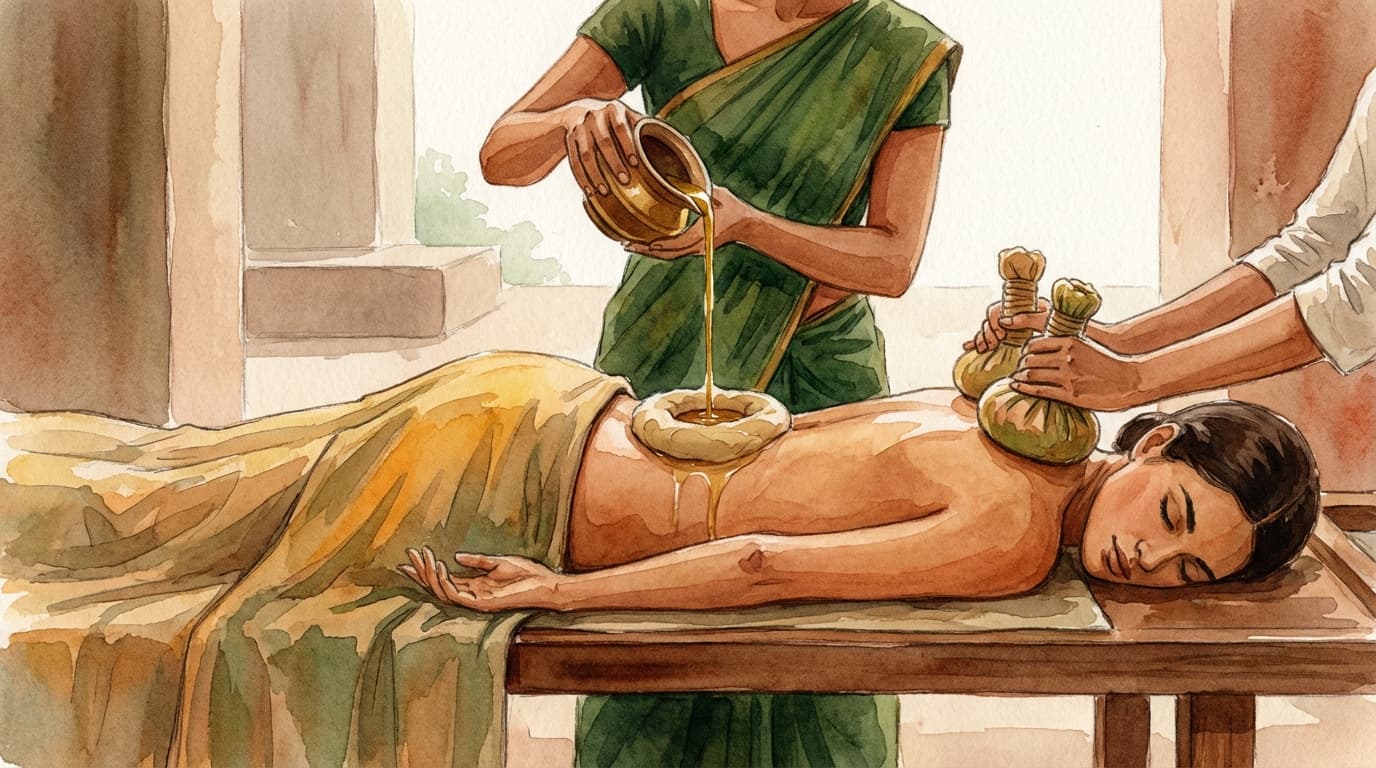
Localized treatment retaining a warm medicinal oil bath on the lumbar area using a dough ring, to relieve back pain and sciatica.
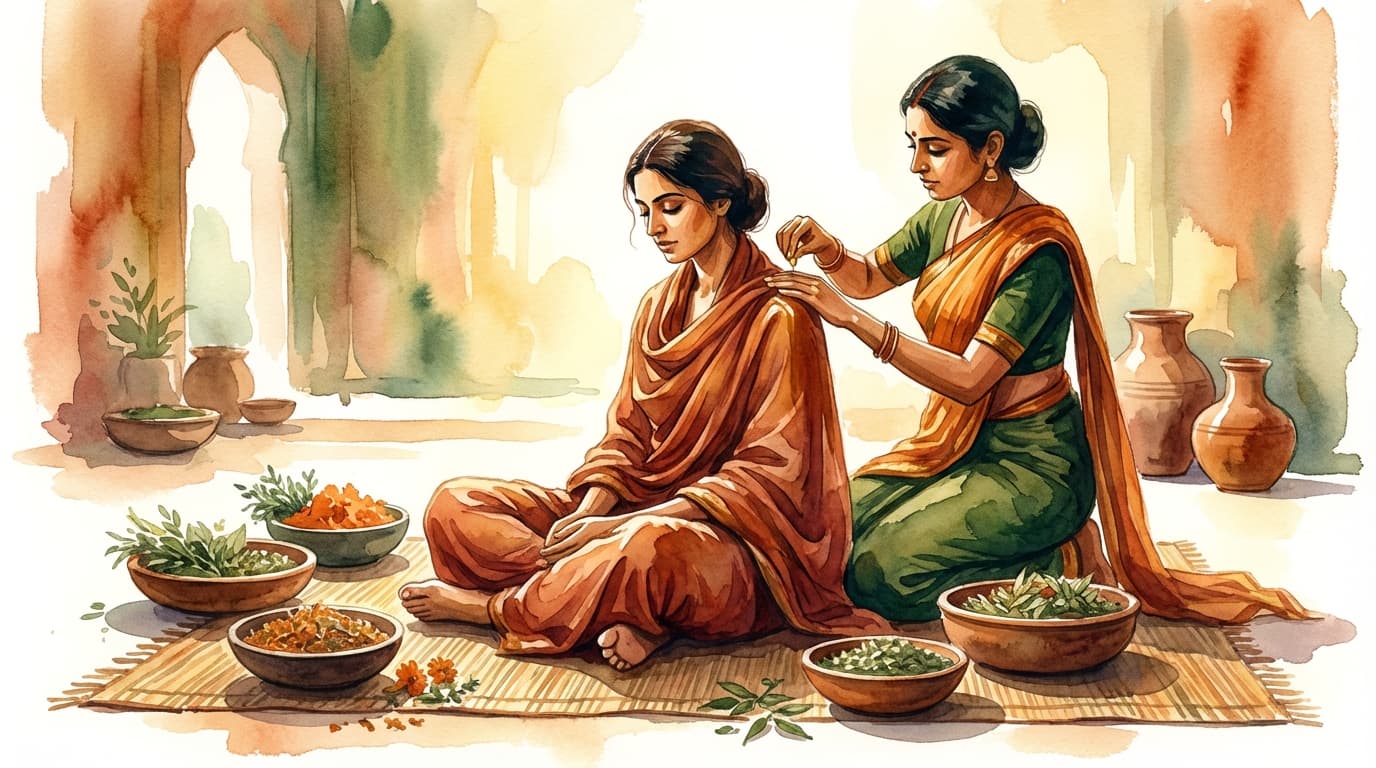
First of the five Panchakarma purification therapies, consisting of controlled therapeutic vomiting to eliminate excess Kapha accumulated in the stomach and lungs.

Detailed Ayurvedic daily program of hygiene and care practices from waking to sleeping, designed to maintain dosha harmony and prevent disease.
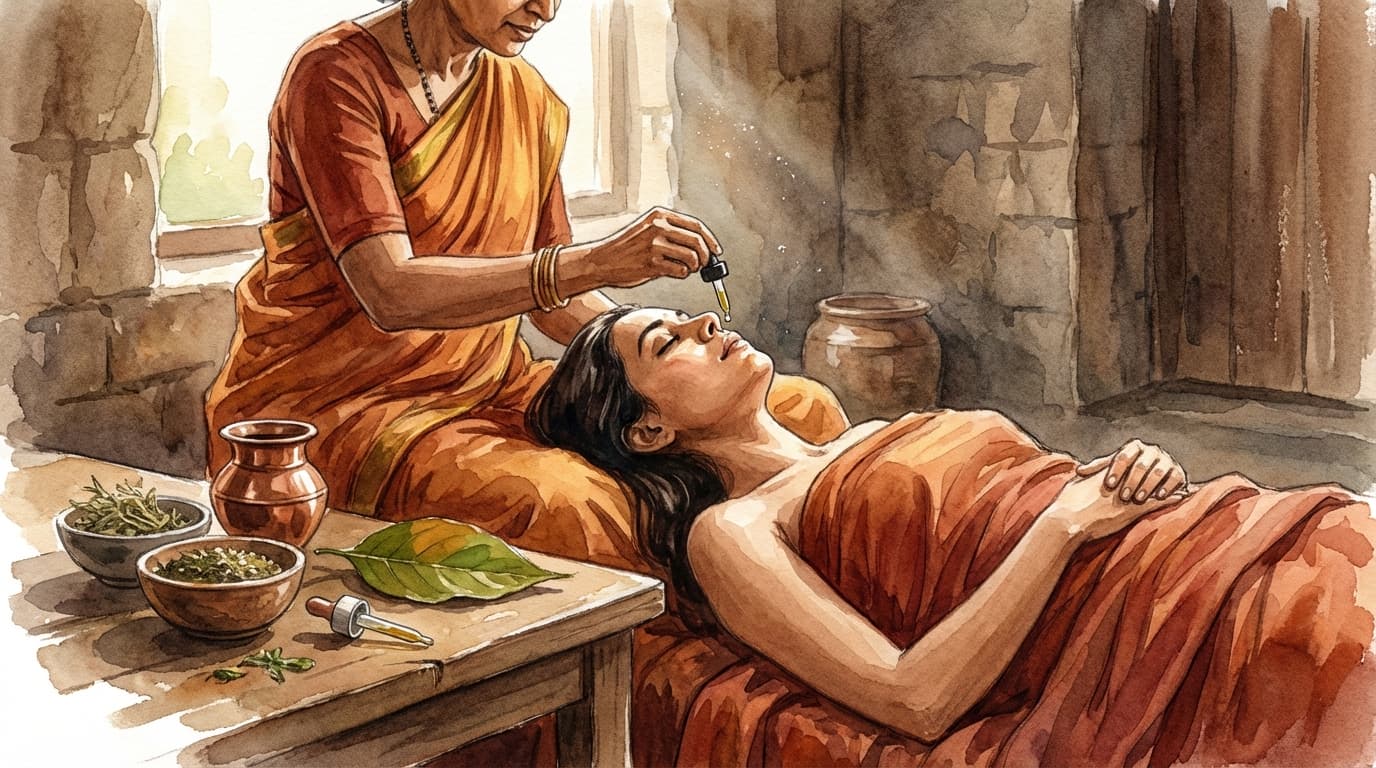
Panchakarma procedure consisting of administering medicinal preparations through the nostrils to treat head, neck and central nervous system conditions.
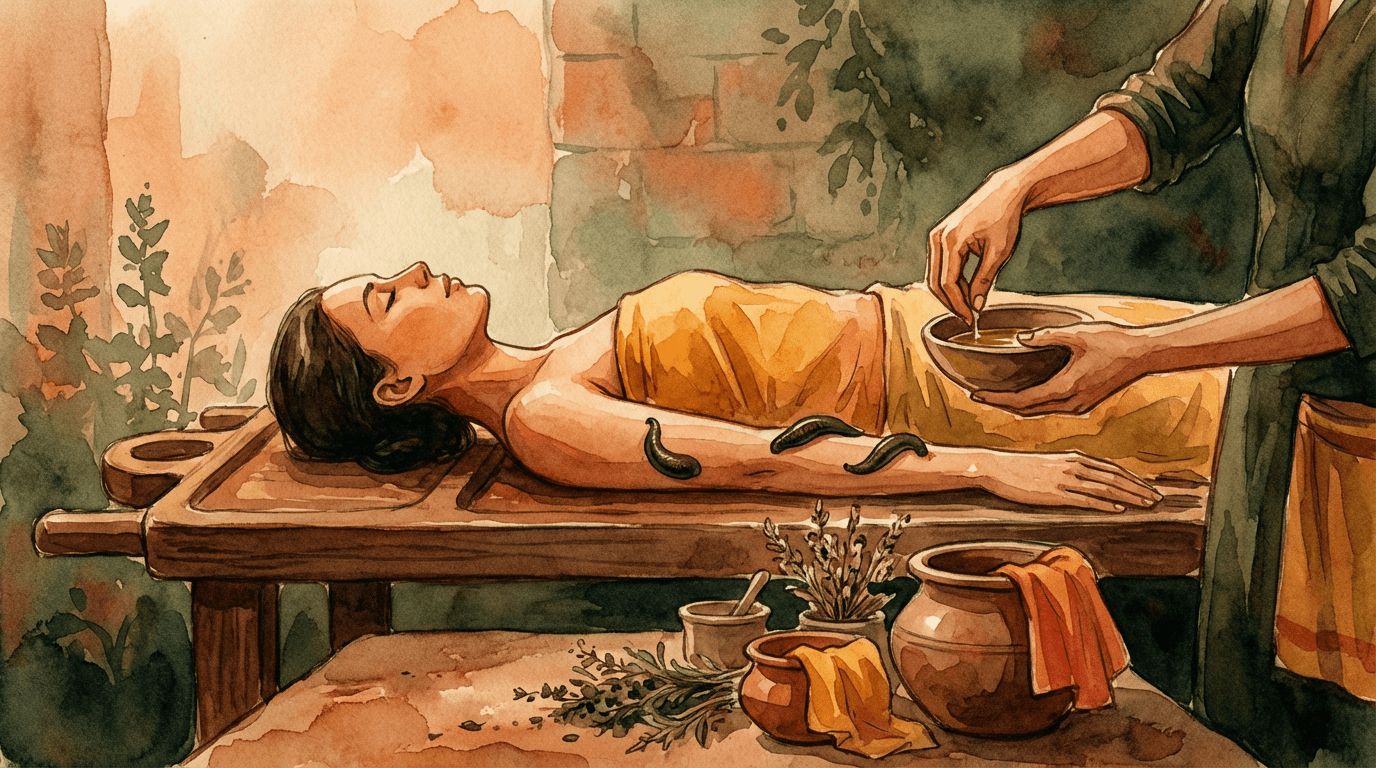
Fifth Panchakarma procedure aimed at blood purification through various methods (bloodletting, leech application, scarification) to treat Pitta and Rakta-related disorders.
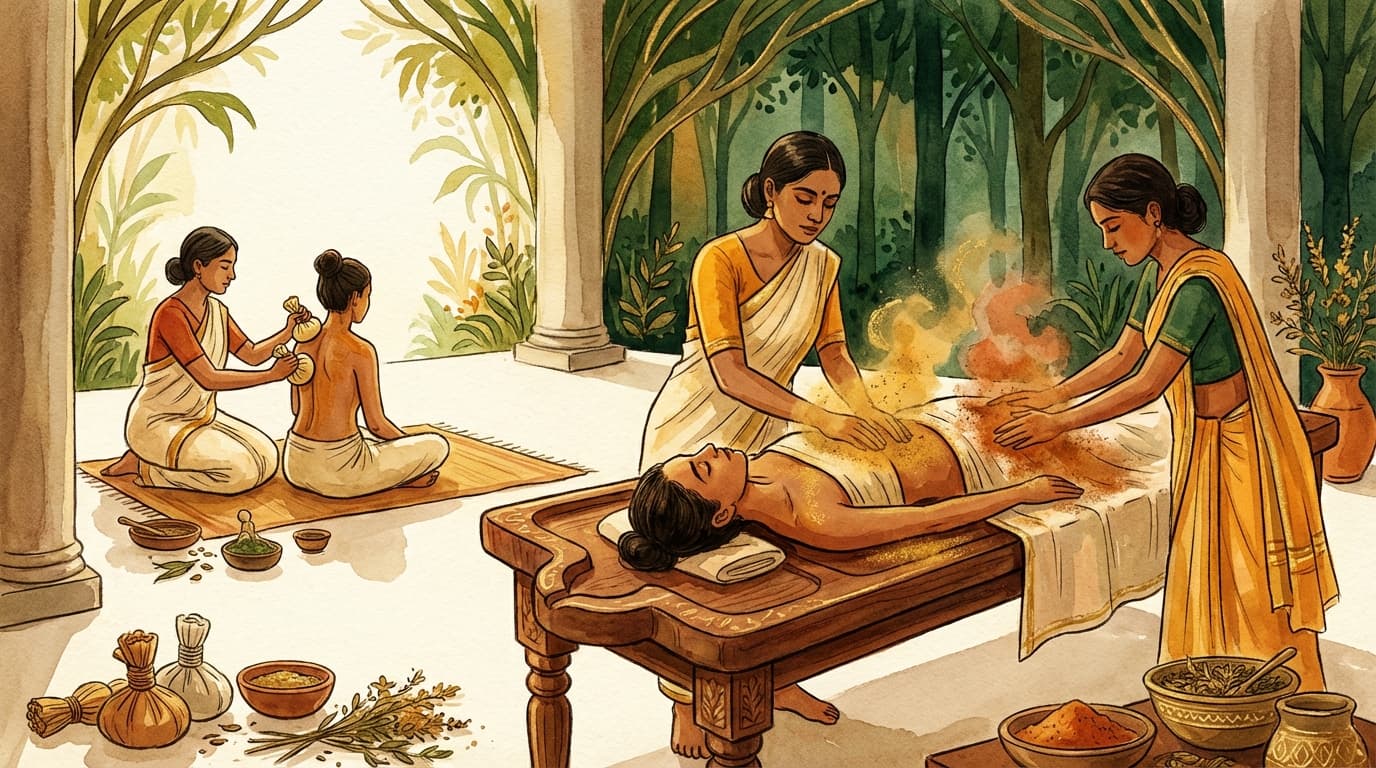
Dry Ayurvedic massage using herbal powders applied against the hair growth for Kapha reduction, circulation stimulation, skin exfoliation and weight loss.

Assessment of the patient's current doshic imbalance relative to their birth constitution (Prakriti), forming the basis of Ayurvedic diagnosis and therapeutic prescription.
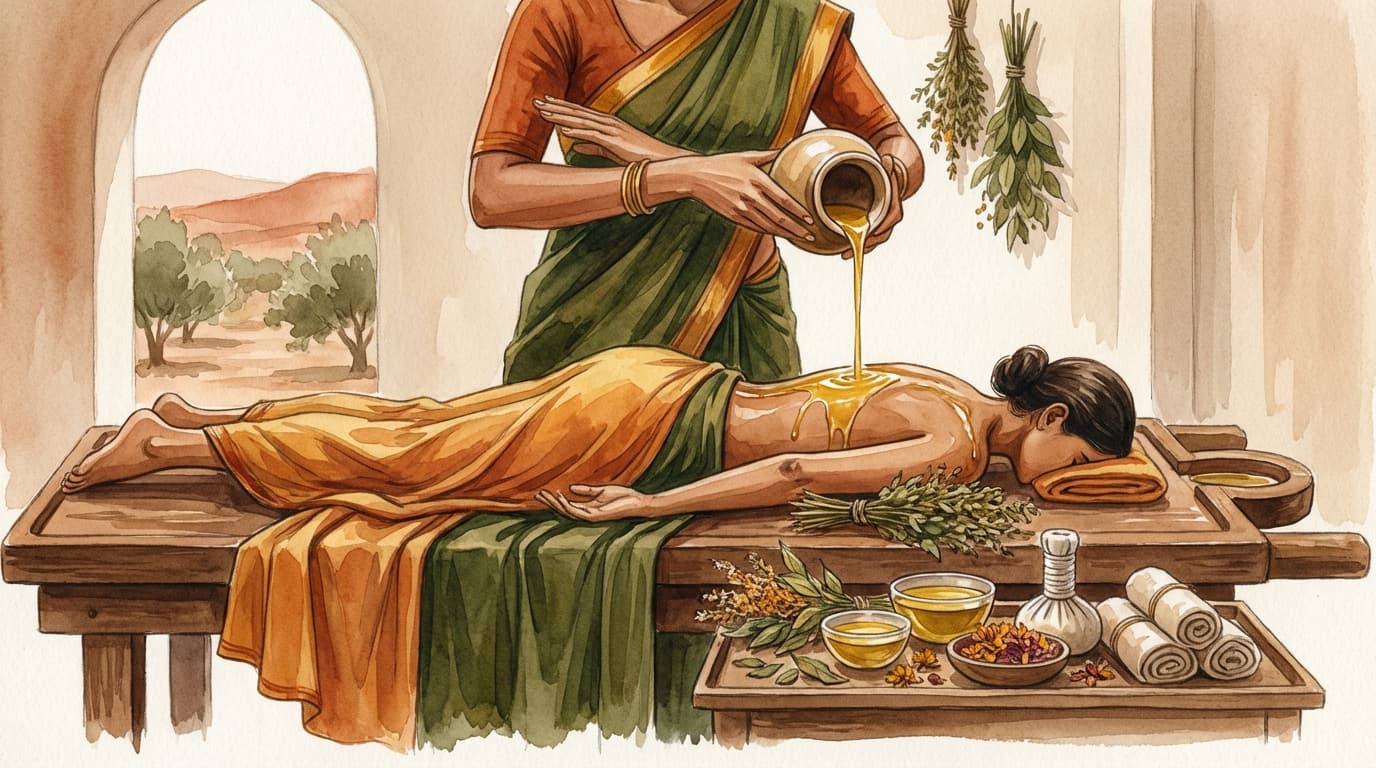
Considered half of all Ayurvedic medicine, Basti is a medicinal enema using herbal decoctions and oils to treat excess Vata dosha in the colon.
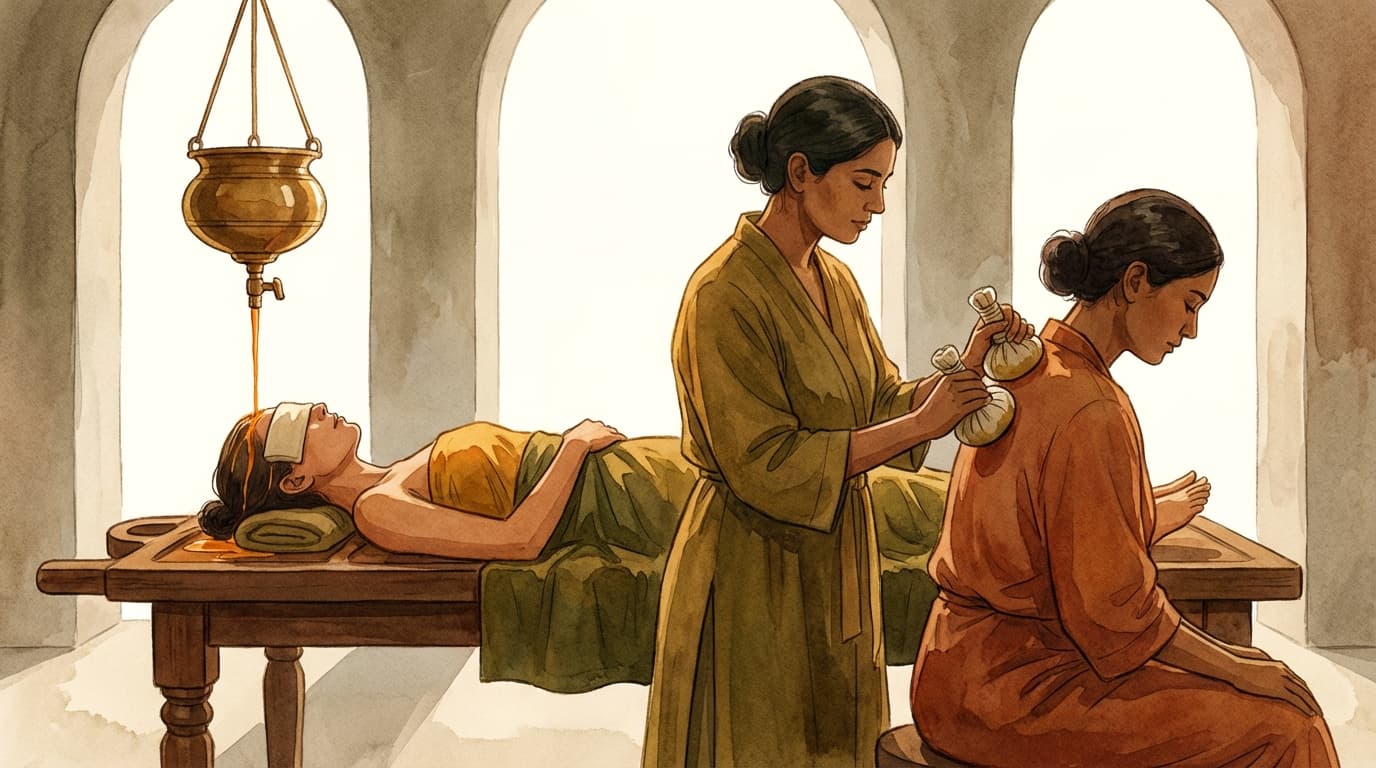
Iconic Ayurvedic treatment consisting of a continuous stream of warm oil poured on the forehead (third eye), inducing deep relaxation and mental calming.

Assessment of the individual's innate fundamental constitution according to Ayurveda, determined at conception by the unique proportion of the three doshas (Vata, Pitta, Kapha).