Amma — Massage Traditionnel Japonais
Forme ancestrale de massage thérapeutique japonais fondée sur les principes de la médecine traditionnelle chinoise (méridiens, points d'acupression), pratiqué historiquement par des praticiens aveugles au Japon, visant à harmoniser la circulation du Ki (énergie vitale) à travers des pressions rythmiques, percussions et étirements.
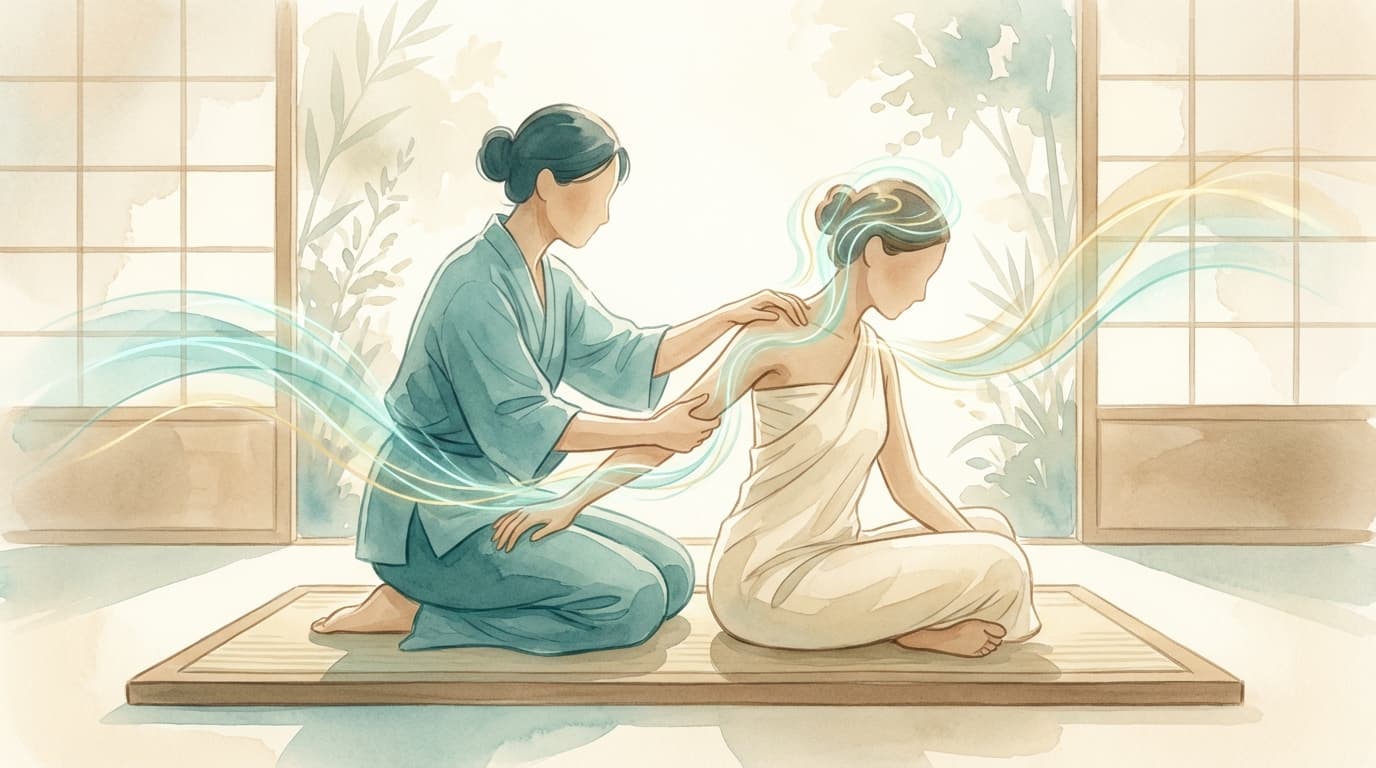
Forme ancestrale de massage thérapeutique japonais fondée sur les principes de la médecine traditionnelle chinoise (méridiens, points d'acupression), pratiqué historiquement par des praticiens aveugles au Japon, visant à harmoniser la circulation du Ki (énergie vitale) à travers des pressions rythmiques, percussions et étirements.
Présentation
L'Amma (あんま, signifiant « calmer par le frottement ») est la forme la plus ancienne de massage japonais, précédant le Shiatsu d'environ 1300 ans. Ses origines remontent au massage chinois Anmo (ou Tuina), introduit au Japon au VIIe siècle avec la médecine bouddhiste. Au Japon féodal, l'Amma était principalement pratiqué par des praticiens aveugles (les zato), à qui la pratique était officiellement réservée par décret impérial dès le Xe siècle — une mesure sociale de protection des personnes aveugles.
L'Amma fut codifié par Sugiyama Waichi (1610–1694), un médecin aveugle qui en fit la pratique officielle du Japon. Le médecin Ota Shinsai et Fujibayashi Ryoho développèrent ses protocoles au XVIIIe siècle. En Occident, l'Amma fut adapté et popularisé par Tina Sohn sous la dénomination Amma Therapy, intégrant des influences de l'oriental bodywork américain.
Origines : Anmo chinois → Japon VIIe siècle ; codifié par Sugiyama Waichi (1610–1694)
Principes fondamentaux
- Ki et méridiens : L'Amma travaille sur les 14 méridiens énergétiques et leurs points d'acupression (tsubo) pour harmoniser la circulation du Ki (énergie vitale).
- Huit techniques de base : pression (appui), friction, pétrissage, tapotement, vibration, rotation, traction, étirement.
- Pratique habillée : l'Amma traditionnel est pratiqué sans huile, sur le client habillé, en position assise ou allongée sur une natte.
- Rythme : chaque pression suit le rythme respiratoire du client, les pressions s'effectuant en expiration.
Techniques principales
- Amma assis (Chair Amma)
- Pratiqué sur chaise ergonomique ou chaise Amma spécifique. Le praticien travaille sur le dos, les épaules, le cou, les bras et la tête. Durée : 15 à 30 minutes. Très répandu en entreprise et événementiel.
- Amma allongé (traditionnel)
- Sur natte au sol ou table. Protocole complet incluant dos, membres inférieurs, abdomen et visage. Durée : 45 à 90 minutes.
- Amma Therapy (Tina Sohn)
- Version américanisée intégrant des techniques de détox physique et émotionnelle, travail sur les 8 méridiens extraordinaires, techniques spécifiques d'évaluation orientale.
Indications principales
- Tensions musculaires du dos, cou et épaules
- Fatigue chronique et stress professionnel
- Maux de tête de tension
- Troubles du sommeil
- Prévention des troubles musculo-squelettiques (TMS) en entreprise
- Troubles digestifs fonctionnels
- Anxiété légère
Contre-indications
- Fièvre et infections aiguës
- Thrombose ou phlébite
- Fractures récentes
- Zones enflammées ou peau lésée
- Grossesse (abdomen et points interdits en 1er trimestre)
- Tumeurs malignes
Avertissement médical
Les informations présentées dans cet article sont fournies à titre éducatif et informatif uniquement. Elles ne constituent en aucun cas un avis médical, un diagnostic ou une prescription de traitement. En cas de doute, consultez toujours votre médecin ou un professionnel de santé qualifié. Les techniques décrites ne se substituent pas à un traitement médical conventionnel.