Kundalini Yoga
Kundalini Yoga, taught in the West by Yogi Bhajan, is the "yoga of awareness." It combines postures, powerful breathwork, mantras, and meditations to awaken the dormant Kundalini energy at the base of the spine.
99 articles
Kundalini Yoga, taught in the West by Yogi Bhajan, is the "yoga of awareness." It combines postures, powerful breathwork, mantras, and meditations to awaken the dormant Kundalini energy at the base of the spine.
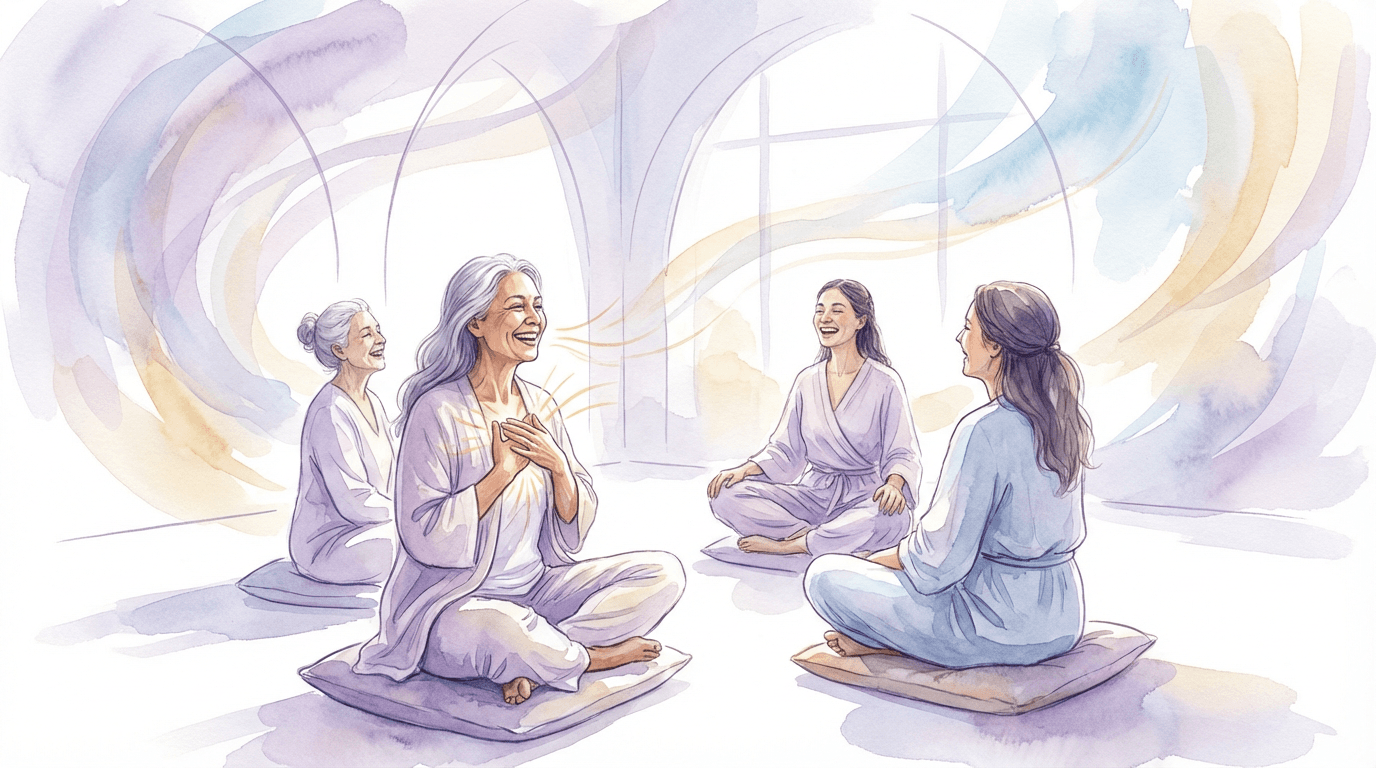
Laughter Yoga, created by Dr. Madan Kataria in 1995, combines voluntary laughter exercises with yogic breathing. The body cannot distinguish between simulated and spontaneous laughter: physiological benefits (endorphins, cortisol reduction, immune boost) are identical.
Ashtanga Yoga is a dynamic and demanding style codified by Sri K. Pattabhi Jois. It follows fixed series of postures linked in a precise order, synchronized with Ujjayi breathing.
Kriya Yoga is an advanced meditative technique transmitted by Lahiri Mahasaya and popularized by Paramahansa Yogananda in 'Autobiography of a Yogi'. Combining pranayama, mudras and meditation, it aims to accelerate spiritual evolution through mastery of vital energy (prana).
Hatha Yoga is the most widespread traditional form of yoga in the West. It combines postures (asanas), breathing exercises (pranayama), and meditation to harmonize body and mind.
Bikram Yoga (or Hot Yoga) is a practice of 26 postures and 2 breathing exercises performed in a room heated to 40°C with 40% humidity. Heat promotes flexibility, detoxification through sweating, and intense cardiovascular work.
Power Yoga is an athletic and intense yoga inspired by Ashtanga, developed for practitioners seeking a complete physical workout. It builds strength, endurance, and flexibility.
Vinyasa Yoga is a fluid and dynamic yoga where postures flow creatively to the rhythm of breath. Each class is unique, offering variety and creativity in practice.
AcroYoga combines yoga, acrobatics and Thai massage into a unique relational practice. Practiced in pairs or trios, it develops trust, body communication and balance through supported acrobatic figures.
Sivananda Yoga is a traditional holistic approach based on five principles: exercise, breathing, relaxation, diet, and positive thinking/meditation. Developed by Swami Vishnudevananda, it offers a complete, accessible practice based on 12 basic postures.
Perinatal hypnosis supports pregnant women throughout pregnancy and childbirth. It helps reduce anxiety, manage pain naturally, and experience a more serene birth.
Tonglen is a Tibetan Buddhist compassion meditation where one visualizes breathing in others' suffering and breathing out well-being and healing. Taught by Pema Chödrön and other Tibetan masters, it transforms self-centeredness into active empathy.
Ujjayi is the sonorous yoga breath produced by slight glottis contraction. Its characteristic ocean-like sound calms the mind, regulates the nervous system, and accompanies asana practice.
The Second Degree Dynamic Relaxation, inspired by Tibetan Buddhism, explores the contemplative dimension of consciousness. It develops the ability to mentally represent the body and work on self-image.
The First Degree Dynamic Relaxation, inspired by yoga, is the first step of the Caycedo method. It aims at discovering and mastering the body schema through concentration on physical sensations.
Yin Yoga is a slow, deep yoga where postures are held for 3-5 minutes. It targets connective tissues (fascia, ligaments, tendons) and promotes deep flexibility, meditation, and letting go.
The Third Degree Dynamic Relaxation, inspired by Japanese Zen, develops reflective meditation. It allows exploration of body-mind unity and integration of deep existential values.
Serial sophro-correction is a sophrological technique aimed at progressively desensitizing a phobia or fear by reliving anxiety-inducing situations in stages, within a state of deep relaxation.