Explore Moreno's psychodrama, a therapeutic method based on the spontaneous enactment of inner conflicts. Discover its five instruments, core techniques, and clinical applications.
Complete encyclopedia of art therapy and creative mediation: visual arts, music therapy, dance movement therapy, drama therapy and therapeutic writing. Scientific foundations, clinical framework, indications and techniques for each artistic medium.
Explore Moreno's psychodrama, a therapeutic method based on the spontaneous enactment of inner conflicts. Discover its five instruments, core techniques, and clinical applications.
Receptive music therapy uses musical listening as a therapeutic vector. Directed listening, U-shaped musical montage, Helen Bonny's GIM method, or psychomusical relaxation: these techniques support pain management, pre-operative anxiety, palliative care, and neonatology.
Sonic vibration therapy explores the therapeutic effects of specific frequencies on body and mind. Therapeutic tuning forks, Solfeggio frequencies (432 Hz, 528 Hz), bioresonance, and therapeutic didgeridoo: these approaches propose using vibration as a tool for rebalancing and well-being.
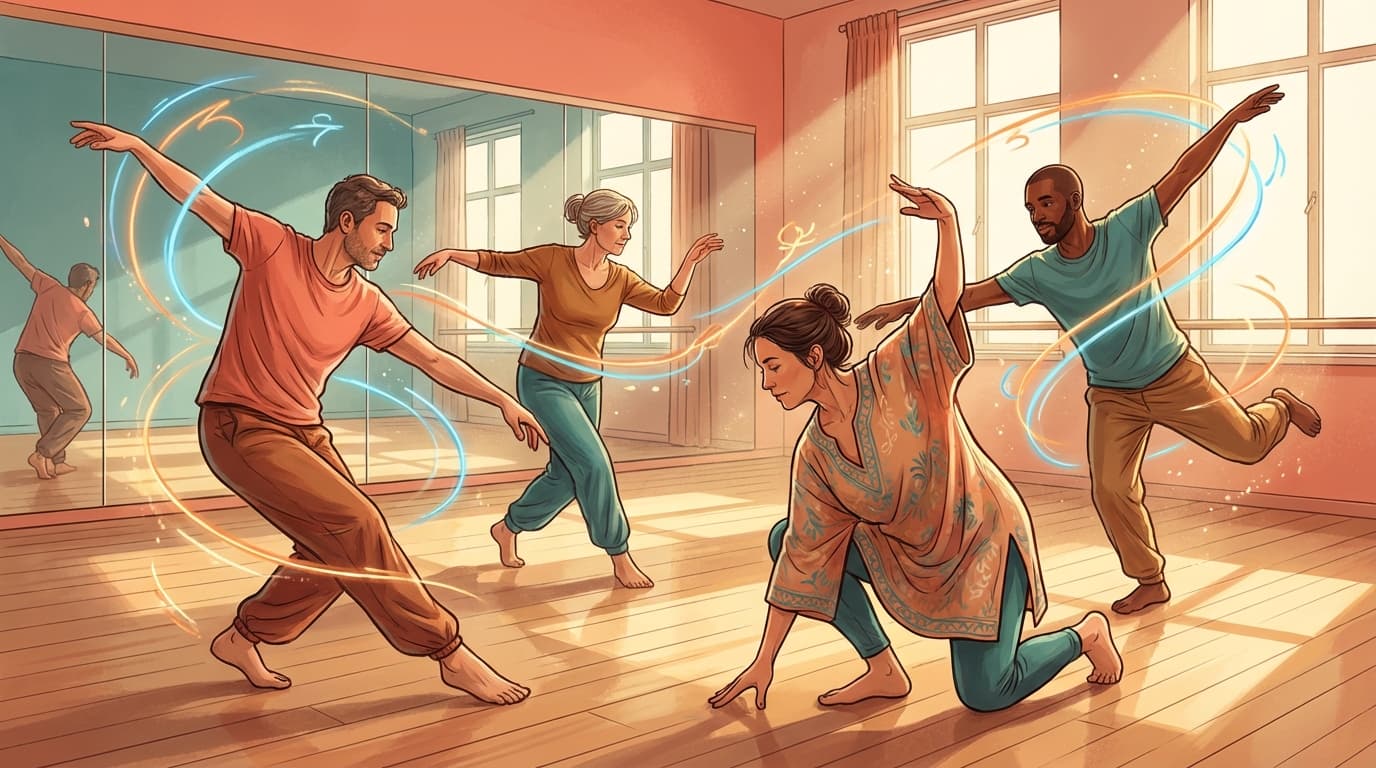
Dance movement therapy is a psychotherapeutic approach using body movement as the primary medium for expression and transformation. Founded by pioneers such as Marian Chace and Mary Whitehouse, it draws on Laban Movement Analysis and embodiment neuroscience to address psychological, emotional and relational disorders.
Active music therapy engages the patient in musical production: instrumental improvisation, therapeutic singing, body percussion, and composition. This expressive approach mobilizes creativity, motor skills, and the sound relationship to support conditions as varied as autism, stroke, or Parkinson's disease.
Music therapy is a codified clinical practice that uses music and its components (sound, rhythm, melody, harmony) as therapeutic mediators. Between active and receptive approaches, it draws on neuroscience to support patients with psychological, neurological, or somatic disorders.
Contact Improvisation, created by Steve Paxton in 1972, is an improvised dance form based on tactile listening, weight sharing and the point of contact between dancers. Used therapeutically, it addresses trust, body boundaries, letting go and relating to others, with specific applications for touch phobia, social isolation and motor disability.
Therapeutic sculpting uses clay, modeling paste, plaster, and other three-dimensional materials as care mediators. The tactile and sensory dimension of working with matter offers direct access to the body and emotions, particularly effective for body schema disorders and trauma.
Visual arts therapy uses the creative process — drawing, painting, sculpting, collage — as a therapeutic mediation. Based on the patient/artwork/therapist triangle, it enables symbolic expression of internal conflicts and promotes psychic transformation through creation.
The mandala, a sacred circle from Buddhist and Hindu traditions, has become a major therapeutic tool in art therapy since Carl Jung's work on individuation. Drawn, painted, or colored, it promotes psychic recentering, stress reduction, and self-exploration through a containing circular form.
Therapeutic collage is a particularly accessible art therapy technique that uses cutting and assembling images, texts, and various materials to promote self-expression and identity reconstruction. Requiring no prior artistic skill, it opens art therapy to all audiences.
Therapeutic painting uses pictorial media — watercolor, gouache, acrylic, ink — as vehicles for emotional expression and psychic transformation. From gestural painting to contemplative watercolor, each technique offers a unique expressive register suited to the patient's needs.
Authentic Movement is a meditative and therapeutic practice of spontaneous movement developed by Mary Starks Whitehouse, Janet Adler and Joan Chodorow. Based on the relationship between a mover and a witness, it draws on Jungian psychology to explore the body unconscious and foster individuation.
Therapeutic body expression uses free movement, improvised dance and body schema work as tools for psychological transformation. Focused on process rather than performance, it helps restore body image, release emotional tensions and address eating disorders, depression and identity difficulties.
Biodanza is a system of human integration developed by Rolando Toro Araneda in Chile in the 1960s. Based on music, movement and group encounter, it activates five lines of vivencia — vitality, sexuality, creativity, affectivity and transcendence — to strengthen identity, self-confidence and social connection.
Discover therapeutic role-playing, a structured technique for training social and relational skills. Applications in CBT, group therapy, conflict management and assertiveness development.
Discover the foundations of dramatherapy, a psychotherapeutic approach using dramatic play as a transitional space to explore emotions, transform inner roles, and foster personal change.
Bibliotherapy uses the reading of literary texts as a therapeutic tool to promote psychological healing. From the term coined by Samuel Crothers in 1916 to contemporary practices, this discipline mobilizes mechanisms of identification, catharsis, and insight to support change.
The therapeutic journal is a regular personal writing practice, guided or free, aimed at exploring emotions, clarifying thoughts, and supporting a change process. From Ira Progoff to Julia Cameron, this method draws on proven protocols to promote psychological healing.
Life narrative and therapeutic autobiography allow the reconstruction of existential meaning by organizing lived experiences into a coherent narrative. Inspired by Daniel Bertaux and Paul Ricœur, this approach restores narrative identity and fosters resilience, particularly among elderly individuals, migrants, and trauma survivors.
Sound therapy uses sonic vibrations produced by specific instruments — Tibetan singing bowls, crystal quartz bowls, and therapeutic gongs — to induce deep relaxation and promote well-being. Based on acoustic resonance principles, it applies to stress management, meditation, pain, and sleep disorders.
Poetry therapy uses the reading and writing of poems as emotional healing tools. Championed by Jack Leedy and the NAPT, this practice harnesses the condensed power of poetic language to express the inexpressible, navigate grief, and support moments of crisis.
Discover therapeutic theatre, from Augusto Boal's Theatre of the Oppressed to clinical improvisation. Exploring inner conflicts through collective and participative staging.
Discover therapeutic clowning, a practice using the clown character and its transgressive power to release emotions, restore dignity, and support vulnerable individuals in care settings.
Therapeutic writing harnesses the power of putting experience into words to transform emotional processing. Since James Pennebaker's pioneering research in 1986, scientific studies have demonstrated the physical and psychological benefits of expressive writing on overall health.