Biodanza: Dance of Life
Biodanza is a system of human integration developed by Rolando Toro Araneda in Chile in the 1960s. Based on music, movement and group encounter, it activates five lines of vivencia — vitality, sexuality, creativity, affectivity and transcendence — to strengthen identity, self-confidence and social connection.
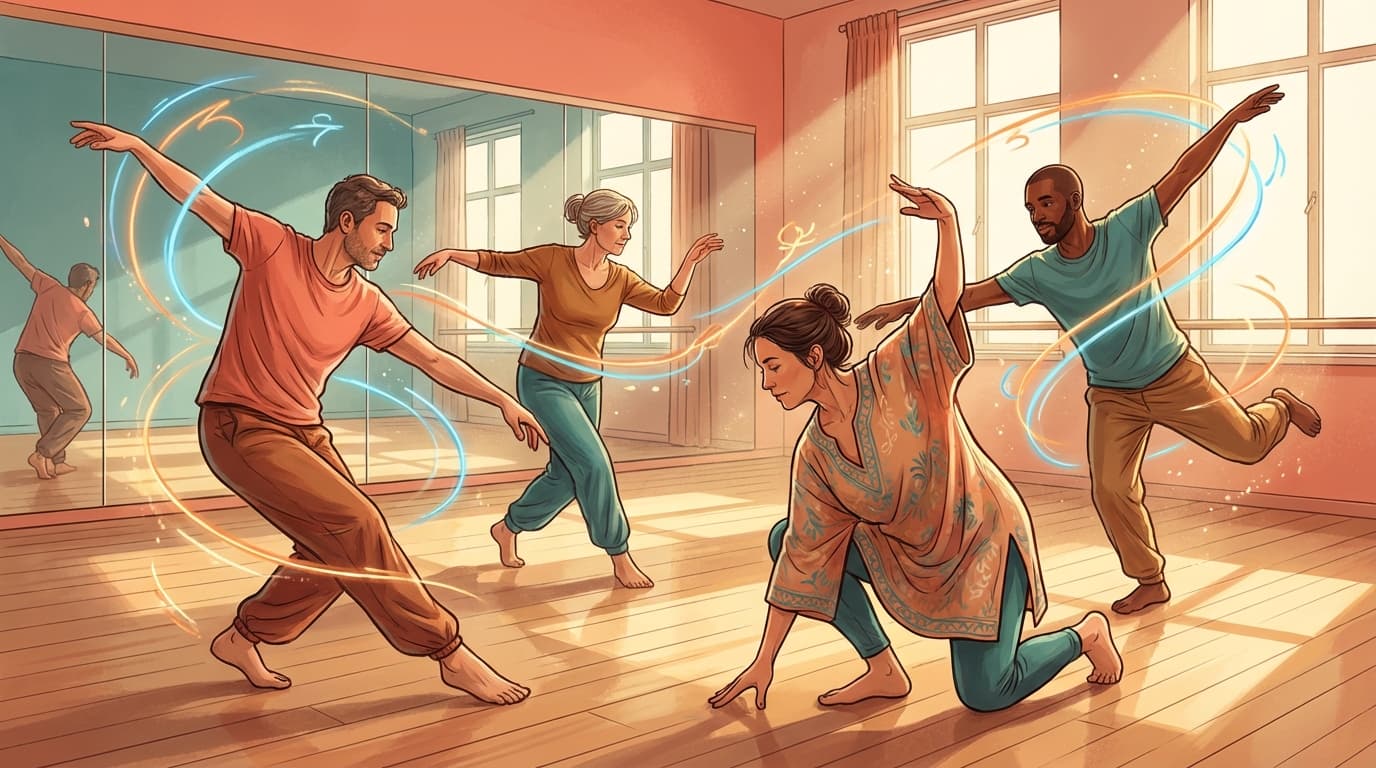
Biodanza is a system of human integration developed by Rolando Toro Araneda in Chile in the 1960s. Based on music, movement and group encounter, it activates five lines of vivencia — vitality, sexuality, creativity, affectivity and transcendence — to strengthen identity, self-confidence and social connection.
Presentation
Biodanza (from Greek "bios" — life, and Spanish "danza" — dance) is a system of affective integration, organic renewal and re-education of vital functions developed by Chilean psychologist and anthropologist Rolando Toro Araneda from the 1960s onwards. It defines itself as a "human development system" rather than a therapy per se, although its therapeutic effects are widely documented.
Biodanza is practised exclusively in groups, with no verbalization during the session. It uses music, movement and encounter situations to induce "vivencias" — experiences lived intensely in the present moment, integrating emotional, cenesthetic and visceral dimensions.
Origins
Rolando Toro Araneda (1924-2010), psychologist, anthropologist and Chilean poet, developed Biodanza through several stages: initial experiments with psychiatric patients at Santiago de Chile hospital in the 1960s, formalization of the theoretical model in the 1970s, and international expansion across Latin America and Europe from the 1980s onwards. The International Biocentric Foundation (IBF) was established to guarantee quality of training and practice.
The Five Lines of Vivencia
Biodanza's theoretical model is structured around five "vivencia lines", considered fundamental genetic potentials:
- Vitality: life energy, tone, health, joy. Exercises include dynamic walks, jumps, rhythmic dances activating the sympathetic nervous system.
- Sexuality: in the broad sense — capacity for pleasure and sensory connection, including sensuality and healthy eroticism. Exercises develop fluid movement, gentle contact and body awareness, always within absolute respect for boundaries.
- Creativity: innovation, personal expression, renewal. Free improvisation, artistic expression and imaginative play.
- Affectivity: love, tenderness, solidarity, compassion. Rocking, caresses, duo encounters and "nests" (small support groups).
- Transcendence: belonging to the universe, connection with all living things. Slow dances, closed eyes, expansive movements, meditative circles.
Applications and Benefits
- Self-confidence and self-esteem: identity vivencia and group recognition strengthen self-worth.
- Social bonding: group exercises break isolation and develop non-verbal relational skills.
- Stress management: studies show significant reduction in salivary cortisol and increased immunoglobulin A after sessions.
- Couples: duo exercises help couples recover non-verbal communication, tenderness and desire.
- Older adults: improved balance, coordination, vitality and social quality of life.
- Children and adolescents: development of confidence, creativity and emotional expression.
- Burnout prevention: reconnection with pleasure, vitality and authentic relationships.
Contraindications
- Decompensated psychosis or severe dissociative disorder
- Unstabilized PTSD (physical contact may reactivate trauma)
- Severe touch or proximity phobia
- Personality disorders with marked affective dependence
- Uncontrolled severe cardiac conditions (intense activation phase)
Biodanza does not replace medical or psychotherapeutic treatment. The facilitator is a guide, not a clinical therapist.
Medical Disclaimer
The information presented in this article is provided for educational and informational purposes only. It does not constitute medical advice, diagnosis, or treatment prescription. If in doubt, always consult your physician or a qualified healthcare professional. The techniques described do not replace conventional medical treatment.