Side-Lying Quadriceps Stretch
Side-lying quadriceps stretch with ankle hold, 30-second hold to lengthen the rectus femoris and vastus lateralis without lumbar compression.
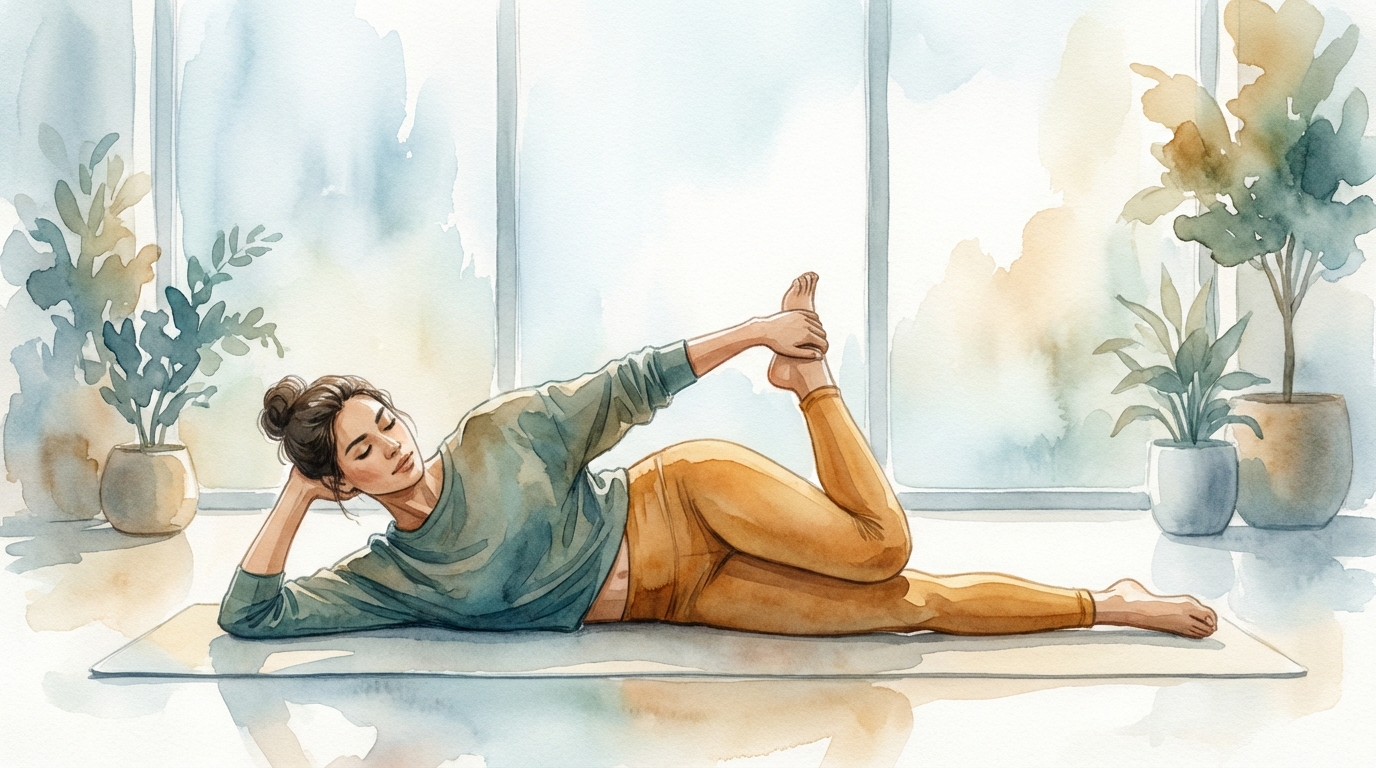
Side-Lying Quadriceps Stretch
The quadriceps is the most powerful muscle in the human body, composed of four heads that converge on the kneecap. Its stiffness is responsible for numerous knee, hip and lower back pains. The side-lying stretch offers a major advantage over the standing version: it eliminates balance demands and allows complete pelvic relaxation, ensuring a deeper and safer quadriceps stretch, especially of the rectus femoris — a biarticular muscle crossing both the hip and knee.
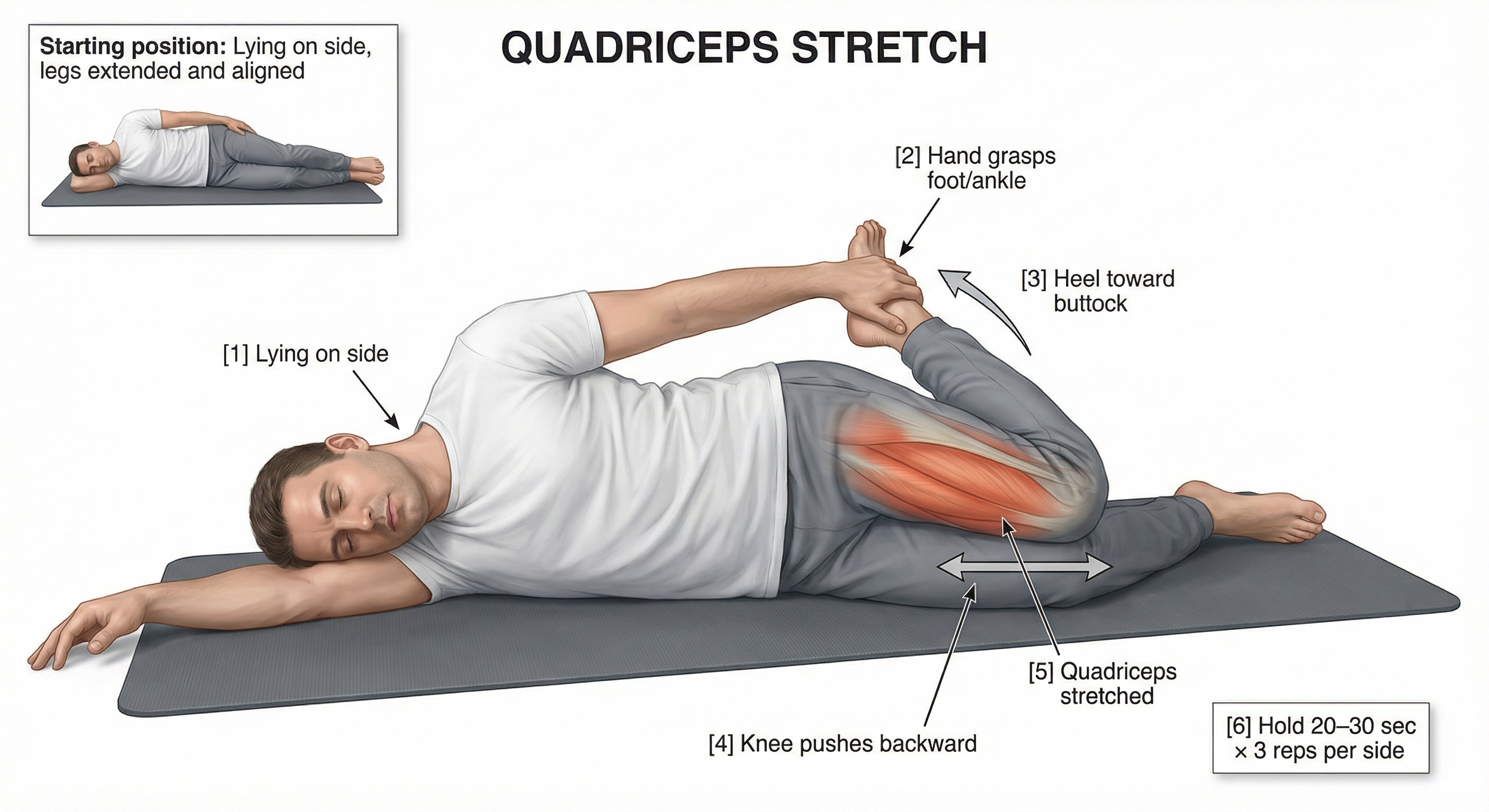
Why Stretch the Quadriceps?
A shortened quadriceps pulls the kneecap upward and tilts the pelvis anteriorly, creating compensatory lumbar hyperlordosis. This mechanism underlies patellofemoral syndrome (anterior knee pain), patellar tendinopathy and mechanical lower back pain. Athletes, particularly runners and cyclists, often develop an imbalance between powerful quadriceps and weaker hamstrings, increasing injury risk. Regular stretching restores this balance and protects the joints.
Anatomy Involved
- Rectus femoris — the only biarticular head, hip flexor and knee extensor, most targeted by this stretch.
- Vastus lateralis — the largest of the four heads, on the outer thigh.
- Vastus medialis — on the inner side, essential for patellar tracking.
- Vastus intermedius — the deepest, between the lateral and medial vasti.
- Patellar tendon — connects the quadriceps to the tibia via the kneecap, placed under tension during the stretch.
Step-by-Step Instructions
Step 1 — Lie on Your Side
Lie on your left side, head resting on the left arm or a pillow. The body forms a straight line. The left leg may be slightly bent for stability.
Step 2 — Grasp the Ankle
Bend the right knee and grasp the right ankle (or top of the foot) with the right hand. Gently bring the heel toward the buttock.
Step 3 — Intensify the Stretch
To deepen the rectus femoris stretch, gently push the right hip forward (hip extension) while maintaining the ankle hold. You should feel the stretch along the entire front of the thigh, from knee to pelvis.
Step 4 — Hold
Hold for 30 seconds, breathing calmly. Release gently, then switch sides. Perform 3 sets per side.
Duration and Repetitions
- Hold: 30 seconds per side
- Sets: 3 per side
- Frequency: 1 to 2 times daily, after physical activity
- Total duration: approximately 5 minutes
Safety Tips
- Never pull the foot toward the buttock forcefully — movement should be progressive and controlled.
- The knee should stay aligned with the hip and not splay outward, which would stress the medial collateral ligament.
- If you cannot reach your ankle, use a strap or towel around the foot.
- If you experience sharp knee pain, stop immediately — this may indicate a meniscal or ligament issue.
Who Benefits from This Exercise?
This stretch is recommended for athletes (runners, cyclists, soccer players), people with anterior knee pain, patellofemoral syndrome or patellar tendinopathy, and anyone wanting to maintain quadriceps flexibility. The side-lying position is particularly suited for those with balance issues or lower back pain preventing standing stretches.
Diagrams and illustrations
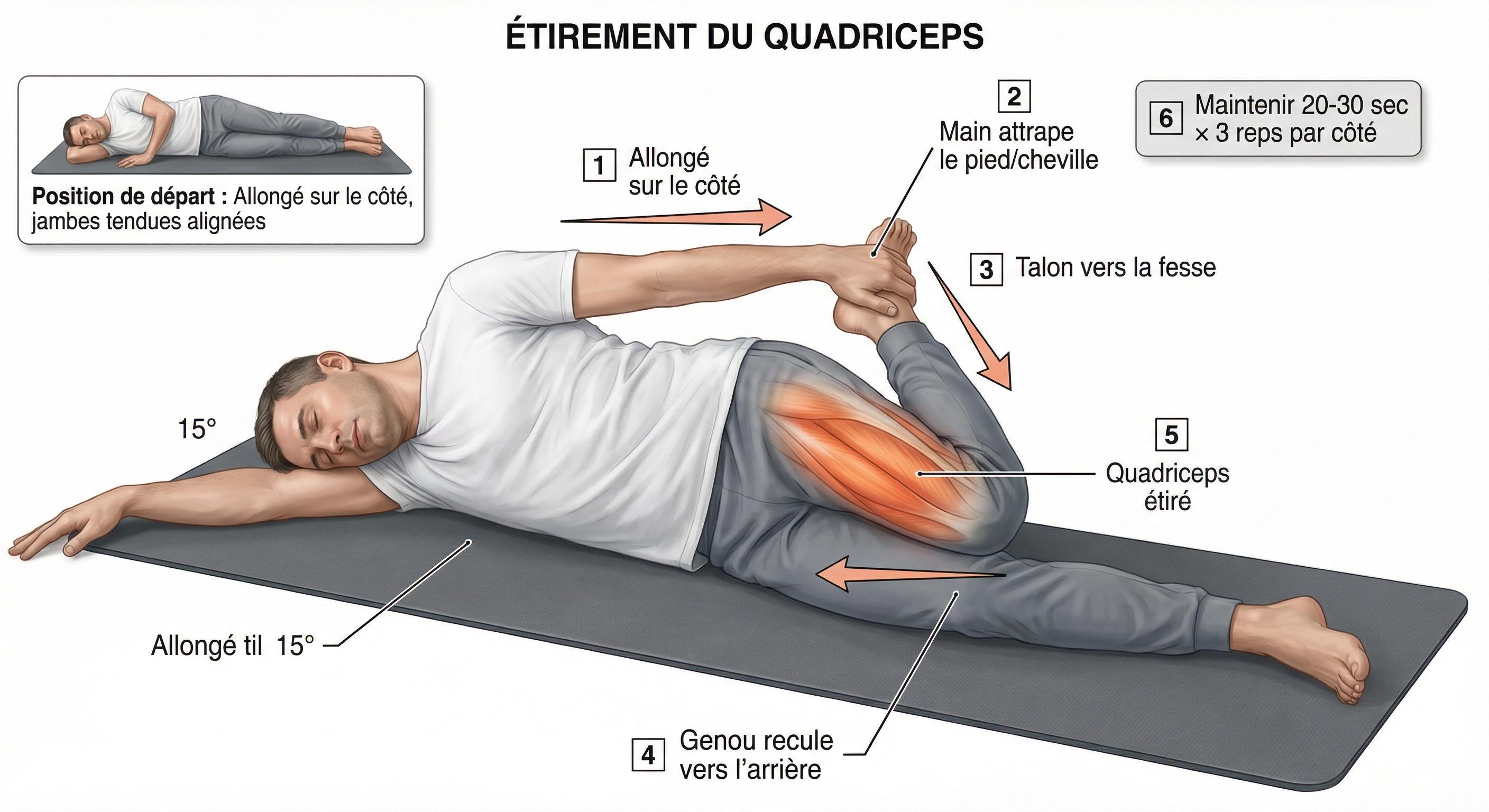
Side-lying quadriceps stretch illustration
Side-lying position with ankle hold to stretch the quadriceps.