Quadriceps Relaxation
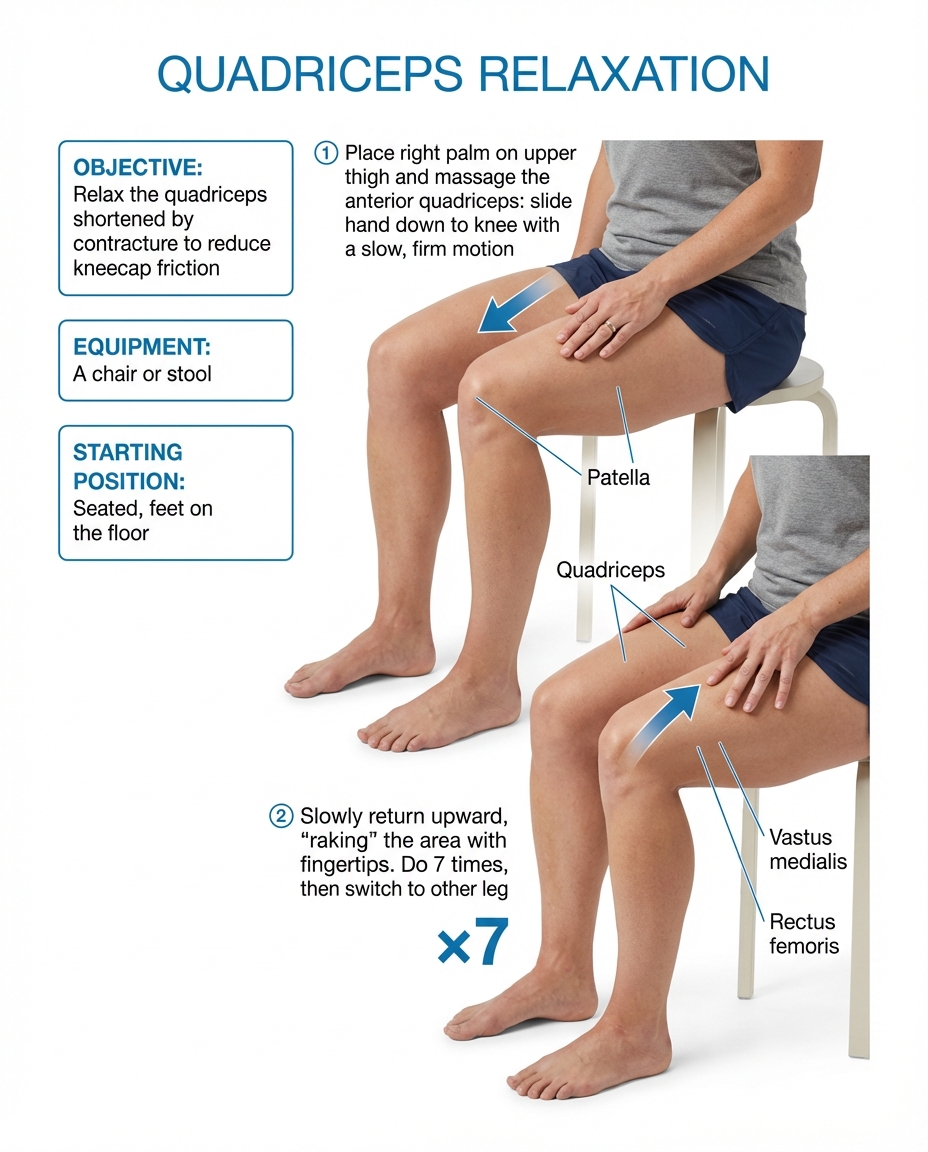
Quadriceps self-massage seated on a chair, manual massage of the front thigh, 7 repetitions per leg to release muscle tension.
Quadriceps Relaxation — Seated Self-Massage
Quadriceps relaxation through self-massage is a simple and effective technique to release tension accumulated in the largest thigh muscle. Seated on a chair, using your hands to massage the front of the thigh, you apply targeted pressure that breaks up contractures, improves blood circulation and restores muscle flexibility. This technique is particularly beneficial after exercise, during knee pain or to relieve tension from prolonged sitting.
Why Massage the Quadriceps?
The quadriceps silently accumulates tension: post-exercise contractures, latent trigger points, fascial adhesions between the four heads. These tensions manifest as anterior thigh stiffness, limited knee flexion and pain referred toward the kneecap. Self-massage detects and treats these tension points before they become symptomatic, restoring glide between muscle fascicles and improving local venous and lymphatic return.
Anatomy Involved
- Rectus femoris — superficial and central quadriceps head, easily accessible to manual massage.
- Vastus lateralis — on the outer face, often harboring trigger points after running or cycling.
- Vastus medialis — on the inner face, essential for patellar tracking, often tense and painful.
- Vastus intermedius — the deepest, reached by firmer pressure through superficial layers.
- Fascia lata — fibrous quadriceps envelope whose adhesions limit muscle mobility.
Step-by-Step Instructions
Step 1 — Seated Position
Sit on a stable chair, feet flat, the leg to massage slightly extended (foot on floor, knee partially extended). The quadriceps is thus partially relaxed, facilitating massage penetration.
Step 2 — Longitudinal Massage
Place both hands on the upper thigh, just below the groin crease. With palms and fingers, perform firm gliding pressures descending along the thigh to the knee. This movement drains venous blood and relaxes muscle fibers along their orientation.
Step 3 — Cross-Fiber Massage and Kneading
With thumbs or knuckles, perform transverse pressures on tense areas you identify. Knead the muscle between both hands like dough, working section by section from top to bottom of the thigh.
Step 4 — Tension Point Work
When you find a particularly tender point, hold constant pressure for 10 to 15 seconds until you feel release. Repeat the entire massage 7 times per leg.
Duration and Repetitions
- Repetitions: 7 complete passes per leg
- Duration per pass: 1 to 2 minutes
- Total duration: 10 to 15 minutes for both legs
- Frequency: after each intense physical activity or daily for chronic tension
Safety Tips
- Avoid massaging directly on the kneecap or patellar tendons: focus on the muscle belly.
- Pressure should be firm but not painful — aim for moderate discomfort (4-5 out of 10).
- Do not massage the area in case of bruising, suspected phlebitis or recent muscle injury.
- Hydrate well after self-massage to facilitate elimination of released metabolic waste.
Who Benefits from This Exercise?
This self-massage is recommended for athletes (runners, cyclists, soccer players), people with anterior knee pain, quadriceps stiffness or nocturnal cramps, and anyone seeking a simple, accessible recovery technique. It can be easily practiced at the office, home or in changing rooms after training.
Diagrams and illustrations
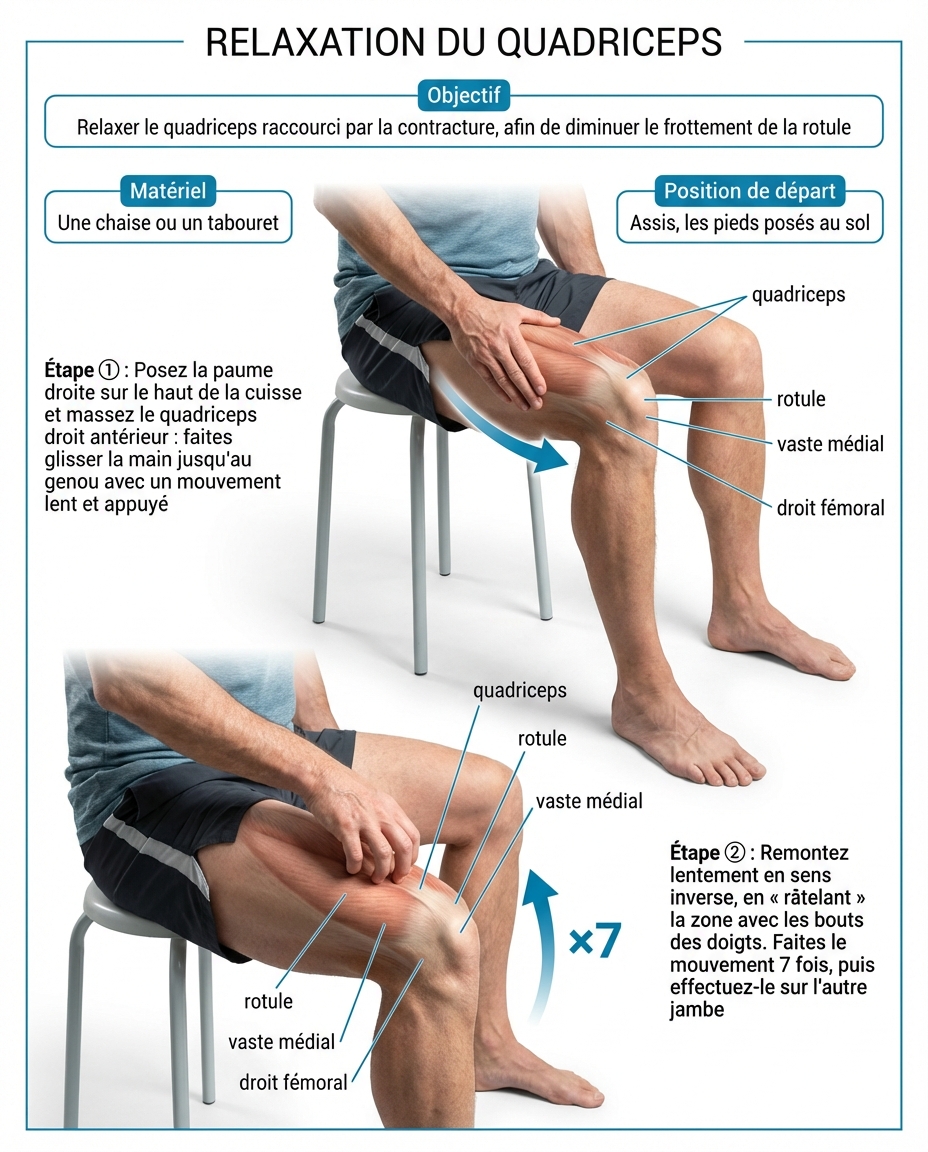
Quadriceps relaxation illustration
Seated on chair with manual quadriceps massage for muscle relaxation.