Balneotherapy and Therapeutic Hydrotherapy
Set of therapeutic techniques using water in different forms (baths, jets, showers, rehabilitation pool) at various temperatures and pressures to treat musculoskeletal, rheumatic, neurological and dermatological conditions, exploiting the mechanical, thermal and chemical properties of water.
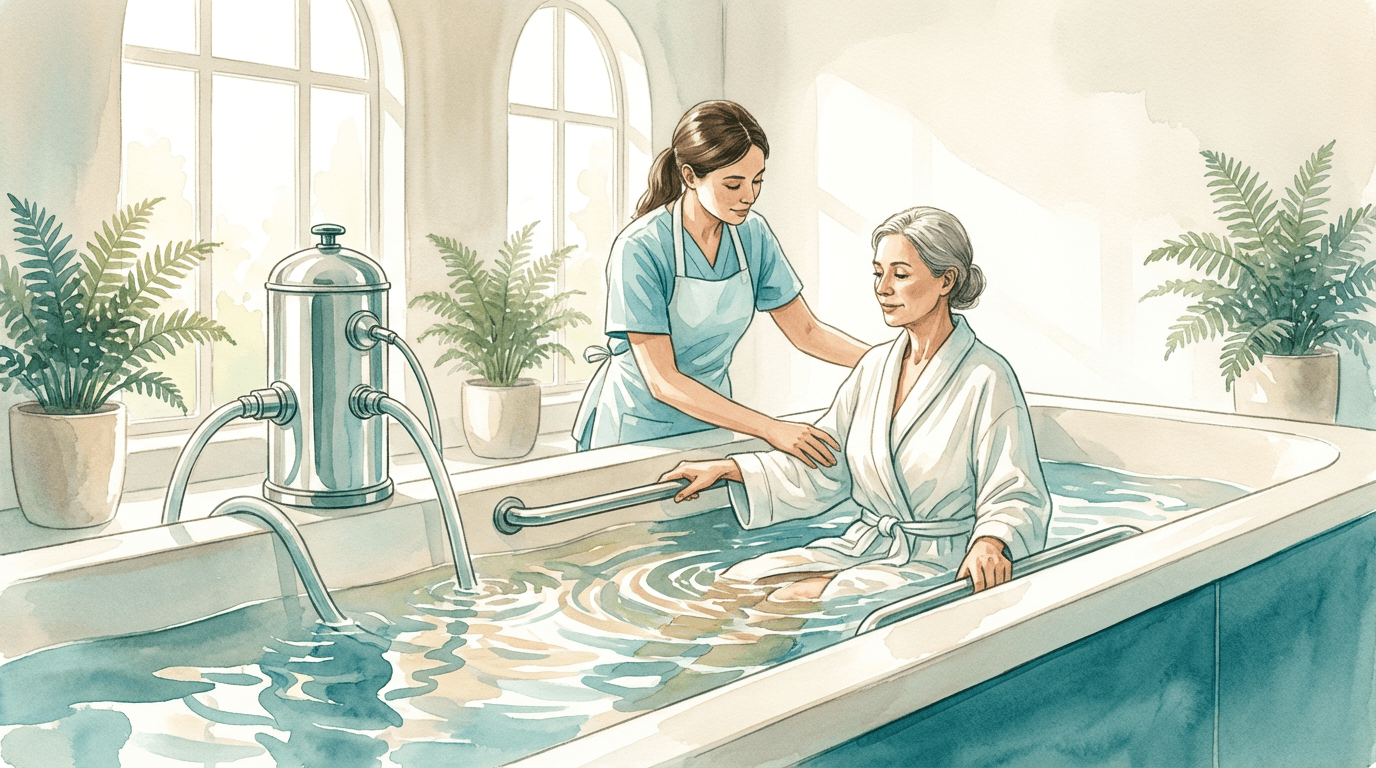
Set of therapeutic techniques using water in different forms (baths, jets, showers, rehabilitation pool) at various temperatures and pressures to treat musculoskeletal, rheumatic, neurological and dermatological conditions, exploiting the mechanical, thermal and chemical properties of water.
Presentation
Balneotherapy (from Latin balneum, bath) is the therapeutic use of water, baths and aquatic environments to prevent and treat various pathologies. It is one of humanity's oldest medical practices (Ancient Greece, Rome, Japan, thermal spas). Modern hydrotherapy developed in the 19th century, particularly with Vincenz Priessnitz (1799–1851) in Austria and Sebastian Kneipp (1821–1897) in Bavaria.
In physiotherapy, the term specifically designates aquatic rehabilitation (aquatherapy), which exploits water's physical properties: buoyancy (Archimedes principle reducing load-bearing), hydrodynamic resistance (muscle strengthening), hydrostatic pressure (edema drainage) and thermal properties.
Modern pioneers: Vincenz Priessnitz (1799–1851), Sebastian Kneipp (1821–1897); modern aquatherapy: Bad Ragaz Ring Method (BRRM) developed in Switzerland in the 1950s.
Main Indications
- Chronic rheumatism (osteoarthritis, rheumatoid arthritis in remission)
- Chronic low back and neck pain
- Post-surgical rehabilitation (hip, knee) — early mobilization
- Neurological rehabilitation (stroke, MS, Parkinson's)
- Fibromyalgia
- Chronic venous insufficiency and lymphedema
- Burns
- Psoriasis (sulfurous water balneotherapy)
Contraindications
- Open wounds or skin infections (collective baths)
- Uncontrolled fecal incontinence
- Decompensated heart failure
- Uncontrolled epilepsy (pool)
- Allergy to water additives
- Acute phlebitis or thrombosis
- Pregnancy (very hot baths)
Medical Disclaimer
The information presented in this article is provided for educational and informational purposes only. It does not constitute medical advice, diagnosis, or treatment prescription. If in doubt, always consult your physician or a qualified healthcare professional. The techniques described do not replace conventional medical treatment.