Lacrosse Ball — Piriformis
The lacrosse ball on the piriformis releases deep trigger points in the buttock and relieves sciatic symptoms.
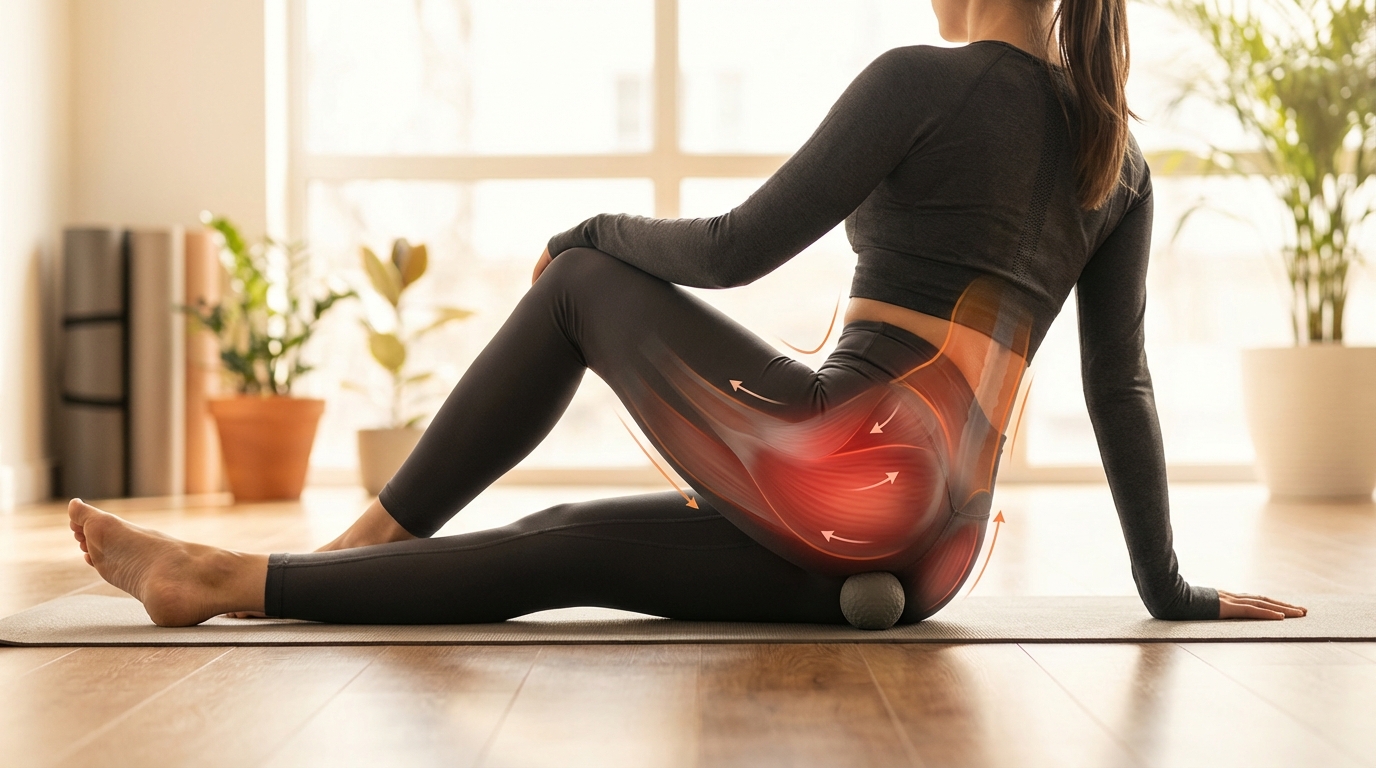
Lacrosse Ball — Piriformis
Foam rolling (self-myofascial release) is a self-release technique using body weight pressure on a foam roller or ball to break fascial adhesions, reduce trigger points and improve local circulation. Practiced regularly, it accelerates recovery, reduces DOMS and prepares tissues for stretching and effort.
Targeted Anatomy
Self-massage acts on multiple tissue layers: superficial and deep fascia, underlying muscle and proprioceptive receptors. Mechanical pressure stimulates the Golgi tendon organ system causing a reflex muscle release, while friction on the fascia breaks adhesions and restores sliding between tissue layers.
Step-by-Step Instructions
Step 1 — Positioning
Place the roller or ball under the target muscle group. Use your arms and legs to control the amount of body weight applied to the tool. Start with light weight and gradually increase.
Step 2 — Slow Rolling
Roll slowly along the entire muscle length, from proximal to distal tendon. Ideal speed is about 2-3 centimeters per second. Breathe deeply and stay relaxed.
Step 3 — Trigger Point Work
When you find a particularly tender spot (trigger point), stop and hold pressure for 20 to 30 seconds. The pain should gradually decrease. If it stays intense, reduce pressure.
Step 4 — Finishing
After treating the area, make a few slow passes along the full length to normalize tone. Follow with a static stretch of the worked area if possible to maximize mobility gains.
Duration and Frequency
- Duration: 1-3 minutes per muscle zone
- Frequency: daily for recovery, or before/after training
- Pressure: moderate, pain scale 5-7/10 maximum
Safety Tips
- Avoid rolling directly on bones, joints and the spine.
- Do not foam roll on acute injury, inflammation or bruising.
- Pain should be tolerable (5-7/10) — excessive pain triggers a guarding reflex preventing release.
- Do not roll the lower back (lumbar) — this area lacks costal bone protection.
- Hydrate after the session to facilitate metabolic waste elimination.
Variations
- Soft roller — for beginners or very sensitive areas.
- Hard roller — for deeper massage on large muscles.
- Lacrosse ball — for precision work on small muscles and deep areas.
- Double ball (peanut) — two balls taped together to work along the spine.
Target Audience
Foam rolling is suitable for everyone: athletes in recovery, sedentary individuals with chronic tension, seniors, and anyone wanting to improve tissue mobility. Guided practice is recommended for beginners.
Diagrams and illustrations
Lacrosse Ball — Piriformis illustration
Lacrosse Ball — Piriformis — foam rolling technique.