Ashtanga Yoga
Ashtanga Yoga is a dynamic and demanding style codified by Sri K. Pattabhi Jois. It follows fixed series of postures linked in a precise order, synchronized with Ujjayi breathing.
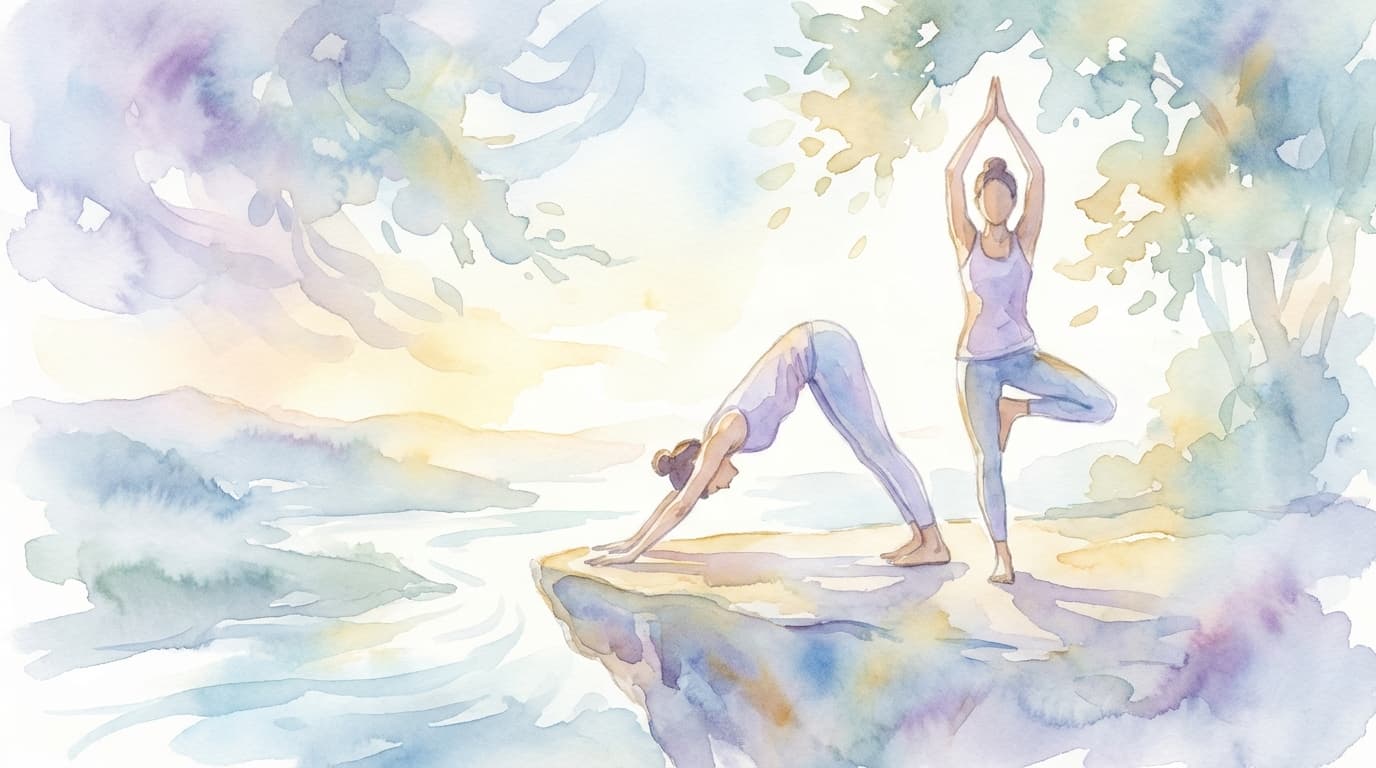
Ashtanga Yoga is a dynamic and demanding style codified by Sri K. Pattabhi Jois. It follows fixed series of postures linked in a precise order, synchronized with Ujjayi breathing.
Overview
Ashtanga Yoga (or Ashtanga Vinyasa Yoga) is a dynamic yoga system developed by Sri K. Pattabhi Jois (1915-2009) in Mysore, India. Jois claimed to have learned this method from his teacher Tirumalai Krishnamacharya, considered the "father of modern yoga." The term "Ashtanga" means "eight limbs" in Sanskrit, referring to the eight stages of yoga described by Patanjali in the Yoga Sutras.
Ashtanga is distinguished by its fixed series of postures (six total) always practiced in the same order. The first series (Yoga Chikitsa — "yoga therapy") is the most practiced and sufficient for most practitioners. The second series (Nadi Shodhana — "channel purification") and advanced series (A, B, C, D) are only approached after mastering previous ones.
Core Principles
- Vinyasa: precise synchronization of each movement with breath. Each posture is linked to a defined number of breaths
- Ujjayi breathing: audible nasal breathing with slight glottis contraction, maintained throughout practice
- Bandhas: constant engagement of Mula Bandha (pelvic floor) and Uddiyana Bandha (abdomen), creating internal heat and stability
- Drishti: fixed gaze point for each posture (9 different drishtis), promoting concentration and internalization
- Mysore practice: traditional method where each student practices at their own pace while the teacher gives individual adjustments
- Daily practice: ideally 6 days per week, rest on moon days (full and new)
Main Indications
- Strength, endurance, and flexibility development
- Concentration and mental discipline improvement
- Detoxification through abundant sweating
- Stress management through breath attention
- Cardiovascular system strengthening
- Practice autonomy development
- Deep physical and mental transformation
Session Structure
A complete first series practice lasts approximately 90 minutes:
- Opening mantra (2 min): traditional Sanskrit mantra chanting
- Sun Salutations A and B (15 min): 5 Surya Namaskar A and 5 Surya Namaskar B, creating internal heat
- Standing postures (20 min): fixed sequence including Padangusthasana, Trikonasana, Parsvakonasana, Prasarita Padottanasana
- Seated postures (30-40 min): the longest sequence, including forward bends, hip postures, twists (Marichyasana A-D), boat (Navasana)
- Closing sequence (15 min): fixed sequence including bridge or wheel, shoulderstand, plow, fish, lotus, and headstand
- Final relaxation (5-10 min): Shavasana
- Closing mantra (2 min)
Variations
"Mysore style" is the traditional method where students memorize the sequence and practice autonomously. "Led class" is guided in unison with Sanskrit counting. The "half series" is an option for beginners. Adaptations exist for pregnant women and injured practitioners. Sharath Jois insists on strict tradition, while teachers like David Swenson or Kino MacGregor offer more accessible adaptations.
Contraindications
- Severe joint injuries (knees, shoulders, wrists)
- Unmonitored cardiac problems
- Pregnancy (adaptations needed from 1st trimester)
- Acute herniated disc
- Complete beginner without supervision
- Uncontrolled hypertension
Medical Disclaimer
The information presented in this article is provided for educational and informational purposes only. It does not constitute medical advice, diagnosis, or treatment prescription. If in doubt, always consult your physician or a qualified healthcare professional. The techniques described do not replace conventional medical treatment.