Sacroiliac Joint Unlocking
Sacroiliac joint unlocking technique using knee crossing to relieve lower back and pelvic pain.
Sacroiliac Joint Unlocking
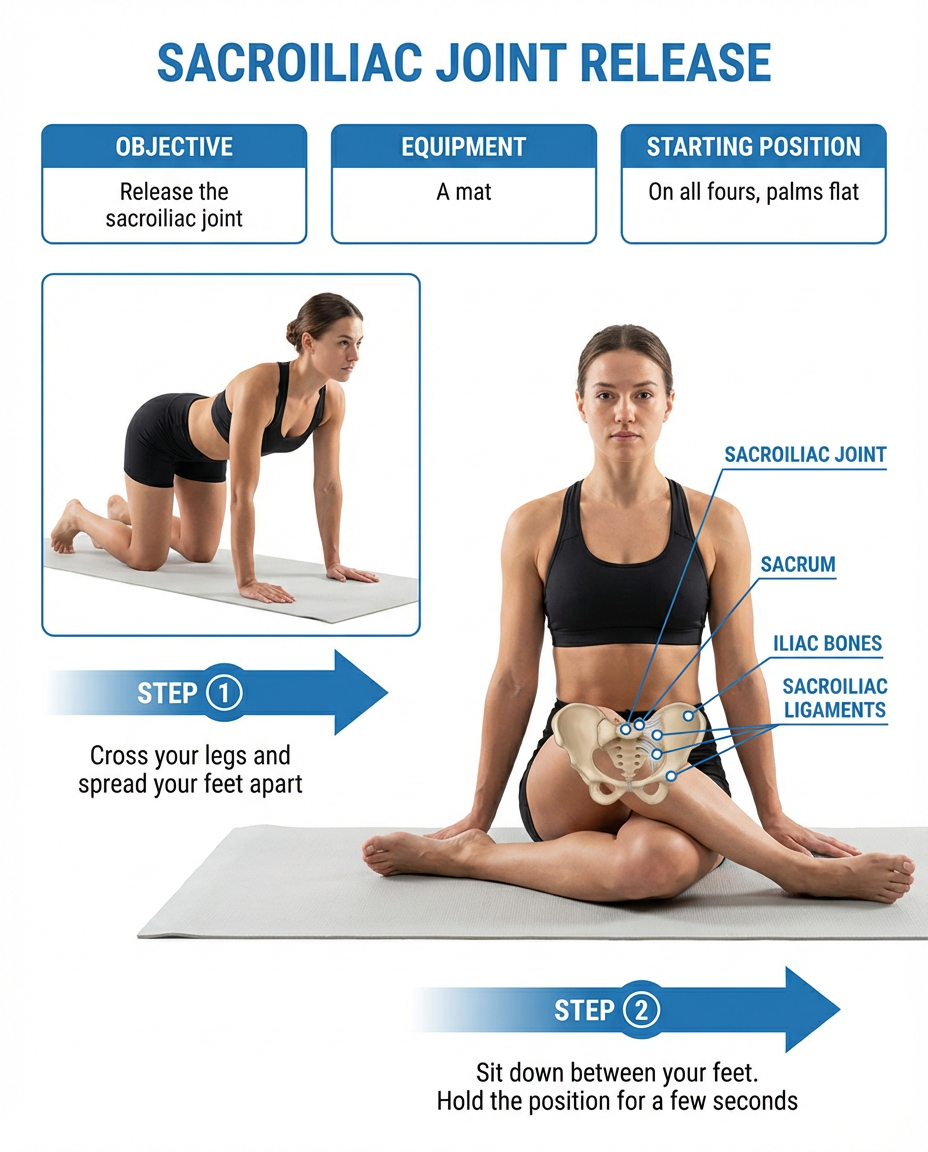
The sacroiliac joint (SIJ) connects the sacrum (base of the spine) to the iliac bones of the pelvis. It is a semi-mobile joint that can lock up or become dysfunctional, causing pain in the lower back, buttock, and sometimes the leg. This gentle unlocking technique uses knee crossing to create a rotational movement that helps restore joint mobility.
Why Unlock the Sacroiliac Joint?
Sacroiliac joint dysfunction is responsible for 15 to 30% of lower back pain. It is often underdiagnosed because its symptoms mimic those of a herniated disc or sciatica. Locking frequently occurs after a wrong movement, an asymmetric effort, childbirth, or simply holding a position too long. This gentle unlocking can be done at home as a complement to osteopathic care.
Anatomy Involved
- Sacroiliac joint — the junction between the sacrum and iliac bone, held by very powerful ligaments (anterior, posterior, and interosseous sacroiliac ligaments).
- Piriformis muscle — crosses the area and may be involved in sacroiliac blockages.
- Iliopsoas muscle — its pelvic insertions influence SIJ mobility.
- Gluteal muscles — their tension can maintain the joint blockage.
- Sacrotuberous and sacrospinous ligaments — stabilize the joint and can be a source of pain.
Step-by-Step Instructions
Step 1 — Starting Position
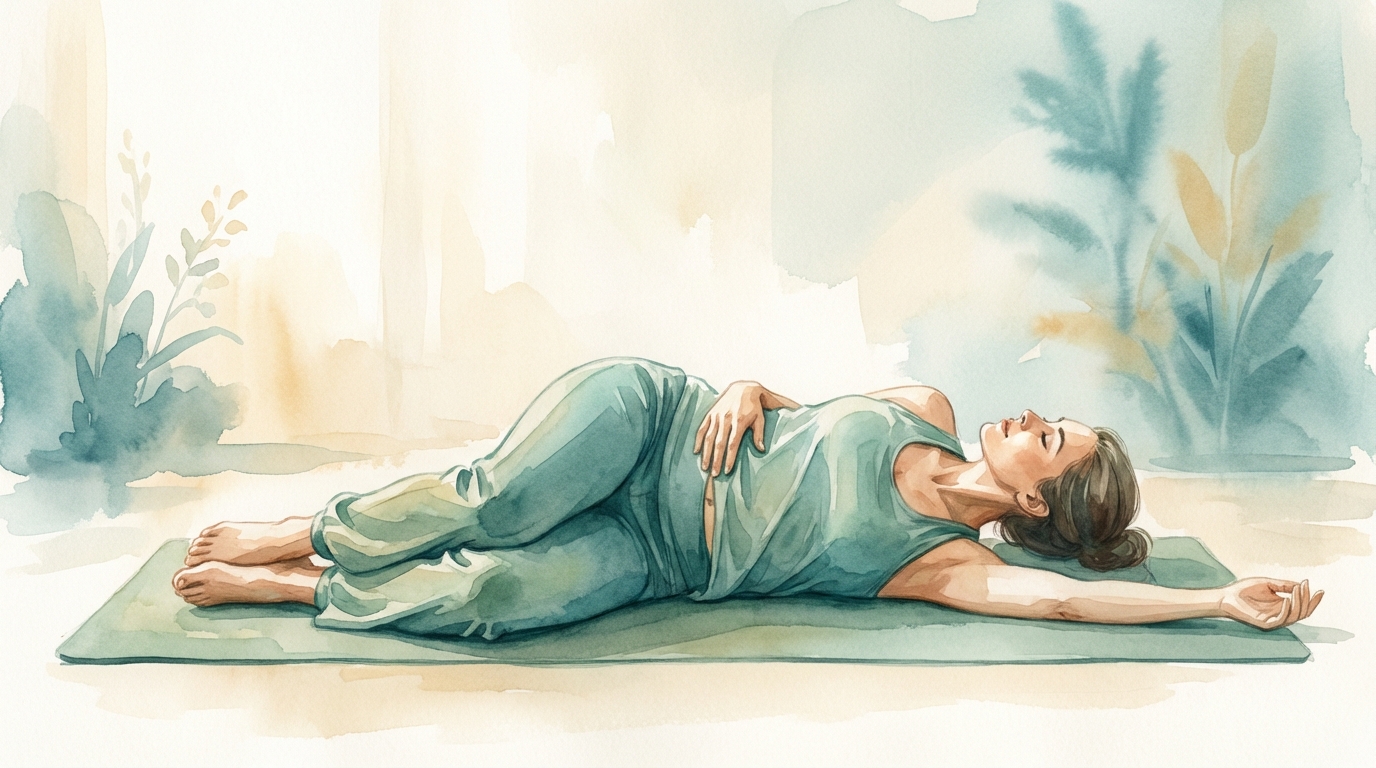
Lie on your back on a firm surface (floor mat, not a soft mattress). Bend your knees with feet flat on the floor, hip-width apart. Arms in a T position or at your sides. Take a few breaths to release the lower back.
Step 2 — Crossing and Rotation
Cross your right knee over your left knee (as if crossing your legs). As you exhale, slowly let both knees fall toward the right, toward the floor. The crossing movement creates a specific rotation that mobilizes the right sacroiliac joint. Hold for 15 to 20 seconds.
Bring the knees back to center. Uncross then recross: left knee over the right. Let them fall to the left. Hold for 15 to 20 seconds. You may feel a slight crack or click — this is normal and often relieving.
Duration and Repetitions
- Hold: 15 to 20 seconds per side
- Sets: 3 to 4 on each side
- Frequency: 1 to 2 times daily during a blockage episode, then 2 to 3 times weekly for prevention
Safety Tips
- Use a firm surface — a soft mattress does not allow proper unlocking.
- The movement should be slow and controlled — never abrupt or forced.
- A slight crack is normal. Sharp pain is not — stop if this occurs.
- Do not perform this exercise if you have a sacral fracture or diagnosed sacroiliac instability.
- If pain persists after a week of daily practice, consult an osteopath.
- Pregnant or postpartum women should consult before practicing (the SIJ is naturally more mobile during this period).
Who Benefits from This Exercise?
This unlocking technique is recommended for people with unilateral buttock pain, lower back pain worsened by prolonged standing, pain when transitioning from sitting to standing, and people with a history of sacroiliac dysfunction. It is particularly useful for postpartum women.
Diagrams and illustrations
Sacroiliac joint unlocking illustration
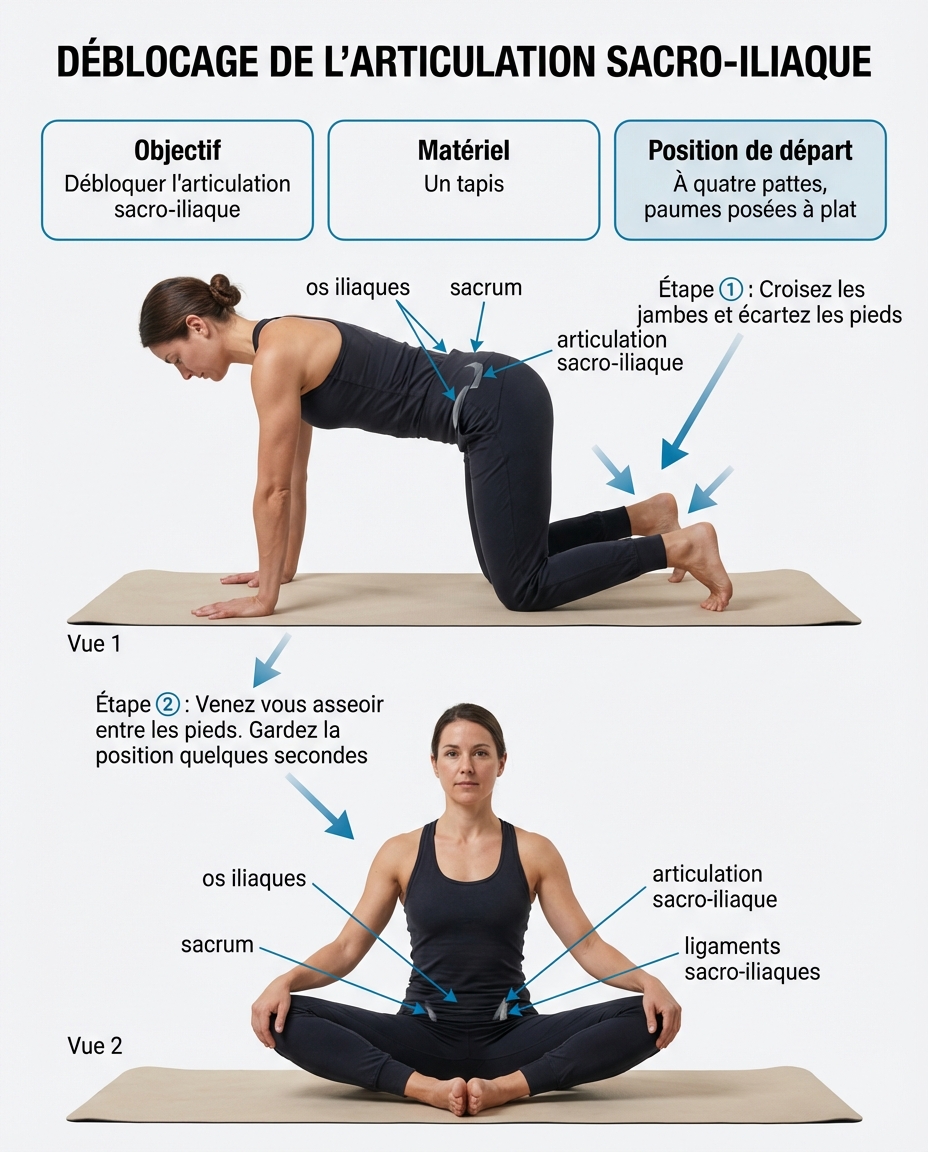
Unlocking technique using knee crossing while supine to mobilize the sacroiliac joint.