Kneecap Mobilization
Manual kneecap mobilization while seated, with up/down and lateral movements for 90 seconds to restore patellar glide and relieve knee pain.
Kneecap Mobilization — Manual Technique
Kneecap mobilization is a fundamental therapeutic technique for treating anterior knee pain. The kneecap (patella) is a sesamoid bone embedded in the quadriceps tendon that glides in the femoral trochlea with every knee flexion and extension. When this glide is disrupted — by adhesions, muscle imbalance or trauma — characteristic pain appears at the front of the knee, worsened by stairs, squatting and prolonged sitting. Manual mobilization restores this glide and is often the first treatment prescribed for patellofemoral syndrome.
Why Mobilize the Kneecap?
Patellofemoral syndrome accounts for 25-40% of all knee pain consultations, particularly in women and athletes. A "stuck" patella — from patellar retinaculum retraction, vastus lateralis hypertonia or vastus medialis weakness — no longer glides correctly in its femoral groove, creating abnormal friction, inflammation and pain. Regular mobilization breaks adhesions, restores joint play and effectively complements quadriceps strengthening.
Anatomy Involved
- Patella — the body's largest sesamoid bone, embedded in the quadriceps tendon, articulating with the femoral trochlea.
- Patellar retinacula — lateral and medial fibrous expansions guiding the patella in its groove. Their retraction is a common cause of patellar subluxation.
- Patellar articular cartilage — the thickest in the human body (up to 7mm), bearing enormous forces during knee movements.
- Infrapatellar bursa — serous bursa between the patellar tendon and tibia, often inflamed in knee pain.
Step-by-Step Instructions
Step 1 — Position
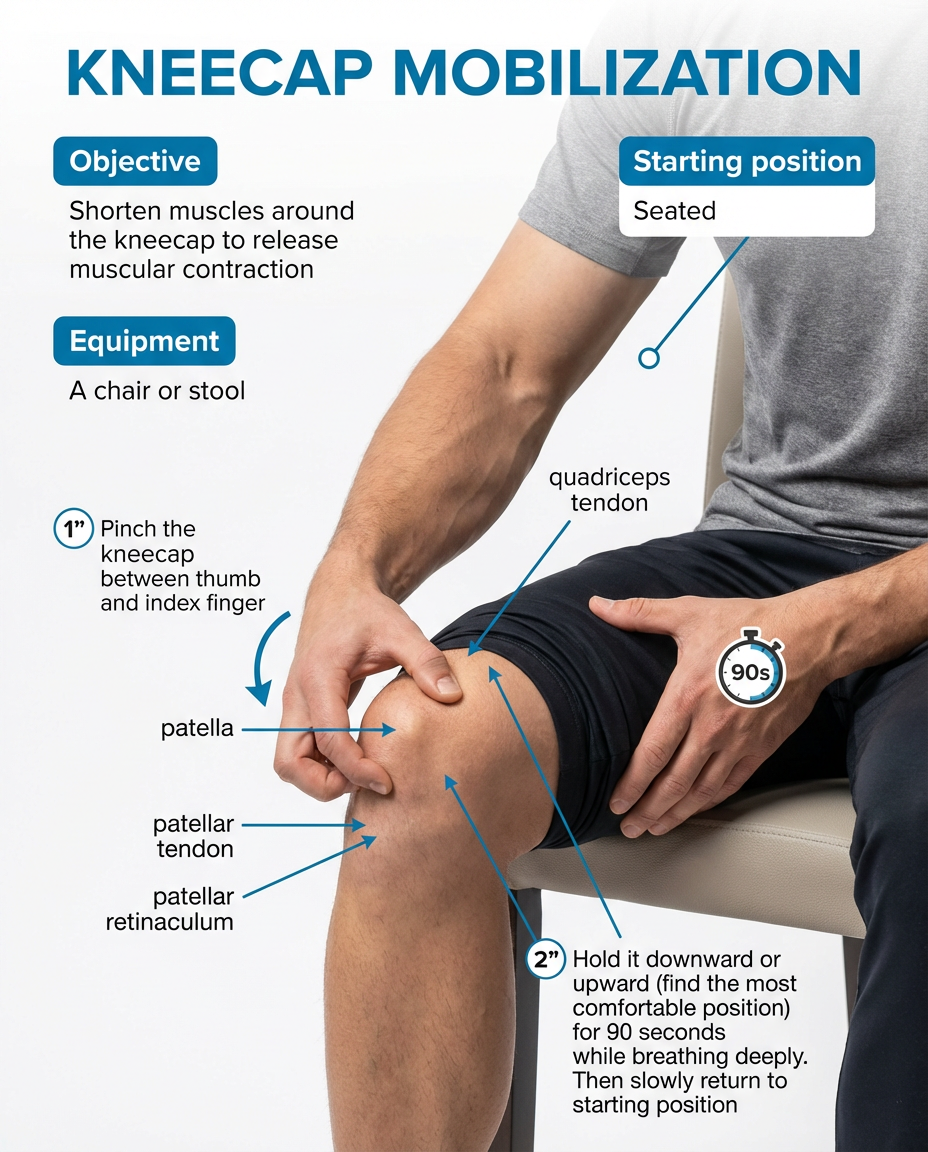
Sit comfortably, leg to mobilize extended in front, knee fully extended. The quadriceps must be completely relaxed — essential for moving the patella. Place a small cushion under the popliteal fossa if the knee does not fully extend.
Step 2 — Grip the Kneecap
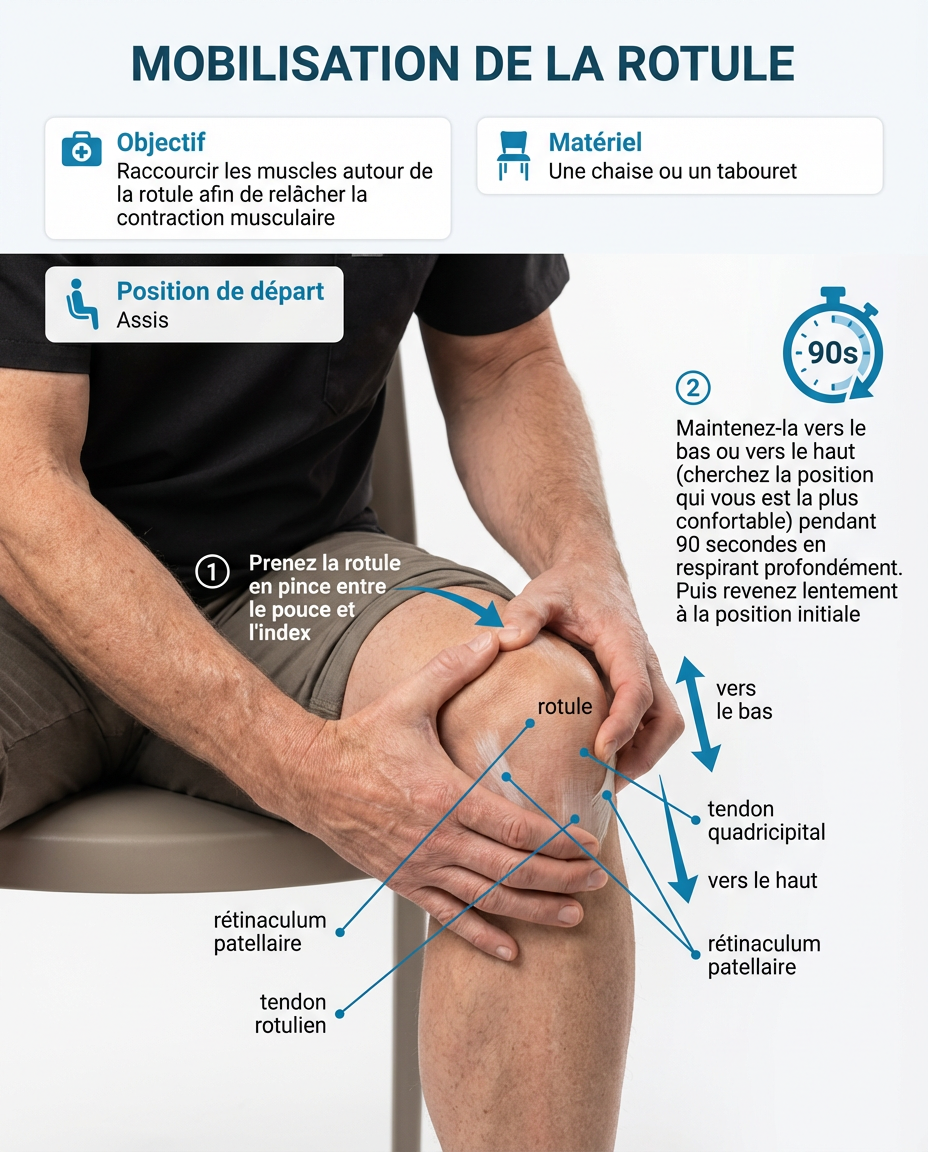
Place the thumb and index finger of each hand on either side of the patella, grasping it firmly but without pain. The grip must be stable for controlled movements.
Step 3 — Directional Mobilizations
Move the patella in four directions:
Up/Down: push the patella upward (cephalic) then downward (caudal), 10 times each.
Lateral/Medial: push the patella outward then inward, 10 times each.
Each movement should be slow, with a 2-3 second hold at end range.
Step 4 — Circular Mobilization
Combine all four directions by making complete circles with the patella, 10 times in each direction. Total mobilization duration is approximately 90 seconds.
Duration and Repetitions
- Total duration: 90 seconds per knee
- Movements: 10 in each direction + 10 circles each way
- Frequency: 2 to 3 times daily
- Best timing: before quadriceps strengthening or before physical activity
Safety Tips
- The quadriceps must be completely relaxed — if contracted, the patella cannot move and you risk forcing unnecessarily.
- Movements should be gentle and progressive — never push the patella forcefully.
- If mobilization causes sharp pain, locking or cracking, stop and consult your practitioner.
- With joint effusion (swollen knee), do not mobilize the patella without medical advice.
Who Benefits from This Exercise?
Kneecap mobilization is recommended for patellofemoral syndrome, patellar chondropathy (cartilage wear), post-operative knee stiffness, or anterior knee pain without precise diagnosis. It is an essential complement to quadriceps strengthening and peri-patellar structure stretching. Athletes, sedentary individuals and knee rehabilitation patients benefit greatly.
Diagrams and illustrations
Kneecap mobilization illustration
Manual kneecap grip with directional movements to restore patellar glide.