Ujjayi (Victorious Breath)
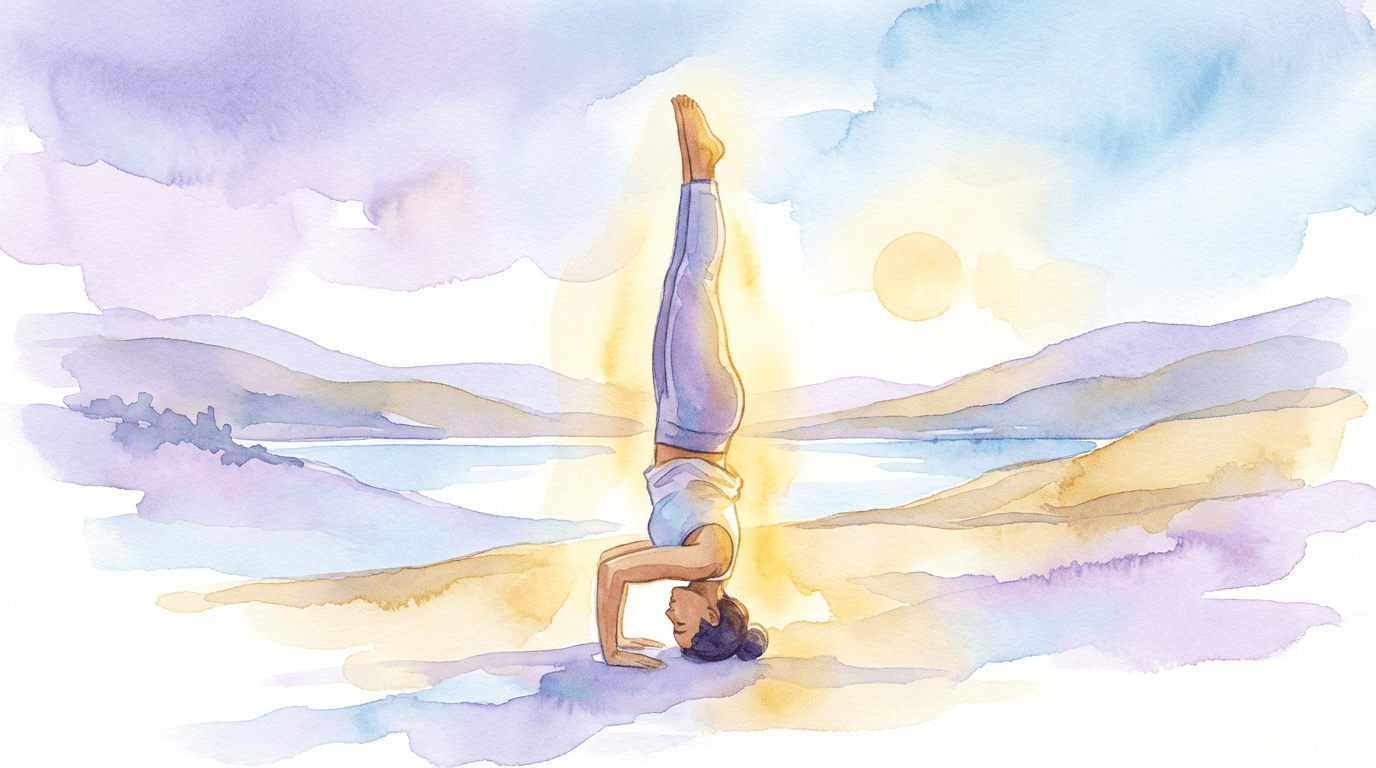
Ujjayi is the sonorous yoga breath produced by slight glottis contraction. Its characteristic ocean-like sound calms the mind, regulates the nervous system, and accompanies asana practice.
38 articles
Ujjayi is the sonorous yoga breath produced by slight glottis contraction. Its characteristic ocean-like sound calms the mind, regulates the nervous system, and accompanies asana practice.
Vipassana ("insight") is one of the oldest Buddhist meditation techniques. It involves observing bodily sensations with equanimity to understand the impermanent nature of all experience.
Zazen is the seated meditation of Zen Buddhism. In lotus posture, facing the wall, the practitioner sits "without goal or gain" — simply being present, letting thoughts pass like clouds in the sky.
Bhramari Pranayama is a yogic breathing technique where exhalation is accompanied by a humming sound like a bee. This internal vibration instantly calms the nervous system, reduces anxiety and promotes deep concentration.
Kapalabhati is an energizing yogic breathing technique of rapid, powerful abdominal exhalations. It purifies the airways, stimulates metabolism, and clarifies the mind.
Tonglen is a Tibetan Buddhist compassion meditation where one visualizes breathing in others' suffering and breathing out well-being and healing. Taught by Pema Chödrön and other Tibetan masters, it transforms self-centeredness into active empathy.
Trataka is a yogic meditation technique of gazing at a candle flame without blinking, then visualizing the afterimage with eyes closed. This purification practice improves concentration, memory and vision, and serves as a powerful gateway to deep meditation.
Ashtanga Yoga is a dynamic and demanding style codified by Sri K. Pattabhi Jois. It follows fixed series of postures linked in a precise order, synchronized with Ujjayi breathing.
Hatha Yoga is the most widespread traditional form of yoga in the West. It combines postures (asanas), breathing exercises (pranayama), and meditation to harmonize body and mind.
Kriya Yoga is an advanced meditative technique transmitted by Lahiri Mahasaya and popularized by Paramahansa Yogananda in 'Autobiography of a Yogi'. Combining pranayama, mudras and meditation, it aims to accelerate spiritual evolution through mastery of vital energy (prana).
Kundalini Yoga, taught in the West by Yogi Bhajan, is the "yoga of awareness." It combines postures, powerful breathwork, mantras, and meditations to awaken the dormant Kundalini energy at the base of the spine.
Sivananda Yoga is a traditional holistic approach based on five principles: exercise, breathing, relaxation, diet, and positive thinking/meditation. Developed by Swami Vishnudevananda, it offers a complete, accessible practice based on 12 basic postures.
Nadi Shodhana is alternate nostril breathing, a fundamental pranayama technique for balancing energies and calming the nervous system. It harmonizes brain hemispheres and reduces anxiety.
Auriculotherapy, codified by Dr. Paul Nogier, uses the ear auricle as a somatotopic microsystem to diagnose and treat pathologies throughout the body by stimulating auricular reflex points.
Sa-Am acupuncture is a sophisticated Korean system using exclusively the Five Element Shu-antique points, combining tonification and dispersion with only 4 needles per treatment to rebalance Zang-Fu organs.
Toyohari is an ultra-gentle Japanese acupuncture style, often without skin penetration, using gold and silver needles held at skin contact to harmonize Qi according to classical meridian tradition.
Jiao Shunfa's scalp acupuncture is a system of stimulating linear scalp zones corresponding to cerebral cortical areas, particularly effective for neurological rehabilitation.
Traditional body acupuncture is the foundational form of Chinese acupuncture, based on stimulating precise points along meridians to restore Qi circulation and rebalance the body's energy.