Gua Sha (Therapeutic Scraping)
Gua Sha is a Chinese therapeutic scraping technique using a smooth-edged tool, producing controlled petechiae (Sha) that indicate Blood stagnation release and relieve pain and inflammation.
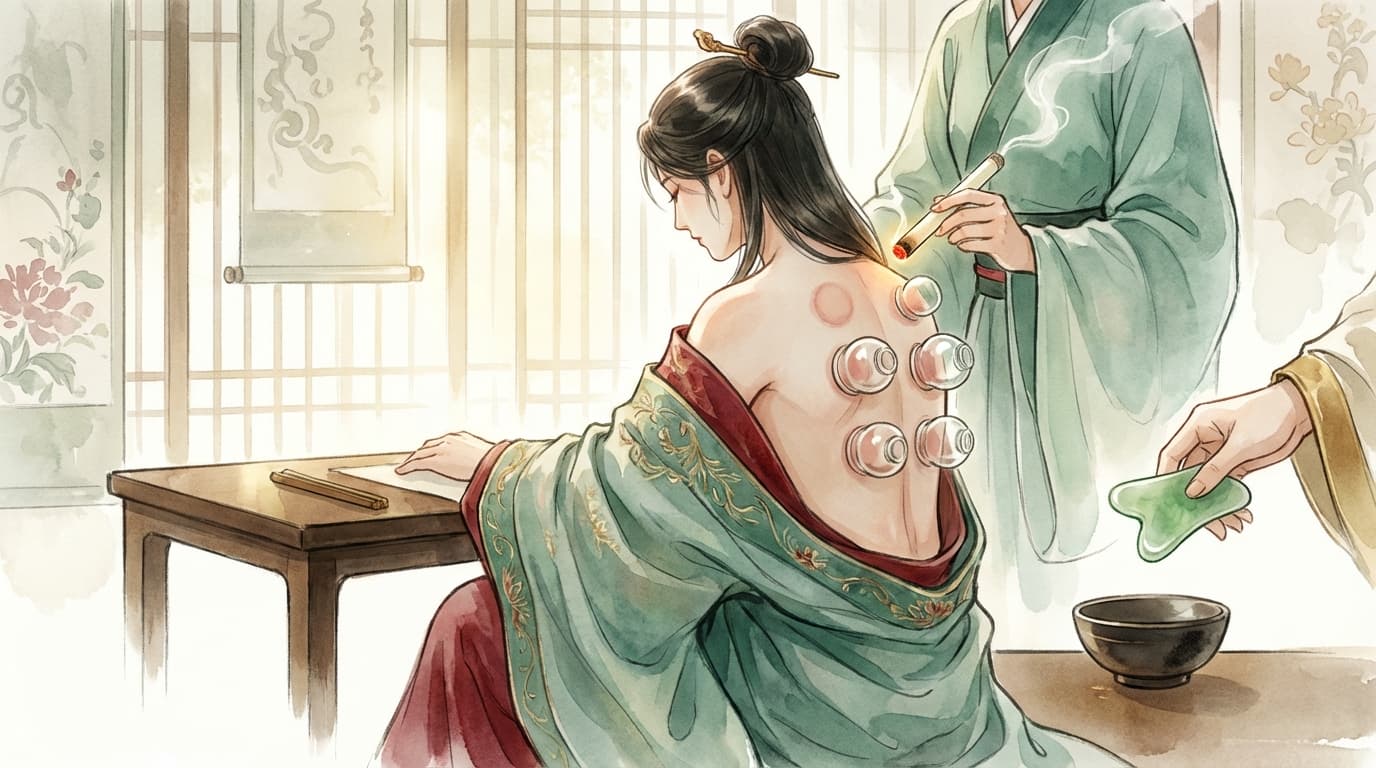
Gua Sha is a Chinese therapeutic scraping technique using a smooth-edged tool, producing controlled petechiae (Sha) that indicate Blood stagnation release and relieve pain and inflammation.
Presentation
Gua Sha (刮痧, guā shā — 'scrape the Sha') is a traditional Chinese medicine technique. 'Sha' refers to reddish petechiae appearing on the skin surface after scraping, indicating Blood stagnation in subcutaneous tissues. The technique involves repeated pressure strokes with a smooth-edged tool on lubricated skin along meridians or muscle bands.
Modern research, notably by Arya Nielsen (Beth Israel Medical Center, New York), has demonstrated significant anti-inflammatory effects through increased heme oxygenase-1 (HO-1) and vasodilation via nitric oxide (NO) release.
Core Principles
- Blood stagnation mobilization: scraping breaks micro-adhesions and blood stagnation in superficial fascia.
- Anti-inflammatory effect: Sha appearance triggers local immune response with HO-1 increase.
- Diagnostic Sha reading: bright red = recent stagnation; dark purple = old stagnation; brown-black = accumulated toxins; no Sha = no stagnation.
Main Indications
- Muscle pain and tension
- Early cold/flu syndrome
- Tension headaches
- Chronic neck and shoulder pain
- Respiratory disorders
- Fever without perspiration
- Mastitis
- Chronic fatigue syndrome
Session Overview
Area is lubricated with oil. Tool applied at 30–45° angle with firm unidirectional strokes. Sha appears in 30 seconds to 2 minutes. Marks disappear in 2–5 days. Session: 15–30 minutes. Patient should stay warm afterward.
Contraindications
- Damaged, infected or irradiated skin
- Sunburn
- Varicose or thrombosed areas
- Coagulation disorders or anticoagulants
- Skin tumors
- Pregnancy: abdomen and lumbar area
- Extreme capillary fragility
Medical Disclaimer
The information presented in this article is provided for educational and informational purposes only. It does not constitute medical advice, diagnosis, or treatment prescription. If in doubt, always consult your physician or a qualified healthcare professional. The techniques described do not replace conventional medical treatment.