Pelvic Floor Stretch
This seated wide-leg forward fold targets the pelvic floor and adductors to release deep pelvic tension.
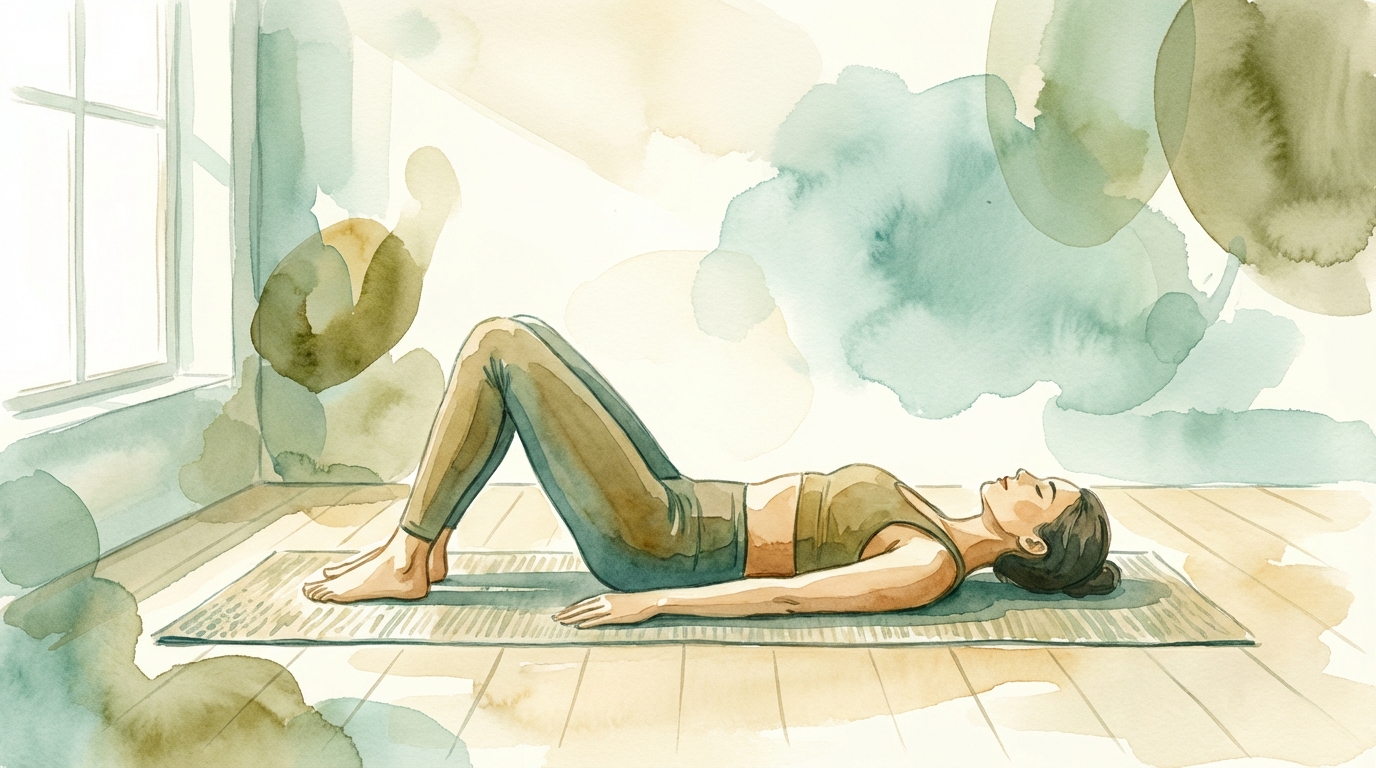
Pelvic Floor Stretch — Releasing Deep Tension
The pelvic floor is a group of deep muscles forming a hammock between the pubic bone and the coccyx. Often neglected, it plays an essential role in supporting pelvic organs, continence, and pelvic stability. A hypertonic (overly contracted) pelvic floor can cause lower back, pelvic, and perineal pain. This gentle stretch helps release these deep muscles while loosening the adductors.
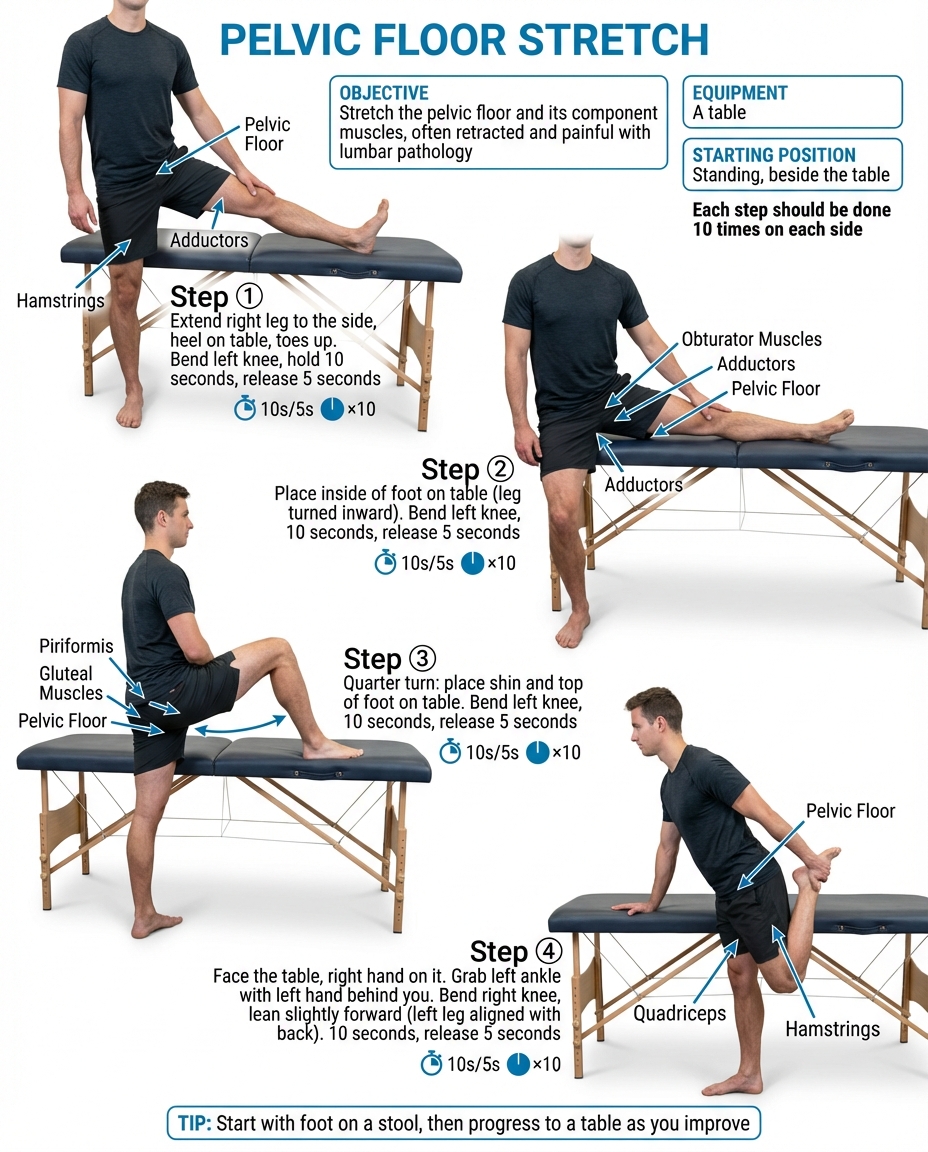
Why Stretch the Pelvic Floor?
There is much talk about strengthening the pelvic floor (Kegel exercises), but stretching is equally important. A permanently contracted pelvic floor can cause pain during intercourse, difficulty urinating, deep buttock pain, and contribute to lower back pain. The seated wide-leg forward fold gently opens this area and promotes deep muscular relaxation.
Anatomy Involved
- Pelvic floor muscles (levator ani, coccygeus) — a group of muscles forming the pelvic diaphragm, directly stretched.
- Adductor muscles (adductor longus, brevis, magnus, and gracilis) — powerfully stretched by the leg spread.
- Hamstring muscles — stretched by the forward fold.
- Lower back muscles — released and lengthened by the trunk flexion.
- Obturator internus fascia — a deep membrane connected to the pelvic floor, mobilized during the stretch.
Step-by-Step Instructions
Step 1 — Seated Wide-Leg Position
Sit on a mat with legs extended and spread in a V shape (as wide as comfortable — do not force the spread). Feet are flexed (toes toward the ceiling). Back is straight, sit bones firmly grounded. If needed, sit on a cushion to elevate the pelvis.
Step 2 — Lengthen the Spine
Inhale deeply and grow tall, lengthening the spine toward the ceiling. Place your hands on the floor in front of you, between your legs. Shoulders away from the ears, gaze straight ahead.
Step 3 — Forward Fold
As you exhale, slowly lean forward from the hips. Keep your back straight as long as possible, then let it round naturally. Hands slide forward on the floor. Go as far as comfortable.
Step 4 — Hold with Conscious Breathing
Hold the position for 30 to 60 seconds. Focus your breath in the pelvis: with each inhale, imagine the pelvic floor gently opening, like a flower; with each exhale, let gravity take you further into the stretch. Deep breathing is essential — it facilitates pelvic floor release.
Duration and Repetitions
- Hold: 30 to 60 seconds
- Sets: 2 to 3
- Frequency: 3 to 5 times per week
Safety Tips
- Never force the leg spread — go to your comfortable limit and no further.
- Initiate the movement from the hips, not by rounding the back from the start.
- If you feel excessive tension behind the knees, bend them slightly.
- Use props (blocks, cushions) if needed.
- Avoid this exercise with acute perineal pain or after recent childbirth (wait for pelvic rehabilitation).
- If you have a diagnosed prolapse, consult your practitioner before practicing.
Who Benefits from This Exercise?
This stretch is recommended for people with pelvic tension, postpartum women (after pelvic rehabilitation), athletes who cycle or ride horses, people with a hypertonic pelvic floor, and anyone wanting to improve hip flexibility and release deep pelvic tension.
Diagrams and illustrations
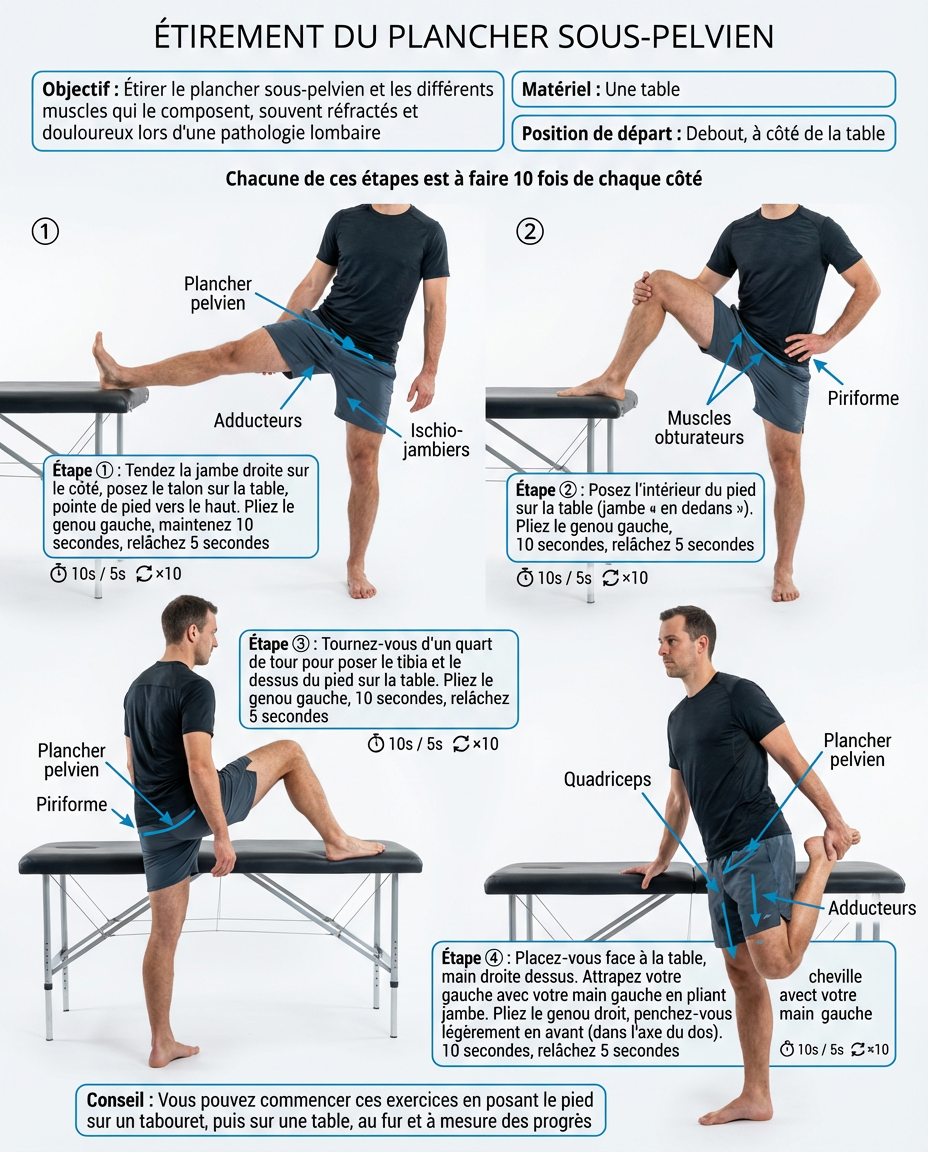
Pelvic floor stretch illustration
Seated wide-leg position with forward fold to stretch the pelvic floor.