Forward Fold Lotus
The forward fold lotus stretch loosens the adductors and lower back muscles through a gentle forward trunk flexion.
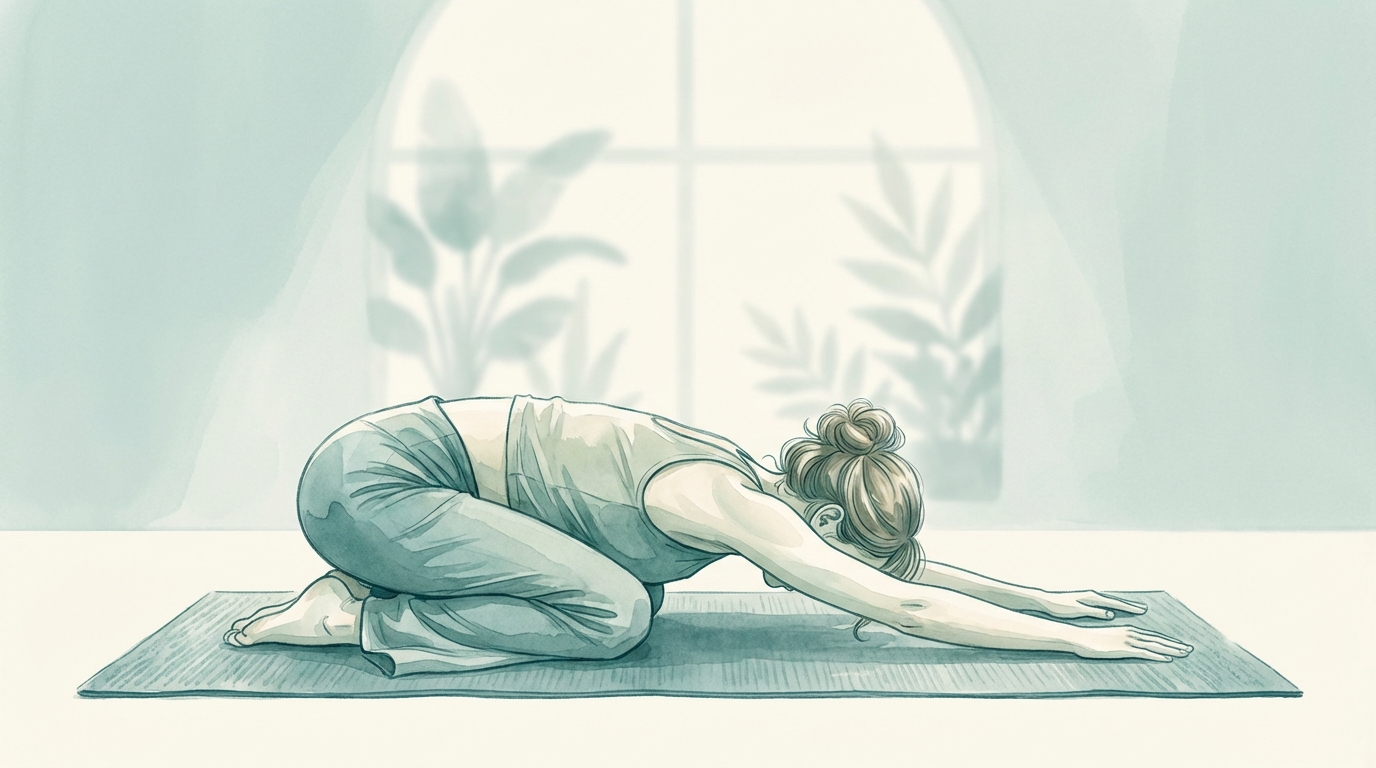
Forward Fold Lotus — Hip and Back Flexibility
This posture combines the hip opening of the lotus position with a forward trunk flexion. The result is a deep stretch of the adductors (inner thigh muscles), lower back muscles, and the entire posterior chain. It is a contemplative posture that invites release and introspection, often practiced at the end of a yoga or stretching session.
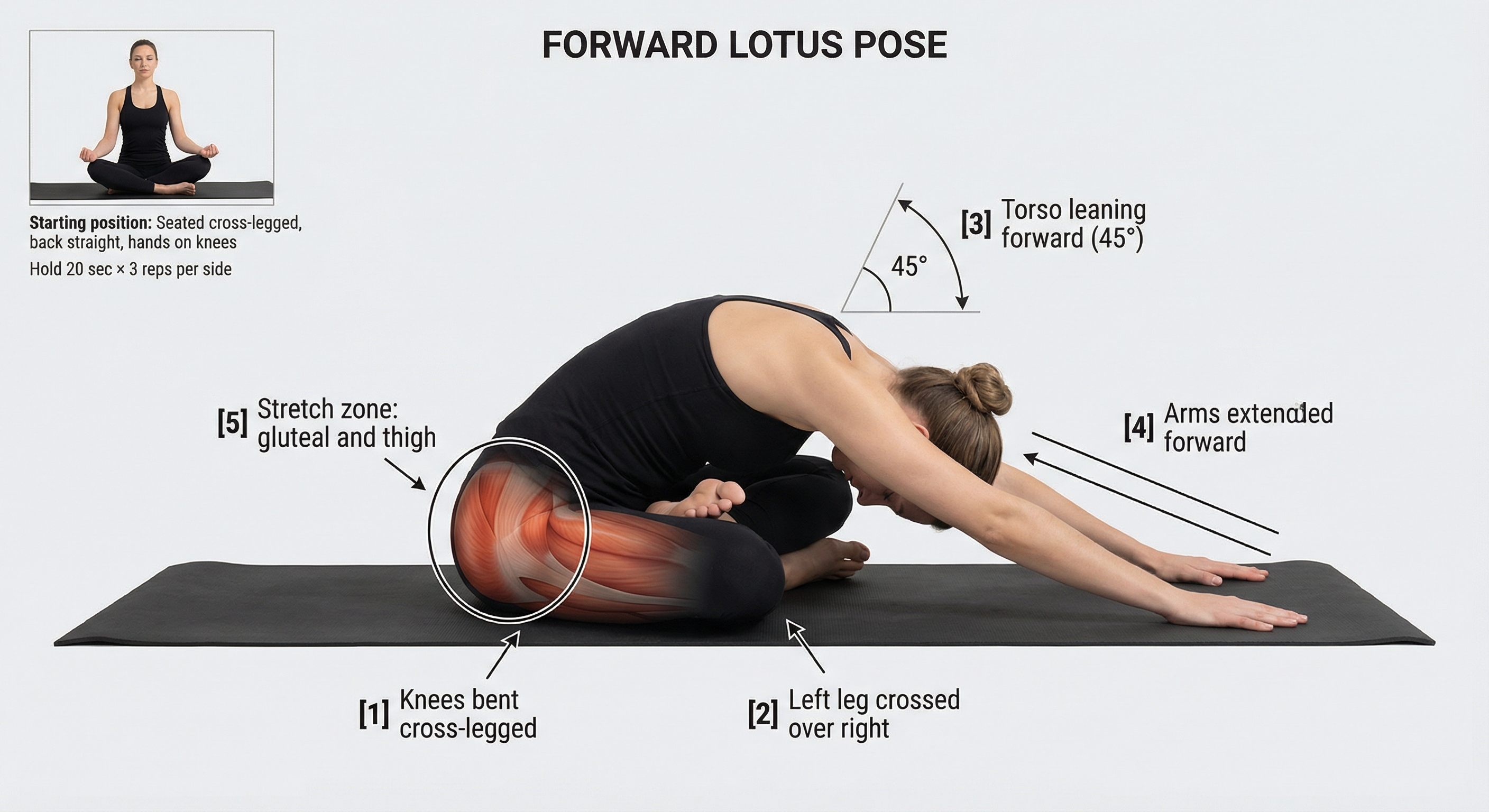
Why Practice This Stretch?
The inner thighs and lower back muscles are among the most neglected areas when it comes to stretching. Shortened adductors pull on the pelvis and contribute to lower back pain and posture problems. This pose corrects this imbalance by simultaneously stretching both areas, while promoting deep release through gravity.
Anatomy Involved
- Adductor muscles (adductor longus, brevis, magnus, and gracilis) — inner thigh muscles, stretched by the hip opening.
- Lower back muscles (erector spinae, quadratus lumborum) — stretched by the forward fold.
- Hamstring muscles — mildly engaged depending on leg position.
- Thoracolumbar fascia — released by the prolonged flexion.
- Sacroiliac joints — gently mobilized.
Step-by-Step Instructions
Step 1 — Seated Lotus Position
Sit on a mat with legs crossed in lotus or half-lotus position. If full lotus is uncomfortable, opt for a simple cross-legged position (Sukhasana). Your sit bones should be firmly grounded. If needed, sit on a cushion to elevate your pelvis.
Step 2 — Lengthen the Spine
Inhale deeply and lengthen your spine toward the ceiling, as if a string were pulling you up from the crown of your head. Shoulders are relaxed, away from the ears. Hands rest on your knees or in front of you.
Step 3 — Forward Fold
As you exhale, slowly lean forward from the hips (not the back). Keep your back as straight as possible in the first few centimeters of the movement. Then let the back round naturally. Hands slide forward on the floor.
Step 4 — Hold and Release
Go as far forward as comfortable. Rest your forearms on the floor if possible, or even your forehead. Hold for 30 to 90 seconds. Breathe deeply into your back — feel your ribs expand with each inhale. Let gravity deepen the stretch with each exhale.
Duration and Repetitions
- Hold: 30 to 90 seconds
- Sets: 2 to 3 (switching leg cross)
- Frequency: daily or 3 to 5 times per week
Safety Tips
- Initiate the movement from the hips, not by rounding the back from the start.
- If your knees are above your hips when seated, use a cushion to elevate the pelvis.
- Do not force your knees — the lotus position is not for everyone. Half-lotus or simple cross-legged are perfectly valid.
- If you feel knee pain, return to a simpler position.
- Avoid this exercise with a recent knee or hip injury.
Who Benefits from This Exercise?
This stretch is recommended for people wanting to improve hip flexibility, yoga and meditation practitioners, people with chronic lower back tension, and anyone seeking a moment of relaxation and centering. It suits intermediate and advanced levels.
Diagrams and illustrations
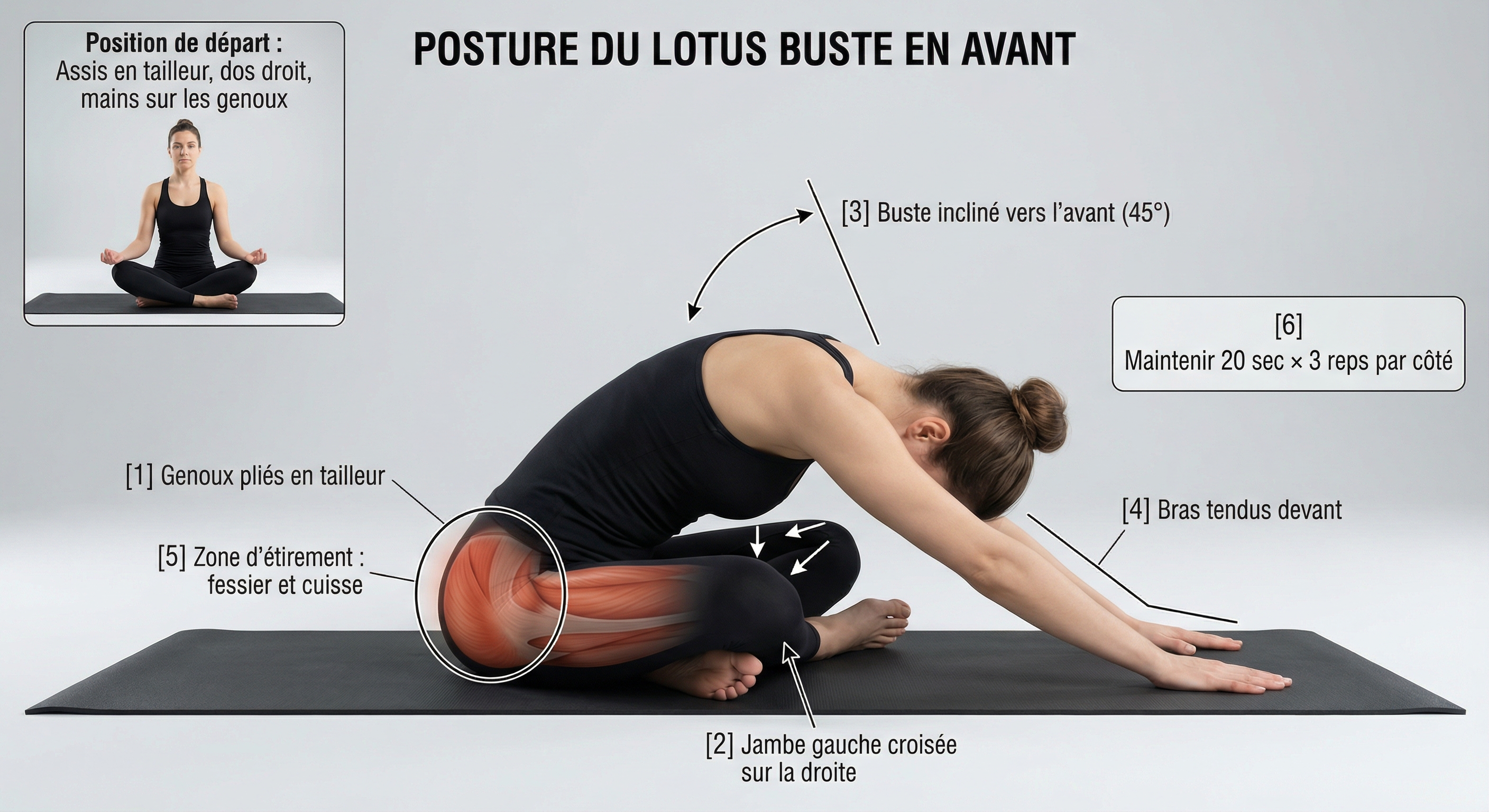
Forward fold lotus illustration
Seated lotus position with forward trunk flexion to stretch hips and back.