Standing Shoulder & Pectoral Stretch
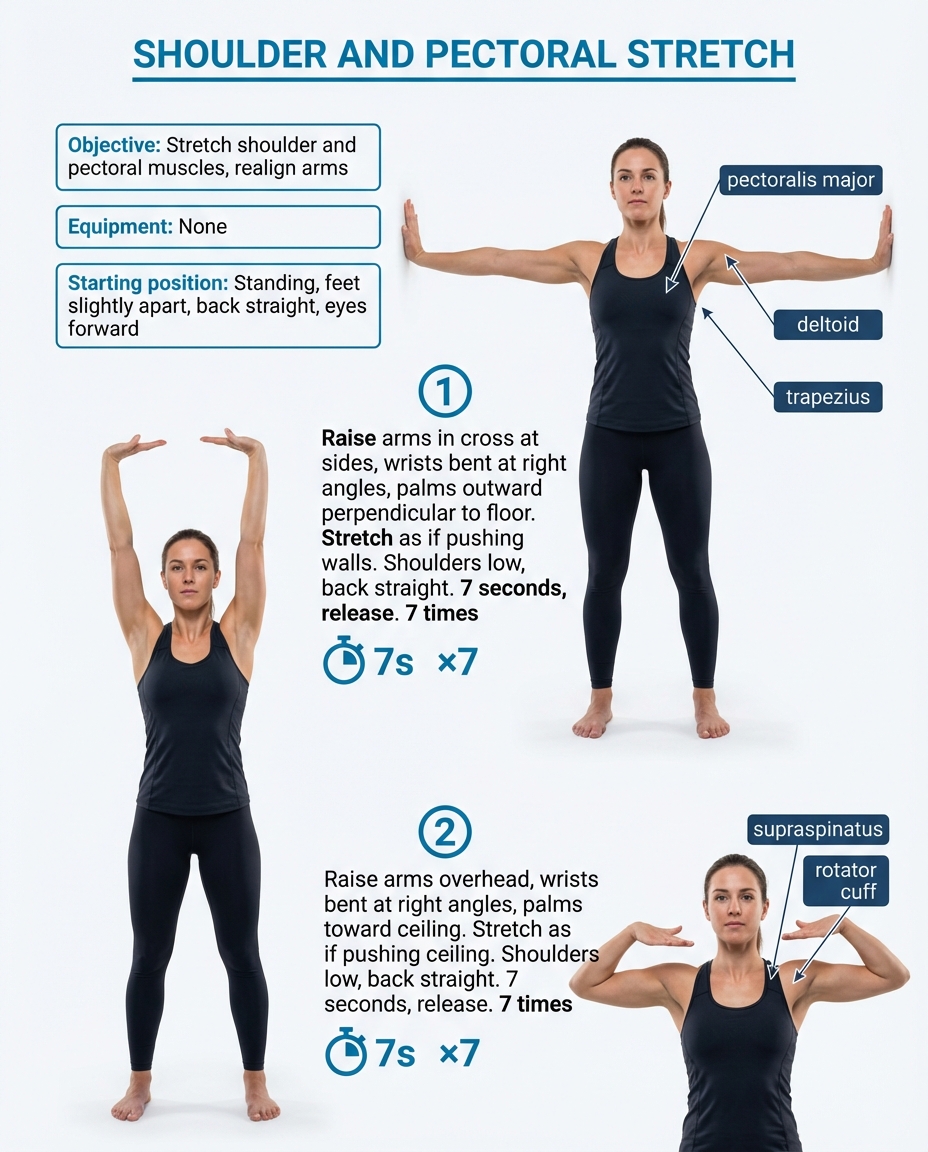
Complete standing shoulder and pectoral stretch with arms crossed and overhead, 7-second holds repeated 7 times, targeting the pectoralis major, deltoid and rotator cuff.
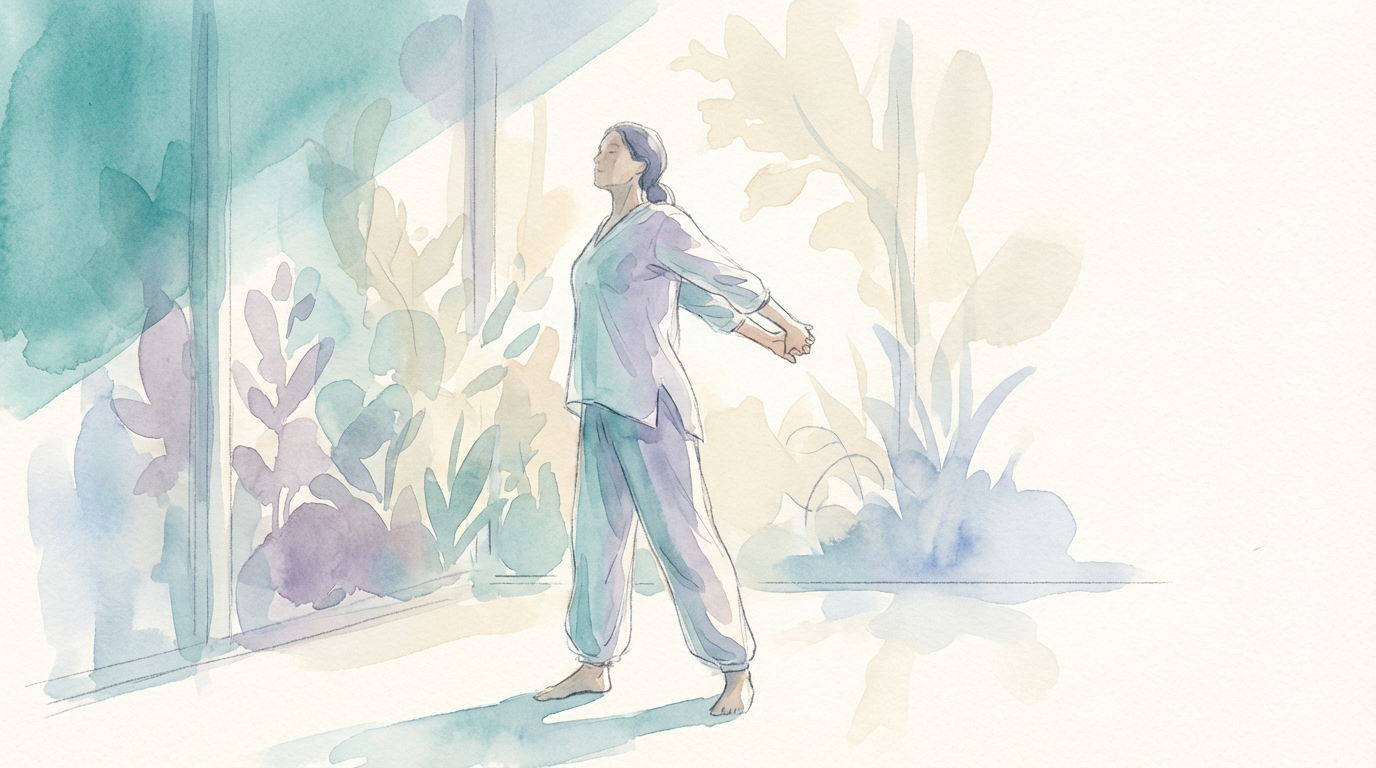
Standing Shoulder & Pectoral Stretch — Complete Program
This exercise applies the fundamental principles of anterior shoulder chain stretching, offering two complementary positions targeting the entire pectoral and scapular muscle complex. The first position, arms crossed, opens the rib cage and stretches the horizontal fibers of the pectoralis major. The second, arms overhead, lengthens the upper fibers and engages the acromioclavicular joint. Together, these two positions cover the entire shoulder girdle in just a few minutes.
Therapeutic Benefits
Pectoral retraction is one of the main causes of shoulder protraction posture, a position that compresses the neurovascular structures of the thoracic outlet and decreases respiratory capacity. By restoring pectoral muscle length and rebalancing scapular musculature, this stretch helps reduce shoulder pain, improve thoracic breathing and prevent thoracic outlet syndromes.
Anatomy Involved
- Pectoralis major — its clavicular, sternal and abdominal bundles are progressively engaged by both positions.
- Deltoid — the anterior head is stretched in the arms-crossed position, while all three heads participate in the arms-raised position.
- Trapezius — upper and middle fibers activate to maintain scapular retraction during the stretch.
- Infraspinatus — external rotator of the cuff, stretched in internal rotation during arm crossing.
- Rotator cuff — all four muscles engage to stabilize the shoulder in the extreme stretch positions.
Step-by-Step Instructions
Position 1 — Arms Crossed
Stand with feet hip-width apart, spine neutral. Open your arms horizontally, palms up, thumbs pointing back. Actively squeeze your shoulder blades by bringing the scapulae together. Push your chest forward while keeping your chin tucked and gaze straight ahead. Hold for 7 seconds, breathing freely. Release for 3 seconds. Repeat 7 times.
Position 2 — Arms Overhead
From standing, raise both arms overhead, elbows slightly bent, palms facing each other. Grow tall by stretching your arms toward the ceiling while firmly grounding your feet. The ribs should not flare forward: slightly engage your abdominals to keep the trunk aligned. Hold 7 seconds, release 3 seconds. Repeat 7 times.
Duration and Repetitions
- Hold: 7 seconds per position
- Rest: 3 seconds between repetitions
- Repetitions: 7 for each position
- Frequency: 2 to 3 times daily
- Total duration: approximately 5 to 6 minutes
Safety Tips
- Keep the cervical spine neutral: do not tilt the head back in the arms-raised position.
- If you feel pinching in the shoulder when arms are up, reduce the elevation angle.
- People with joint hypermobility should avoid locking elbows in full extension.
- If you have a history of shoulder dislocation, perform movements with reduced range and under supervision.
Who Benefits from This Exercise?
This exercise is accessible to everyone and requires no equipment. It is particularly suited for screen workers, professional drivers, students and anyone suffering from shoulder girdle tension. It works as a warm-up before sports or a recovery routine, and integrates easily into work micro-breaks.
Diagrams and illustrations
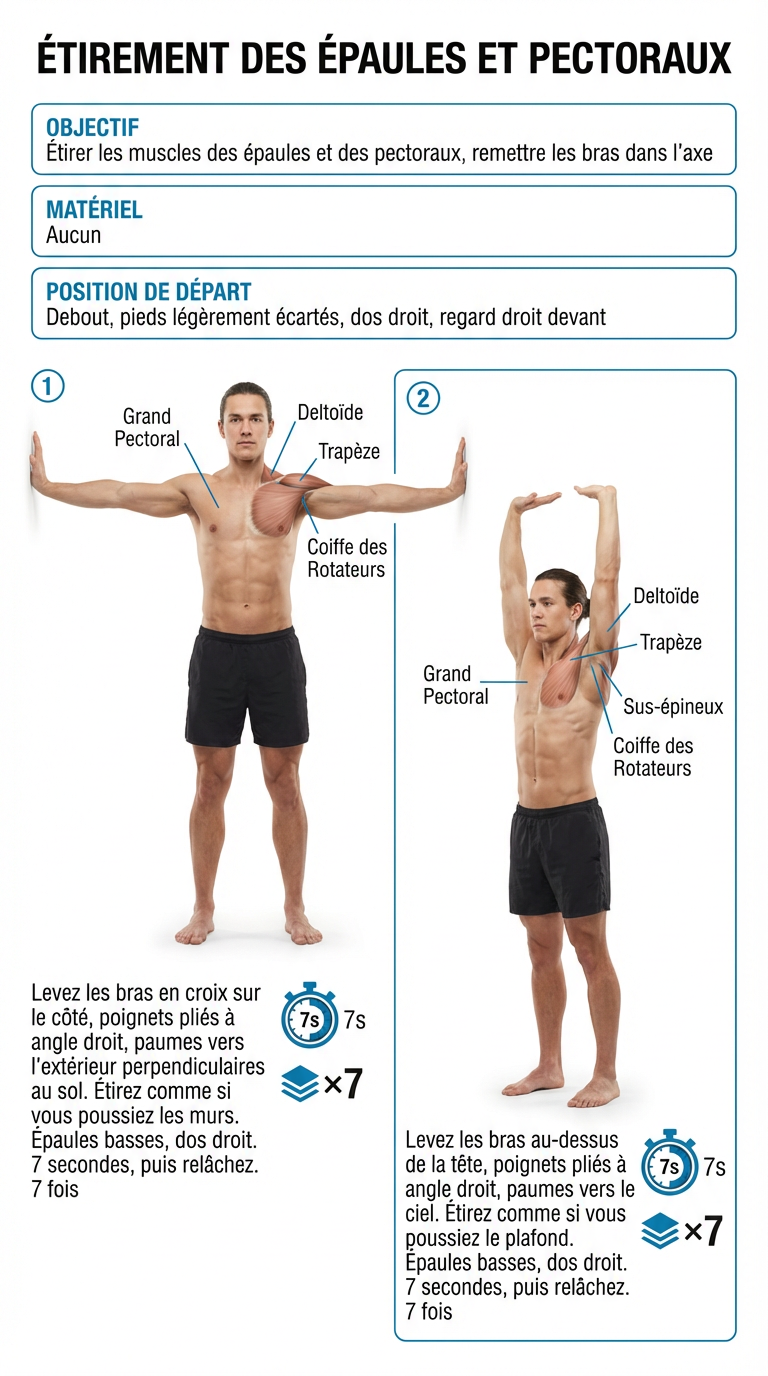
Standing shoulder and pectoral stretch illustration
Standing position with arms crossed and overhead to stretch shoulders and pectorals.