Shoulder Mobilization
Two gentle shoulder mobilization exercises in Y-arm and V-arm positions, with slow controlled movements to restore joint range of motion.
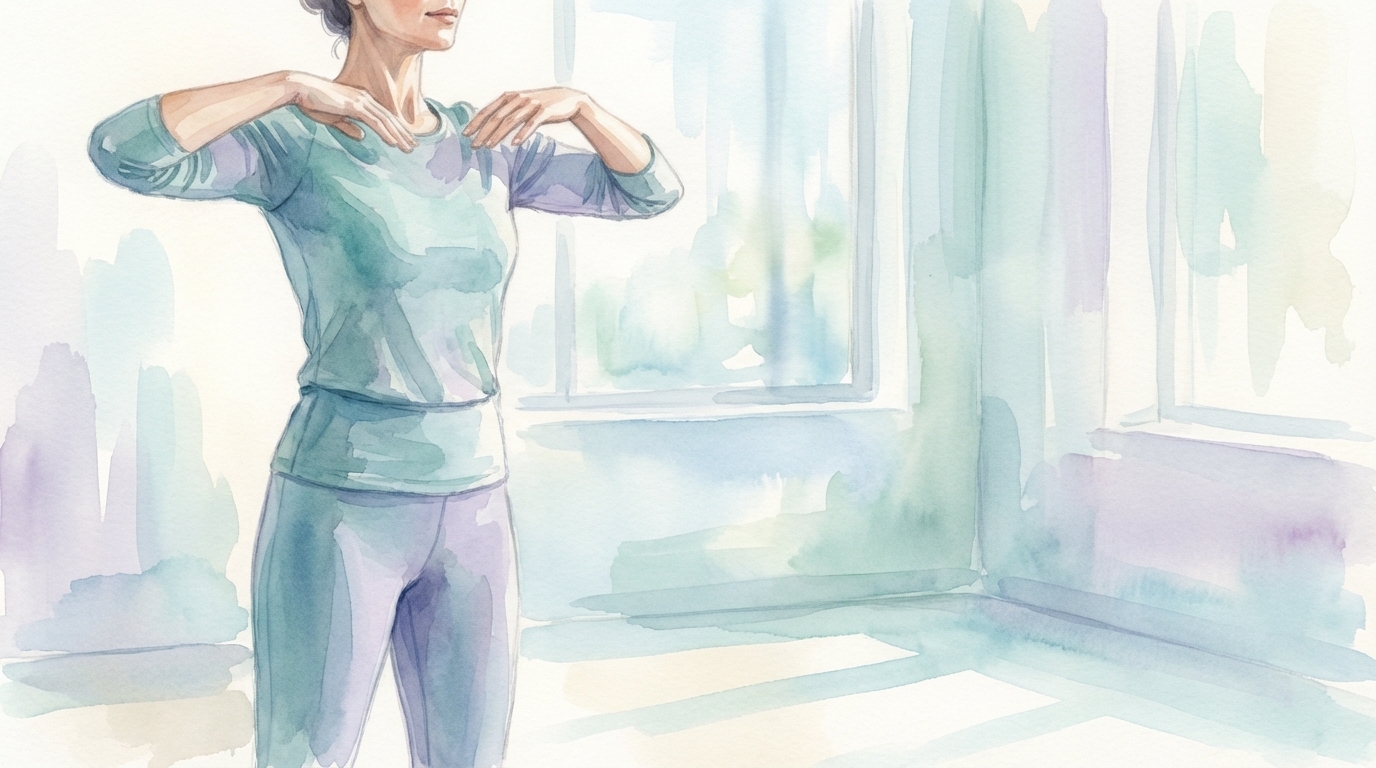
Shoulder Mobilization — Y and V Positions
Shoulder mobilization is a fundamental pillar of joint rehabilitation and stiffness prevention. Unlike a simple static stretch, mobilization involves active, slow movements that nourish cartilage, stimulate synovial fluid production and progressively restore the natural range of motion of the glenohumeral joint. These two Y and V exercises specifically target the deltoid and trapezius fibers while activating the deep stabilizing muscles of the rotator cuff.
Why Mobilize the Shoulders?
The shoulder is the most mobile joint in the human body, but this exceptional mobility also makes it vulnerable. Adhesive capsulitis (frozen shoulder), tendinopathies and subacromial impingement are common conditions, often linked to immobilization or a sedentary lifestyle. Regular mobilization prevents these disorders by maintaining capsular flexibility and improving neuromuscular coordination of the shoulder girdle.
Anatomy Involved
- Supraspinatus — initiates arm abduction in the first 15 degrees and stabilizes the humeral head. Most frequently injured rotator cuff muscle.
- Middle deltoid — takes over from the supraspinatus for abduction beyond 15°, giving the shoulder its characteristic rounded shape.
- Trapezius — large diamond-shaped muscle covering the upper back; its upper, middle and lower fibers coordinate scapular movements with arm motion.
Step-by-Step Instructions
Exercise 1 — Y-Arms
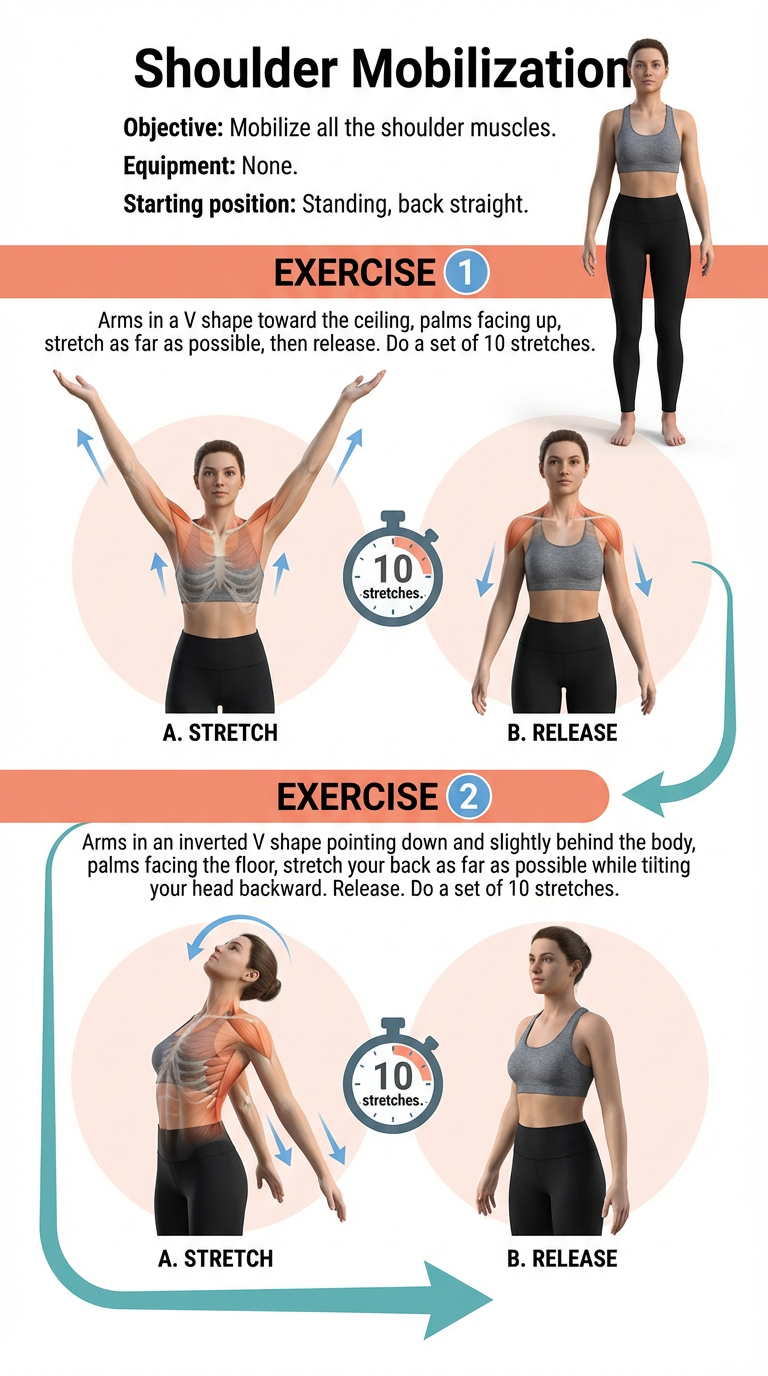
Stand with feet shoulder-width apart, arms at your sides. Slowly raise both arms forward and upward at a diagonal to form a Y with your body. Thumbs point toward the ceiling. Rise to your maximum comfortable range, then slowly lower. Perform the movement fluidly, synchronized with your breathing: inhale going up, exhale coming down. Repeat 10 times.
Exercise 2 — V-Arms
From the same starting position, raise your arms to the sides forming a V, thumbs up. The movement is more lateral than the Y, engaging the middle deltoid and supraspinatus more. Rise slowly, hold 2 seconds at the top, then lower with control. Keep your shoulders low throughout. Repeat 10 times.
Duration and Repetitions
- Repetitions: 10 per exercise
- Sets: 2 to 3
- Tempo: 3 seconds up, 2-second hold, 3 seconds down
- Frequency: daily, ideally in the morning
- Total duration: approximately 8 minutes
Safety Tips
- Slowness is essential: overly fast movements can irritate already weakened tendons.
- Never raise beyond the pain threshold. If discomfort appears before horizontal, limit your range to that zone.
- Avoid shrugging your shoulders toward your ears; keep them lowered and stabilized.
- If diagnosed with subacromial impingement, perform the movement in external rotation (thumbs up) to clear the subacromial space.
Who Benefits from This Exercise?
These mobilizations are ideal for anyone in shoulder rehabilitation, post-immobilization, or simply concerned about maintaining joint health. They suit elderly individuals, recovering athletes and sedentary workers wanting to prevent joint stiffness. They can be integrated into a warm-up or active recovery program.
Diagrams and illustrations
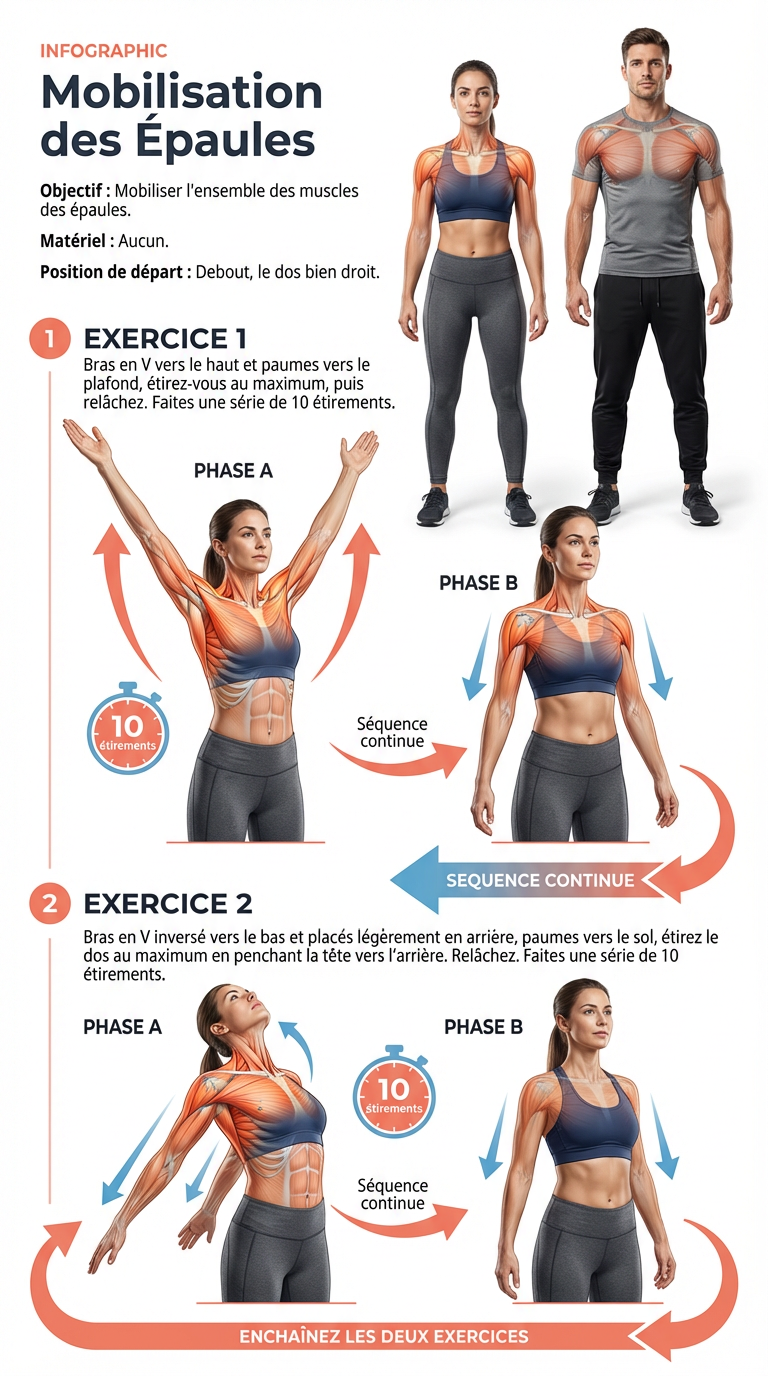
Shoulder mobilization illustration
Y-arm and V-arm movements to gently mobilize the shoulders.