Deep Squat
Deep squat with heels on the floor, 30 to 90-second hold to mobilize hips, knees and ankles simultaneously.
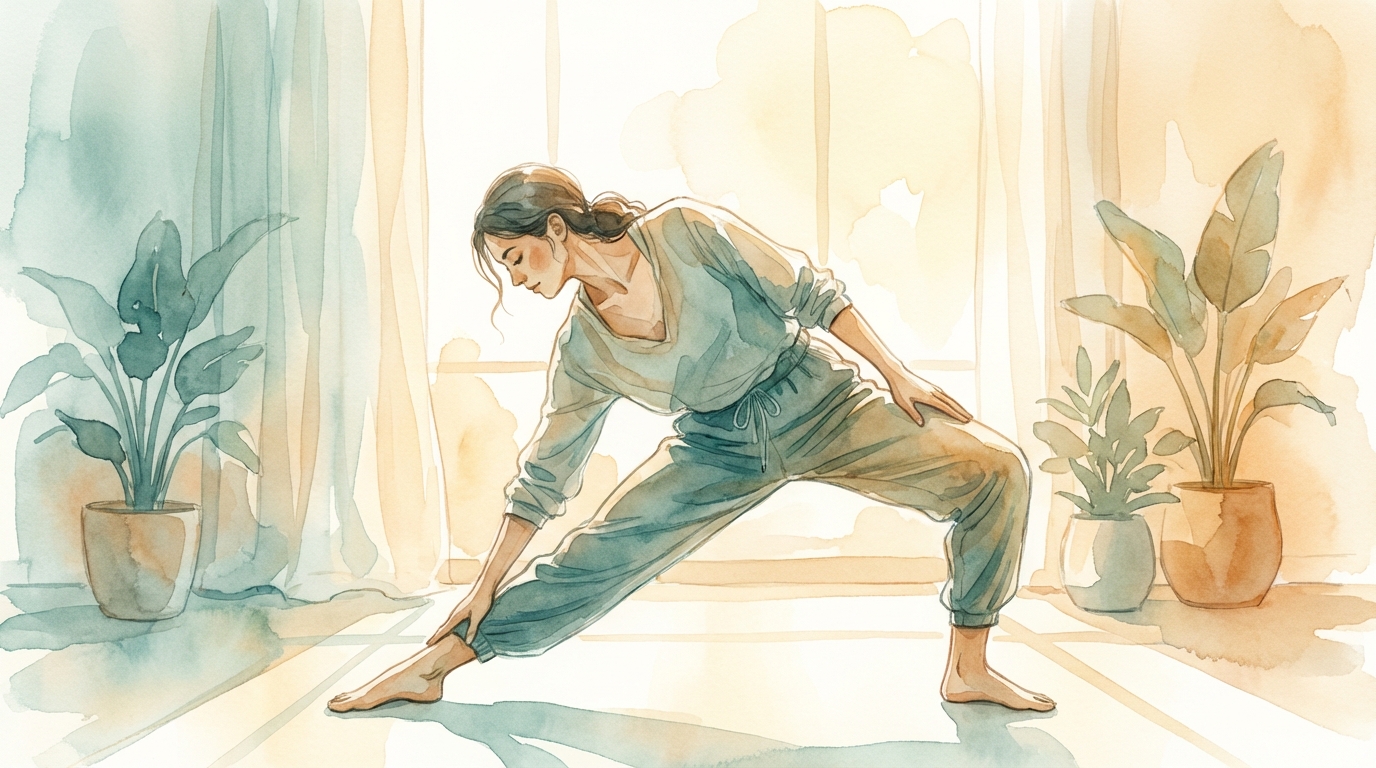
Deep Squat — Global Mobilization
The deep squat is the most natural resting position for humans, practiced daily by billions of people in non-Western cultures. This posture simultaneously mobilizes three major joints — hips, knees and ankles — and stretches the posterior and lateral muscle chains of the lower limbs. Loss of squatting ability is one of the most reliable markers of functional aging, and its restoration is a central goal of modern rehabilitation.
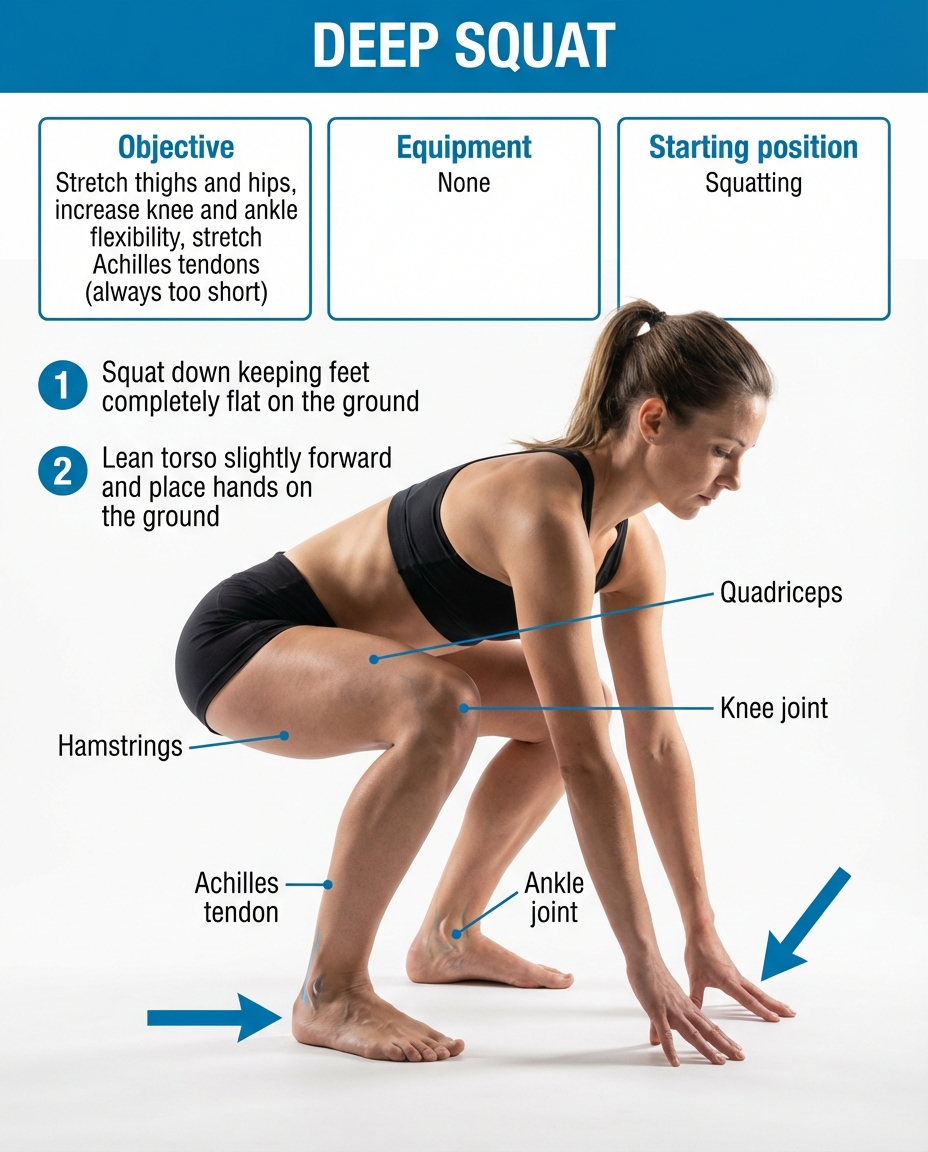
Why Practice the Deep Squat?
Western lifestyle, centered on the chair, has progressively eliminated squatting from our habits. This loss has profound consequences: ankle and hip stiffness, hamstring and calf shortening, quadriceps weakening in deep ranges, and pelvic floor deconditioning. The deep squat restores all these capacities in a single exercise, improves digestion, strengthens the lower body and contributes to joint health through synovial fluid stimulation in all three engaged joints.
Anatomy Involved
- Quadriceps — work eccentrically to control descent and isometrically to hold the position.
- Gluteus maximus — stretched in maximum hip flexion, ensuring pelvic stability in the bottom position.
- Hamstrings — stretched by deep knee flexion combined with hip flexion.
- Soleus and gastrocnemius — stretched by maximum ankle dorsiflexion, often the limiting factor.
- Adductors — contribute to knee stabilization in the open position.
Step-by-Step Instructions
Step 1 — Starting Position
Stand with feet slightly wider than shoulder-width, toes turned slightly outward (about 15 to 30°). Arms are in front for balance.
Step 2 — Descent
Slowly lower by bending knees and hips simultaneously, as if sitting on a very low stool. Knees follow the direction of the toes. Back stays as straight as possible. Go as low as possible while keeping heels on the floor.
Step 3 — Bottom Position
In the bottom position, thighs are ideally below horizontal, pelvis drops below the knees. Elbows can press on the insides of the knees to open the hips further. Keep the chest open and gaze forward.
Step 4 — Hold
Hold for 30 to 90 seconds, breathing calmly. If heels lift, place a wedge or thin book under them to compensate for ankle flexibility deficit. Perform 3 to 5 sets.
Duration and Repetitions
- Hold: 30 to 90 seconds
- Sets: 3 to 5
- Frequency: daily, ideally in the morning
- Total duration: approximately 8 minutes
Safety Tips
- Knees must always stay aligned with the toes — do not let them collapse inward (valgus).
- If you cannot descend fully with heels on the floor, use a wedge under the heels and work progressively.
- Hold onto a stable support (door handle, bar) if balance is insufficient.
- People with meniscal or ligamentous knee pathology should limit depth and consult their practitioner.
Who Benefits from This Exercise?
The deep squat is recommended for anyone wanting to improve overall lower limb mobility. It is particularly beneficial for weightlifters, CrossFit practitioners, martial artists, dancers, and anyone wanting to maintain optimal functional capacity with age. It is a fundamental exercise that should ideally be part of everyone's daily routine.
Diagrams and illustrations
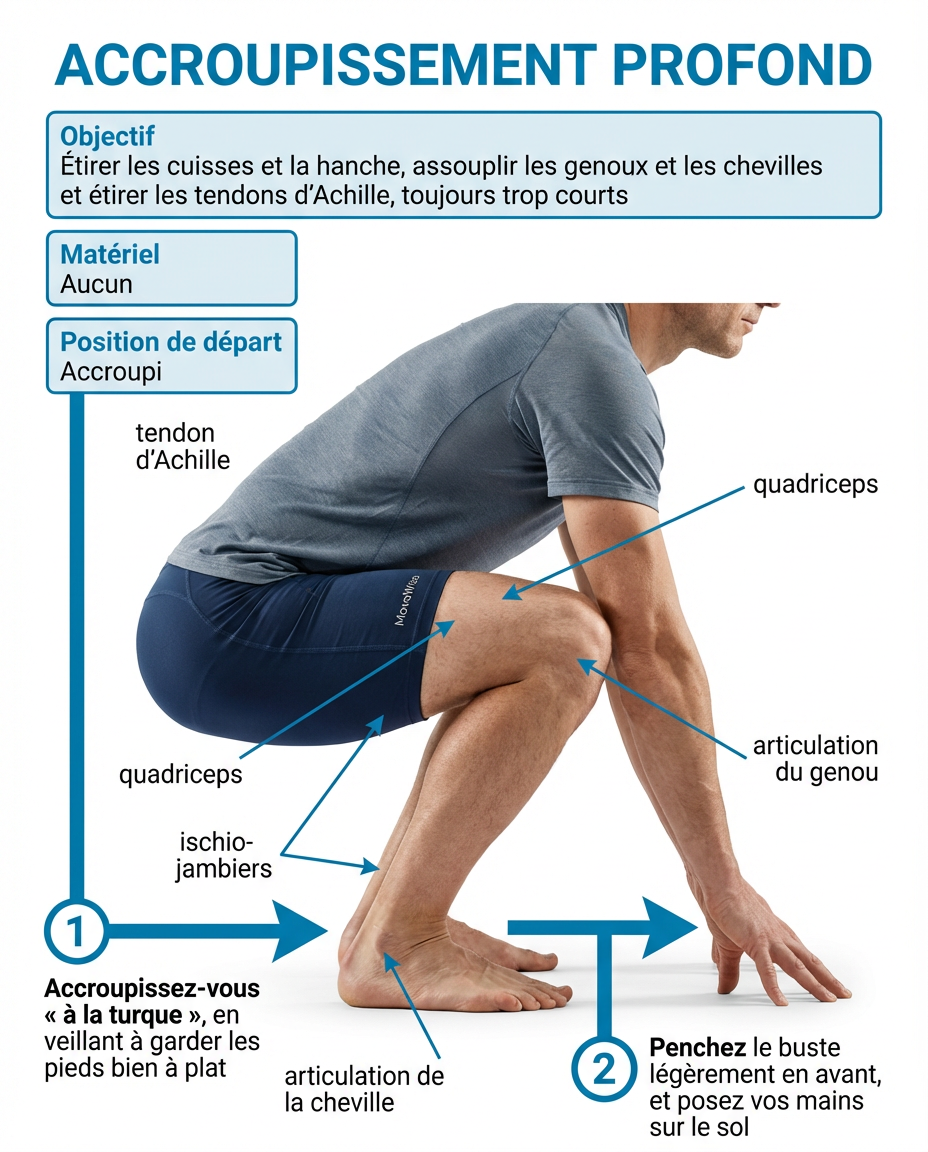
Deep squat illustration
Deep squat position with heels on floor and elbows on knees.