Heel Spur Relief
Standing stretch exercise targeting the calf and plantar fascia to relieve pain associated with heel spurs and plantar fasciitis.
Heel Spur Relief — Calf and Fascia Stretch
A heel spur is a bony growth that forms under the heel, often associated with chronic inflammation of the plantar fascia. It causes sharp pain, particularly intense during the first steps in the morning or after a prolonged rest period. This stretching exercise directly targets the structures under tension to provide progressive and lasting relief.
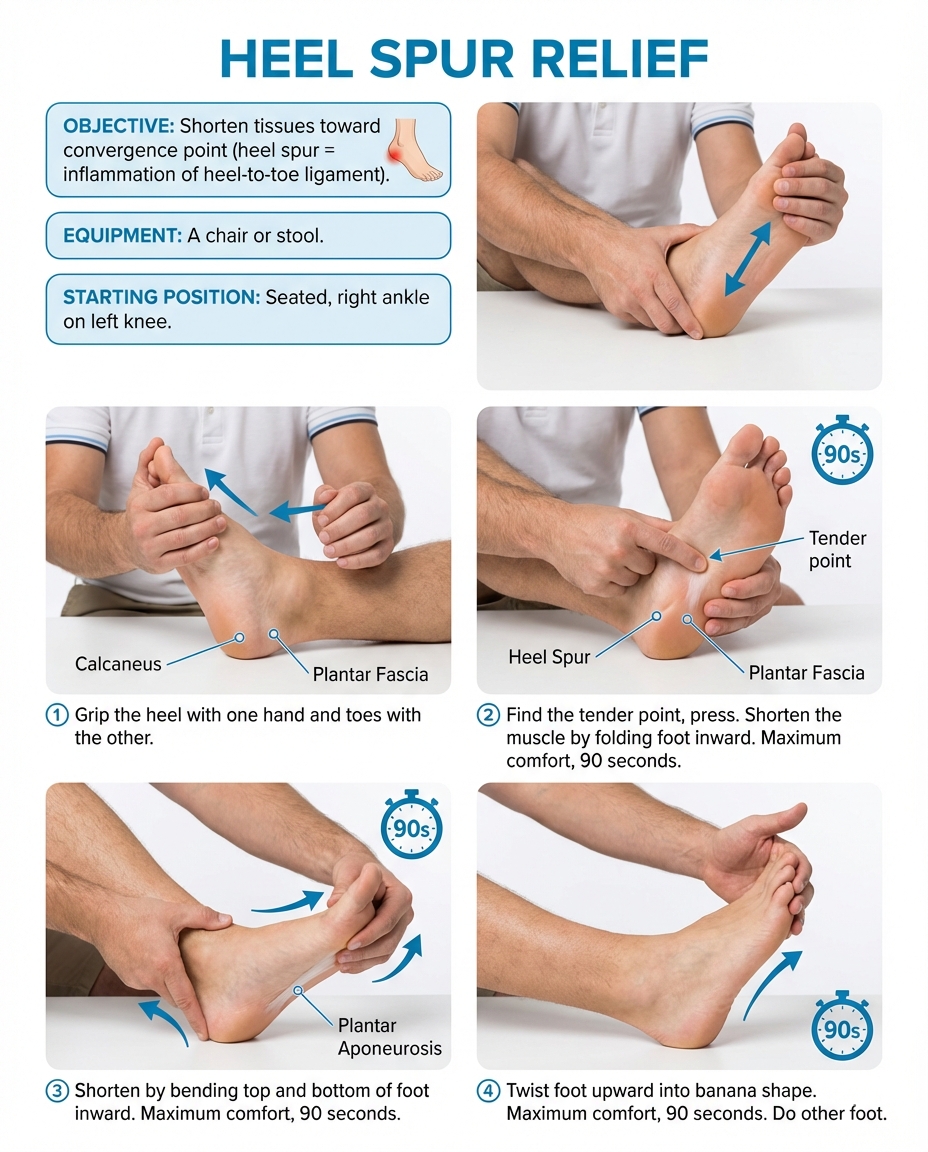
Why This Stretch Is Essential
The heel spur itself does not cause the pain — it is the inflammation and excessive tension of the plantar fascia at its attachment point on the calcaneus that are responsible for the suffering. The plantar fascia is mechanically connected to the Achilles tendon and calf muscles (gastrocnemius and soleus). When these muscles are short or tight, they increase the pull on the fascia, worsening the inflammation. Regular stretching of this posterior chain reduces mechanical tension on the calcaneal insertion and significantly decreases pain.
Anatomy Involved
- Plantar fascia — fibrous band extending from the calcaneus to the toes, whose inflammation at the insertion point causes heel spur pain.
- Gastrocnemius — the superficial two-headed calf muscle, primarily responsible for pulling on the Achilles tendon.
- Soleus — deep calf muscle, specifically stretched when the knee is bent.
- Achilles tendon — the most powerful tendon in the body, connecting the calf muscles to the calcaneus.
- Calcaneus — the heel bone, where the spur forms and where the plantar fascia inserts.
Step-by-Step Instructions
Step 1 — Gastrocnemius Stretch
Face a wall with arms extended, hands flat on the wall at shoulder height. Step your right foot back about one large step, heel firmly on the floor. The front leg is slightly bent, the back leg stays straight. Push your hips forward until you feel a deep stretch in the back calf. Hold for 30 seconds.
Step 2 — Soleus Stretch
Without changing position, slightly bend the knee of the back leg while keeping the heel on the floor. You will feel the stretch move lower into the calf and Achilles tendon. Hold for 30 seconds. This subtle adjustment targets the soleus, often overlooked but crucial for heel spur relief.
Step 3 — Plantar Fascia Stretch on a Step
Place the ball of your right foot on the edge of a stair step or a thick book, with your heel hanging off. Let the heel slowly drop below the step level, using your body weight. Hold for 30 seconds. This eccentric stretch directly engages the plantar fascia and Achilles tendon.
Step 4 — Switch Sides and Repeat
Repeat all three steps with the left foot. Perform 3 complete sets on each side, with 10 seconds of rest between sets.
Duration and Repetitions
- Hold: 30 seconds per position
- Sets: 3 of each stretch, per side
- Total duration: approximately 12 to 15 minutes
- Frequency: 2 to 3 times daily, mandatory in the morning before stepping out of bed and in the evening
Safety Tips
- The stretch should feel like moderate tension, never sharp heel pain.
- If pain increases during the exercise, reduce the range and consult your practitioner.
- Never bounce in the stretch — all movements are slow and continuous.
- In the morning, stretch before getting up: sitting on the bed, gently pull your toes toward you with a towel looped under the foot.
- Wear shoes with good arch support and avoid walking barefoot on hard surfaces.
Who Benefits from This Exercise?
This stretch is fundamental for anyone diagnosed with a heel spur or plantar fasciitis. It also suits runners, overweight individuals, those who stand for long periods, and anyone experiencing heel pain during their first steps. Consistency is key: daily stretching for 6 to 8 weeks provides significant relief in the majority of cases.
Diagrams and illustrations
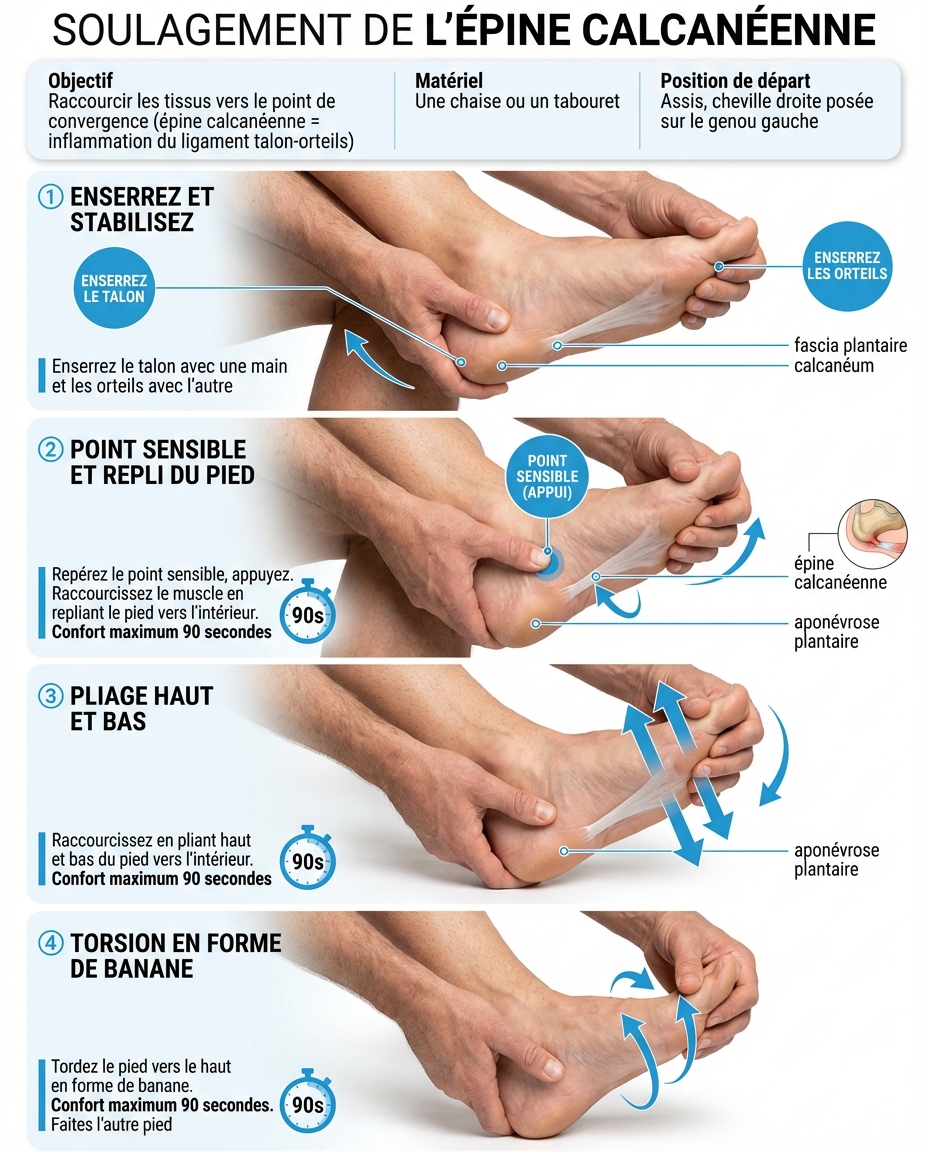
Heel spur relief illustration
Standing position facing wall with calf and plantar fascia stretch for heel spur relief.