Iridology (Iris Reading)
Biological terrain evaluation technique through detailed observation of the eye's iris, whose signs (spots, fibers, rings) are believed to reflect the organism's constitutional state and predispositions.
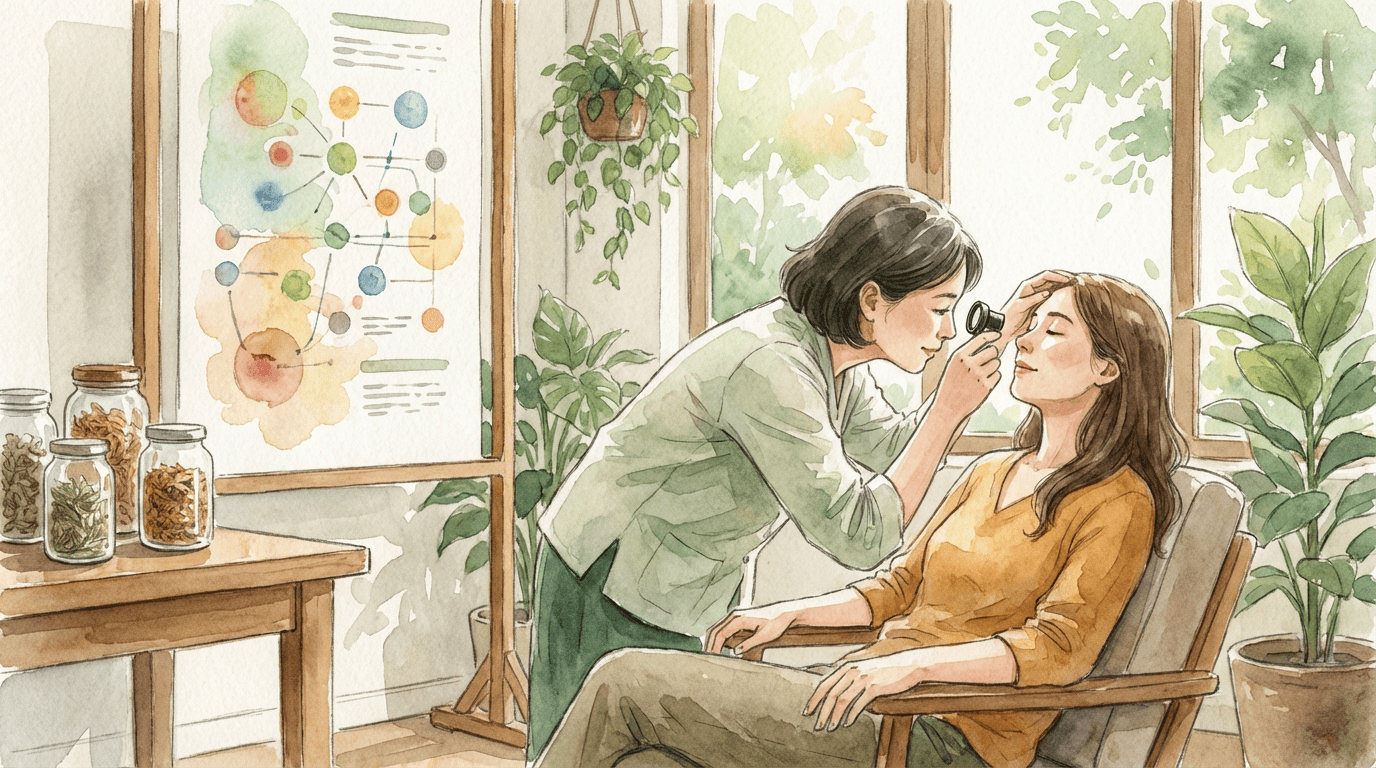
Biological terrain evaluation technique through detailed observation of the eye's iris, whose signs (spots, fibers, rings) are believed to reflect the organism's constitutional state and predispositions.
Presentation
Iridology is a terrain evaluation technique used primarily in naturopathy. It involves meticulous observation of the iris using an iridoscope or high-resolution photography. According to iridologists, the iris is a body map: each zone corresponds to an organ or physiological system, and structural modifications reflect constitutional health, overloads, deficiencies and predispositions.
Iris Mapping
The iris is divided into concentric zones and radial sectors. Concentric zones include the pupil (autonomic nervous system), collarette (digestive system), ciliary zone (internal organs) and outer border (skin, lymphatic system). Radial sectors correspond to different organs: upper sector to brain, lower to lower limbs. Right iris maps the right body side, left iris the left.
Iridological Signs
- Base constitution: lymphatic (blue iris), hematogenic (brown iris), mixed (green/hazel)
- Lacunae: openings indicating hereditary tissue weakness
- Crypts: deep dark lacunae signaling marked functional deficit
- Pigment spots: deposits (toxins, medications, heavy metals)
- Cholesterol ring: peripheral lipid deposit
- Tension rings: circular grooves indicating chronic nervous stress
Scientific Limitations
Iridology is not recognized by conventional medicine. Controlled clinical studies have not confirmed iridology's ability to diagnose specific pathologies. Iridologists respond that iridology evaluates terrain and predispositions, not pathologies.
Medical Disclaimer
The information presented in this article is provided for educational and informational purposes only. It does not constitute medical advice, diagnosis, or treatment prescription. If in doubt, always consult your physician or a qualified healthcare professional. The techniques described do not replace conventional medical treatment.