Hot Bath / Sauna
Hot baths and sauna promote deep muscle relaxation, blood circulation and detoxification through sweating.
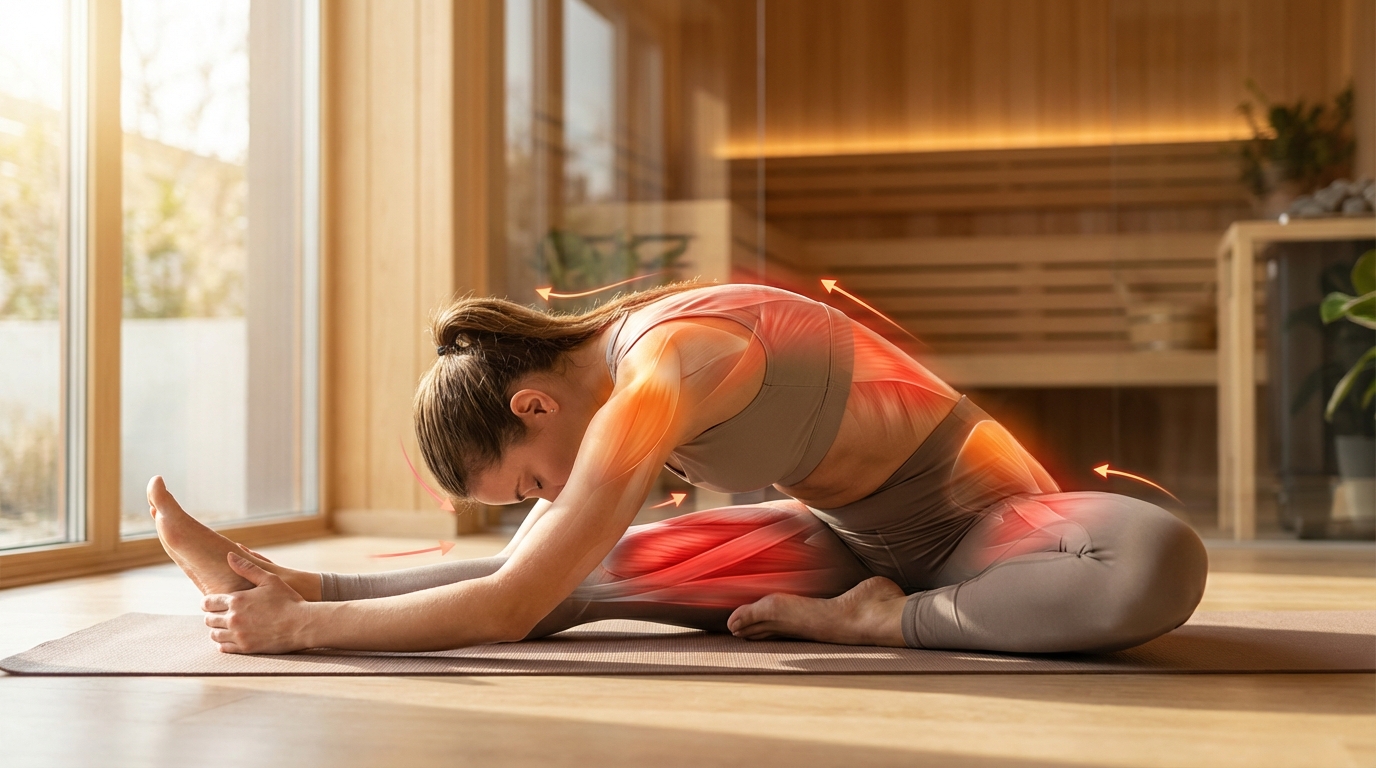
Hot Bath / Sauna
Recovery is when the body repairs, adapts and grows stronger. Without adequate recovery, training becomes counterproductive, leading to chronic fatigue, injuries and plateaus. Self-massage and recovery techniques complement stretching and training by targeting the physiological processes of tissue repair, inflammation reduction and nervous system restoration.
Physiological Mechanisms
Active recovery acts on multiple systems: circulatory (improved blood flow to damaged muscles), lymphatic (metabolic waste elimination), nervous (shift from excited sympathetic to restorative parasympathetic state) and musculoskeletal (reduction of fascial adhesions and restoration of tissue mobility). Each technique has a preferential mechanism of action.
Step-by-Step Instructions
Step 1 — State Assessment
Before choosing your recovery technique, assess your state: fatigue level, presence of muscle soreness (DOMS), identified tension areas, recent sleep quality and overall stress level. This helps select the most appropriate technique.
Step 2 — Preparation
Prepare the environment and necessary equipment. Ensure you are hydrated and have eaten a light meal if needed. Recovery is more effective in a calm, relaxed environment.
Step 3 — Technique Application
Follow the specific protocol of the chosen technique. Stay attentive to your body signals — recovery should never be painful or unpleasant. The goal is relief and regeneration.
Step 4 — Post-Recovery
After the session, hydrate abundantly (minimum 500 ml water). Rest for 15-30 minutes if possible. Note treated areas and sensations to adjust future sessions.
Duration and Frequency
- Duration: 10-30 minutes depending on technique
- Frequency: 2-4 times per week or daily after training
- Timing: within 2 hours of training for maximum effect
Safety Tips
- Do not combine multiple intensive techniques on the same day — alternating approaches is more effective.
- Cold bath should not be practiced immediately after hypertrophy training (may reduce muscle adaptation).
- Individuals with cardiac issues, hypertension or pregnancy should consult before cold baths or sauna.
- Percussive therapy should not be used on inflamed areas, bruises or directly on bones and joints.
Variations and Combinations
- Hot-cold contrast — alternate 3 min hot / 1 min cold to stimulate circulation.
- Active recovery — light walking, gentle swimming or low-intensity cycling to promote circulation.
- Recovery stack — foam rolling + stretching + breathing = optimal post-training combo.
Target Audience
These techniques are suited for athletes of all levels, chronic pain sufferers, physical workers and anyone wanting to optimize recovery and quality of life. Professional supervision is recommended for advanced techniques.
Diagrams and illustrations
Hot Bath / Sauna illustration
Hot Bath / Sauna — recovery technique.