PostureBeginnerShoulders
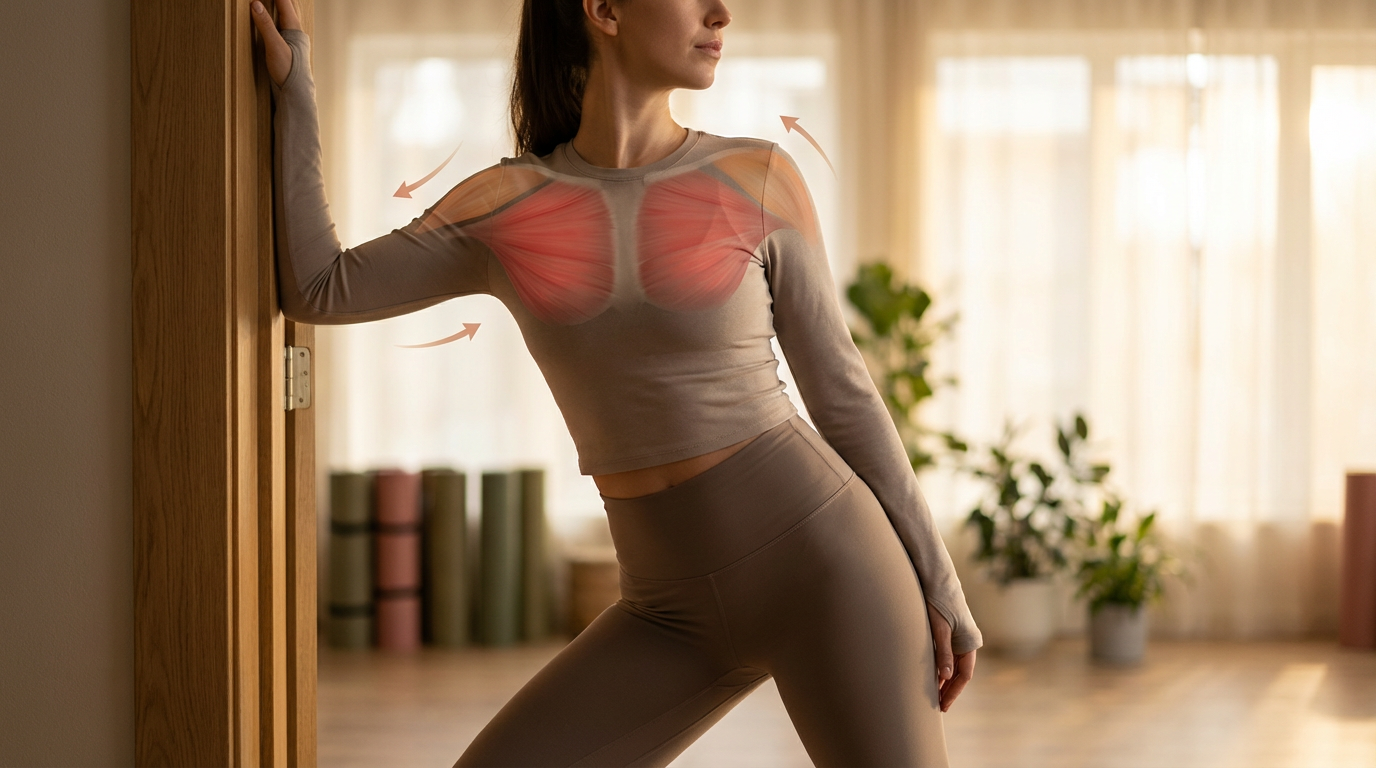
Pectoral Stretch (Doorway/Wall)
The doorway pectoral stretch opens the chest, corrects rounded shoulders and restores shoulder mobility impaired by prolonged sitting.
Read more
10 static stretches targeting the pectorals, deltoids, triceps, biceps, trapezius, neck, forearms and lats. Essential for correcting postural imbalances from screen work.
The doorway pectoral stretch opens the chest, corrects rounded shoulders and restores shoulder mobility impaired by prolonged sitting.
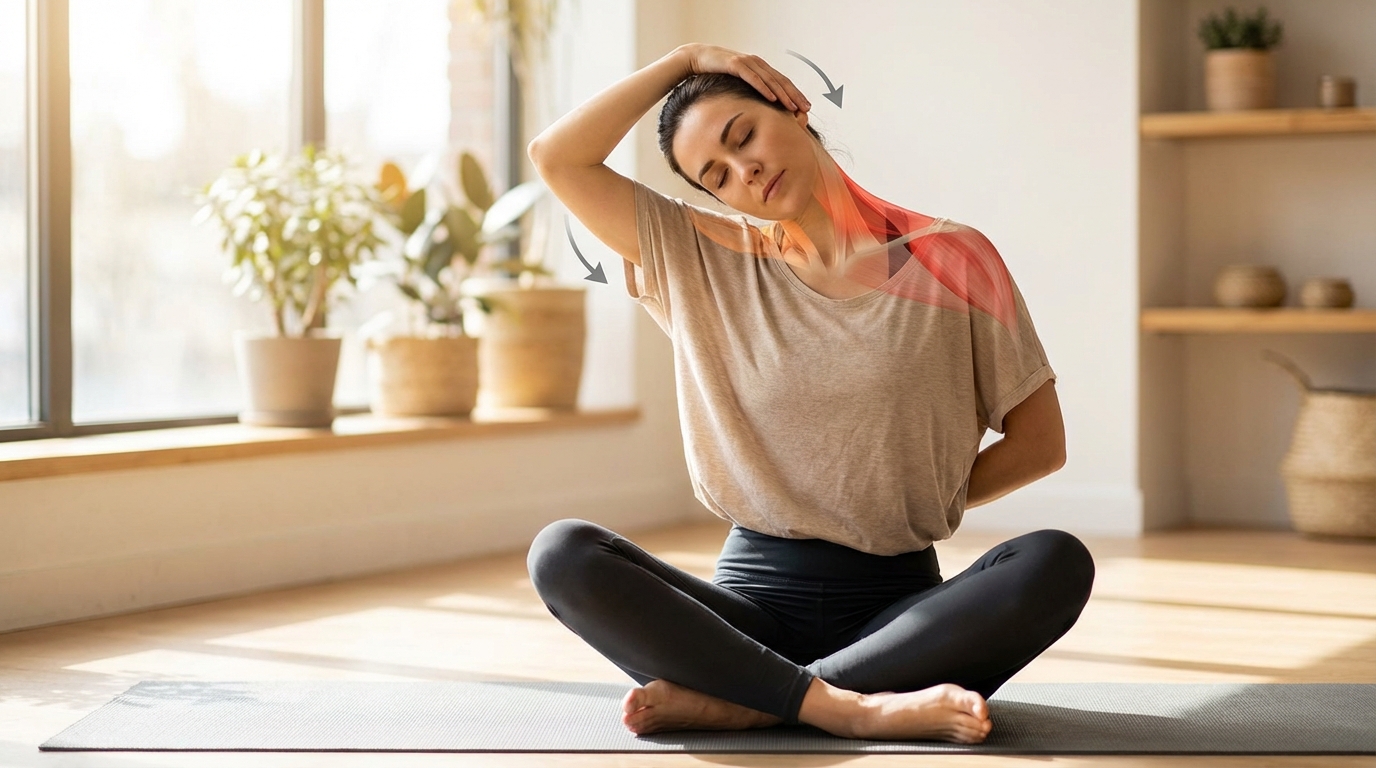
The upper trapezius stretch relieves cervical tension and shoulder stiffness caused by stress and prolonged sitting in front of a screen.
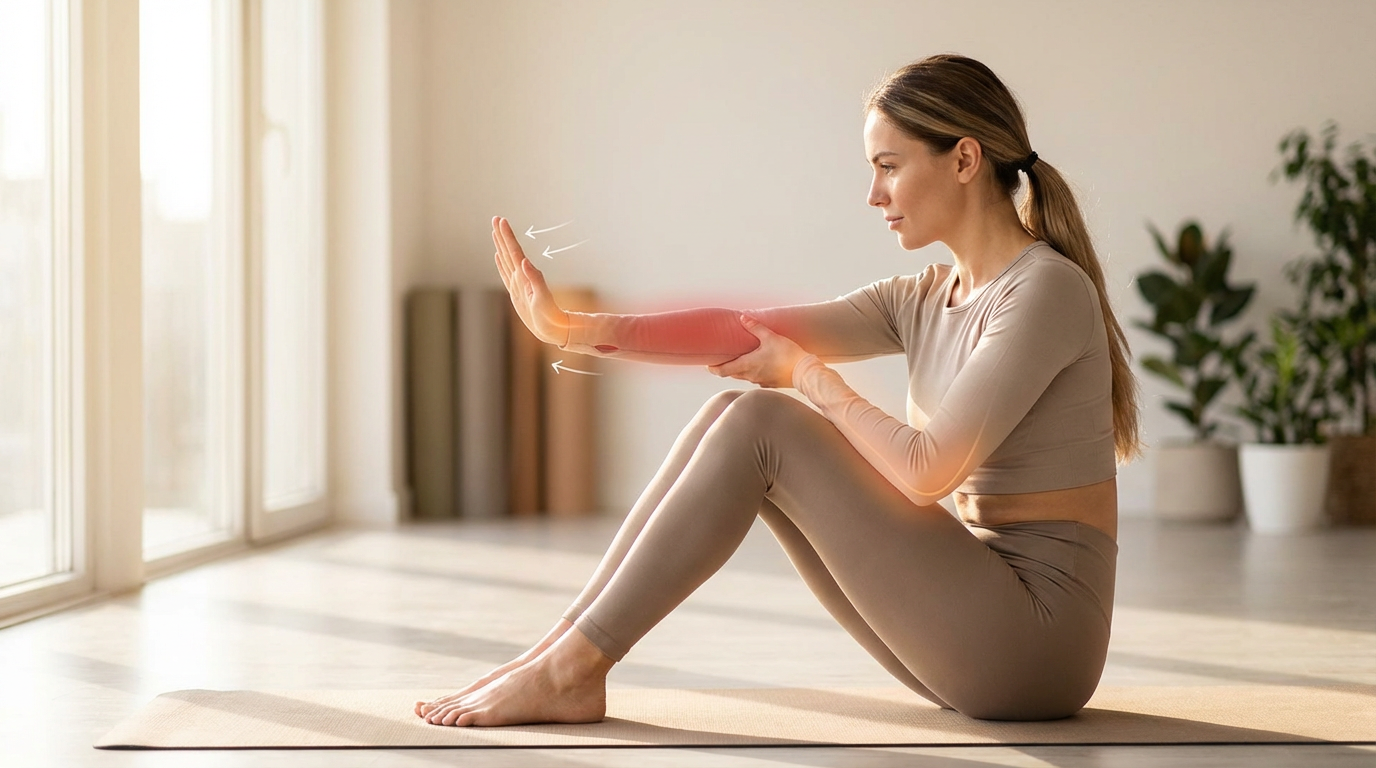
The wrist extensor stretch relieves pain on the outer forearm and helps prevent tennis elbow (lateral epicondylitis).

The wrist flexor stretch relieves forearm tension from keyboard work and gripping, and helps prevent carpal tunnel syndrome.
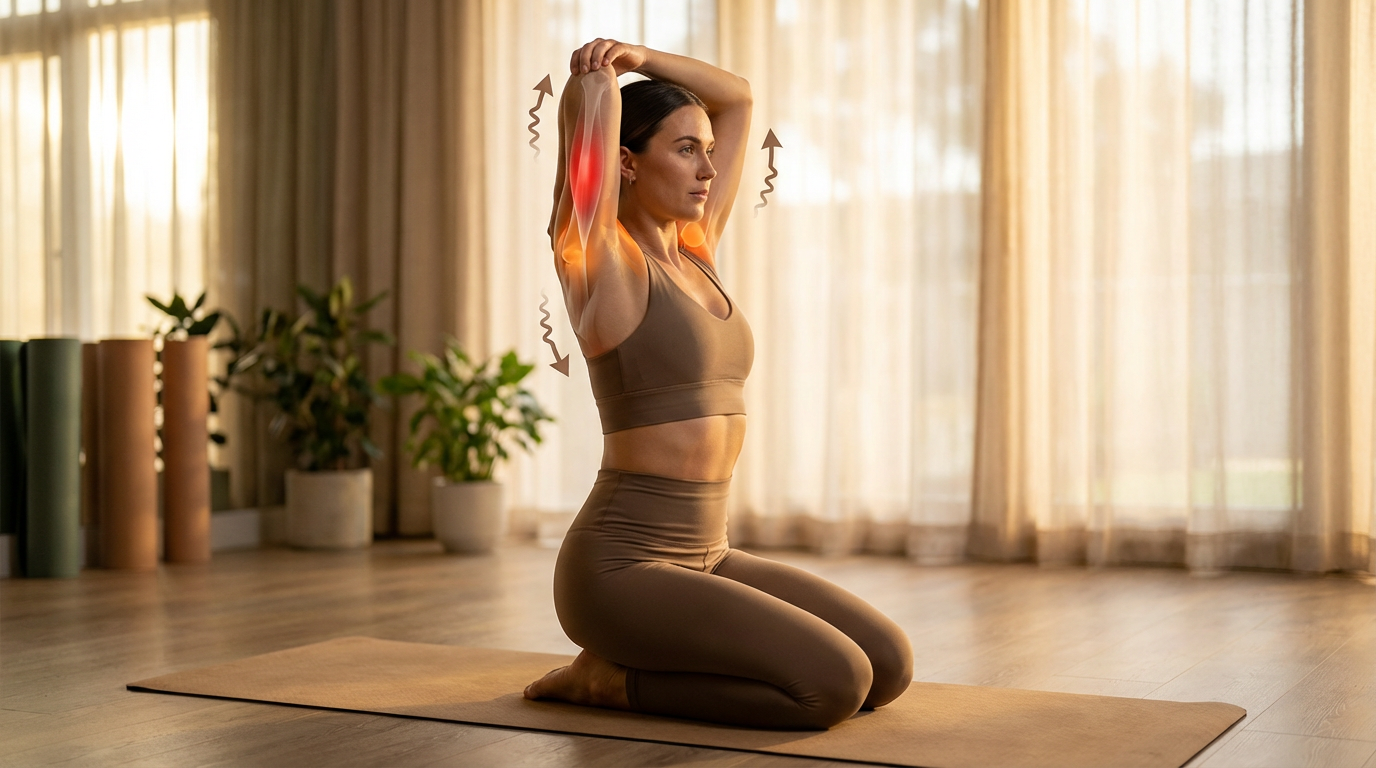
The overhead triceps stretch lengthens the long head of the triceps and latissimus dorsi, releasing tension accumulated in the back of the arm and side.
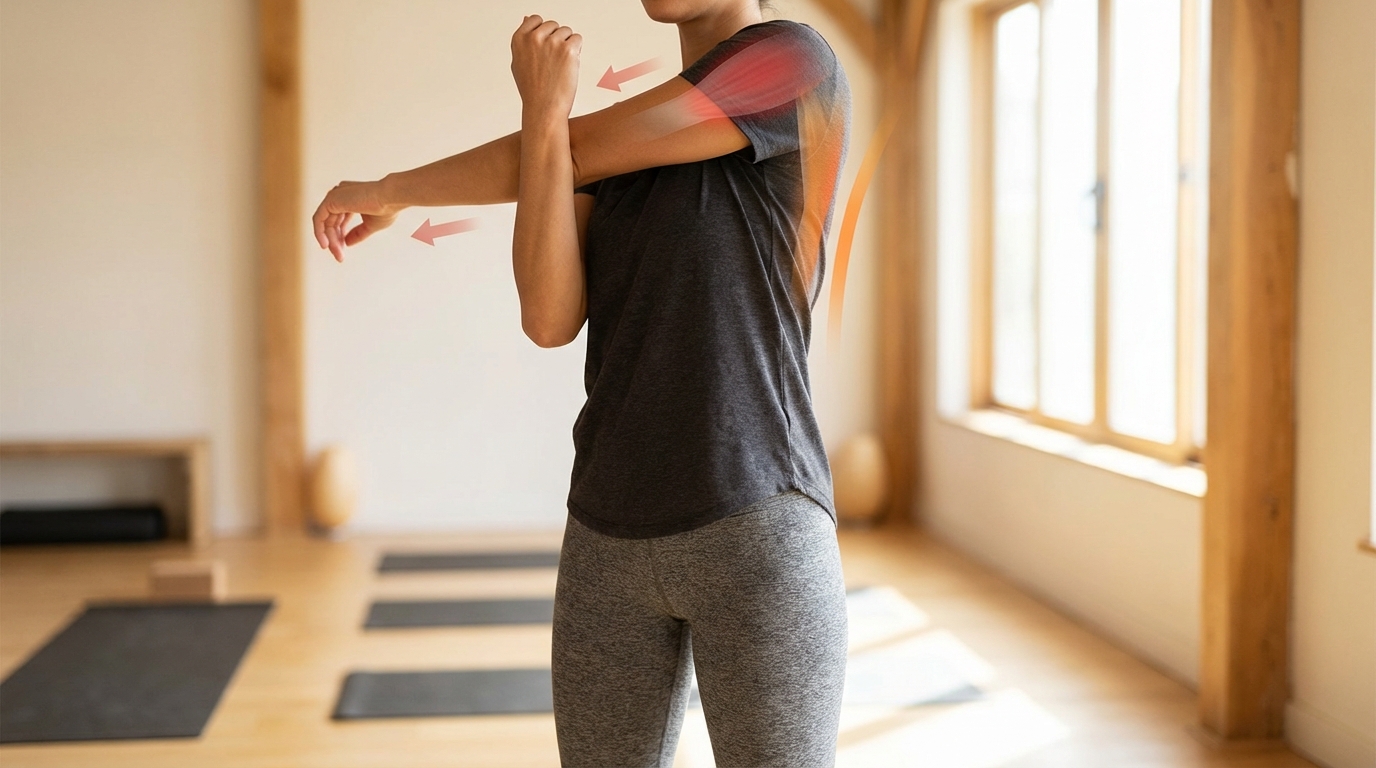
The cross-body stretch targets the posterior deltoid and infraspinatus, releasing tension at the back of the shoulder common in desk workers.
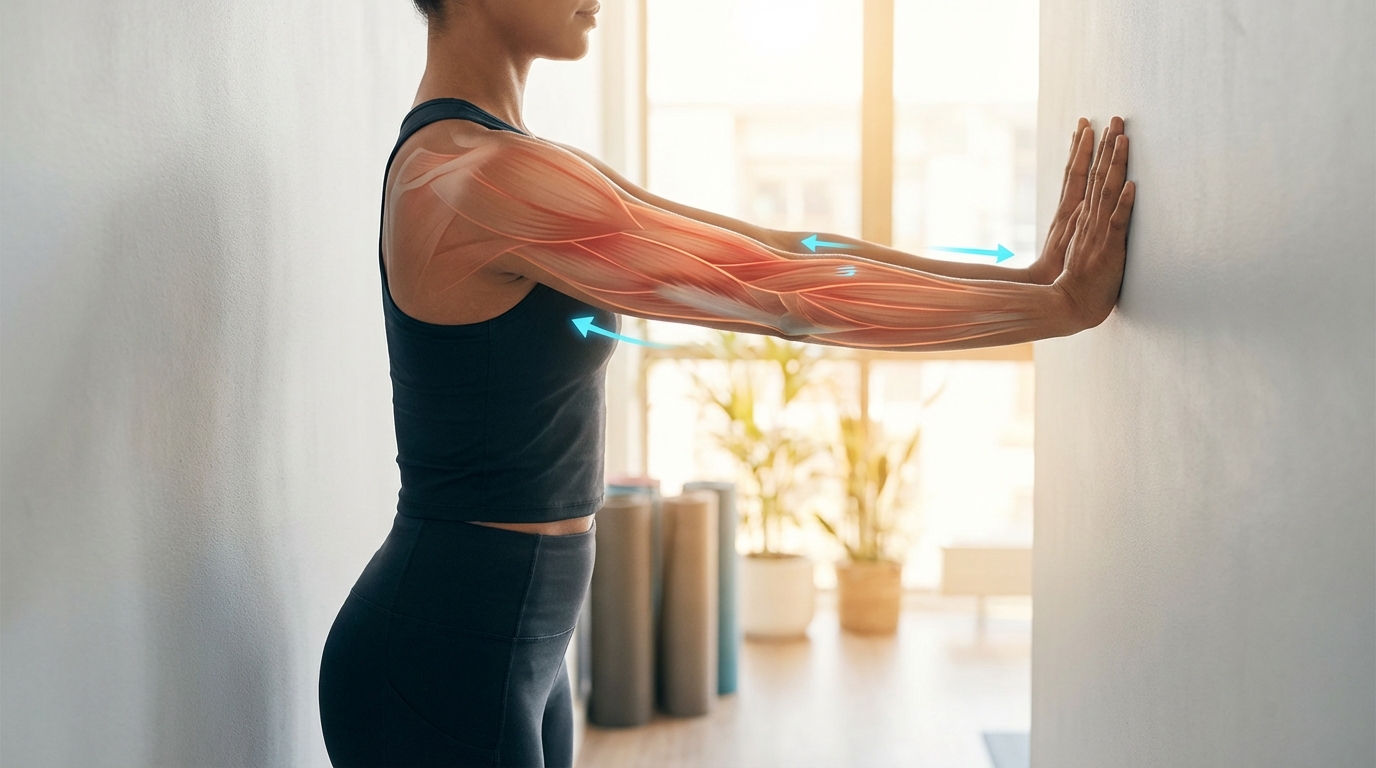
The wall biceps stretch lengthens the biceps brachii and forearm flexors, relieving tension from repetitive flexion movements.
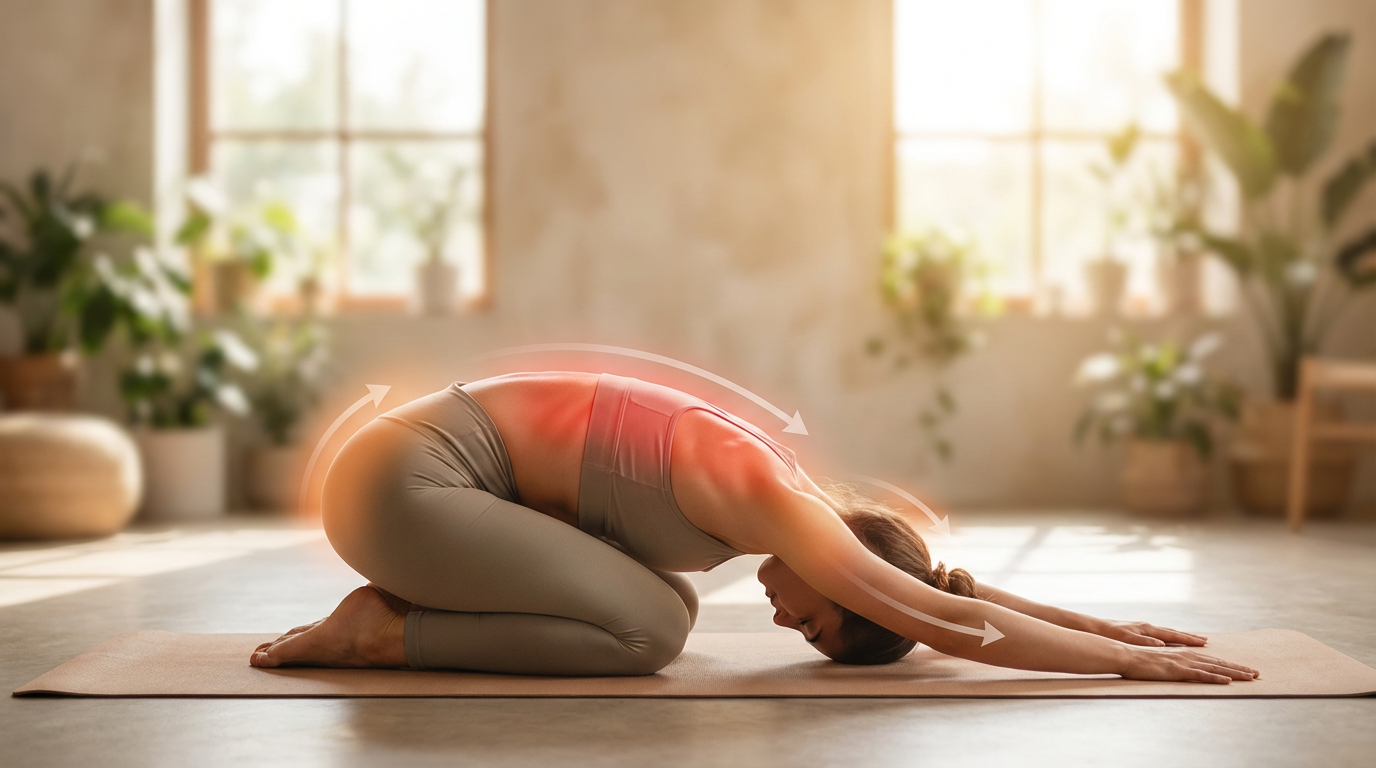
The extended child's pose stretches the latissimus dorsi and teres major in a resting position, providing spinal decompression and deep muscle release.
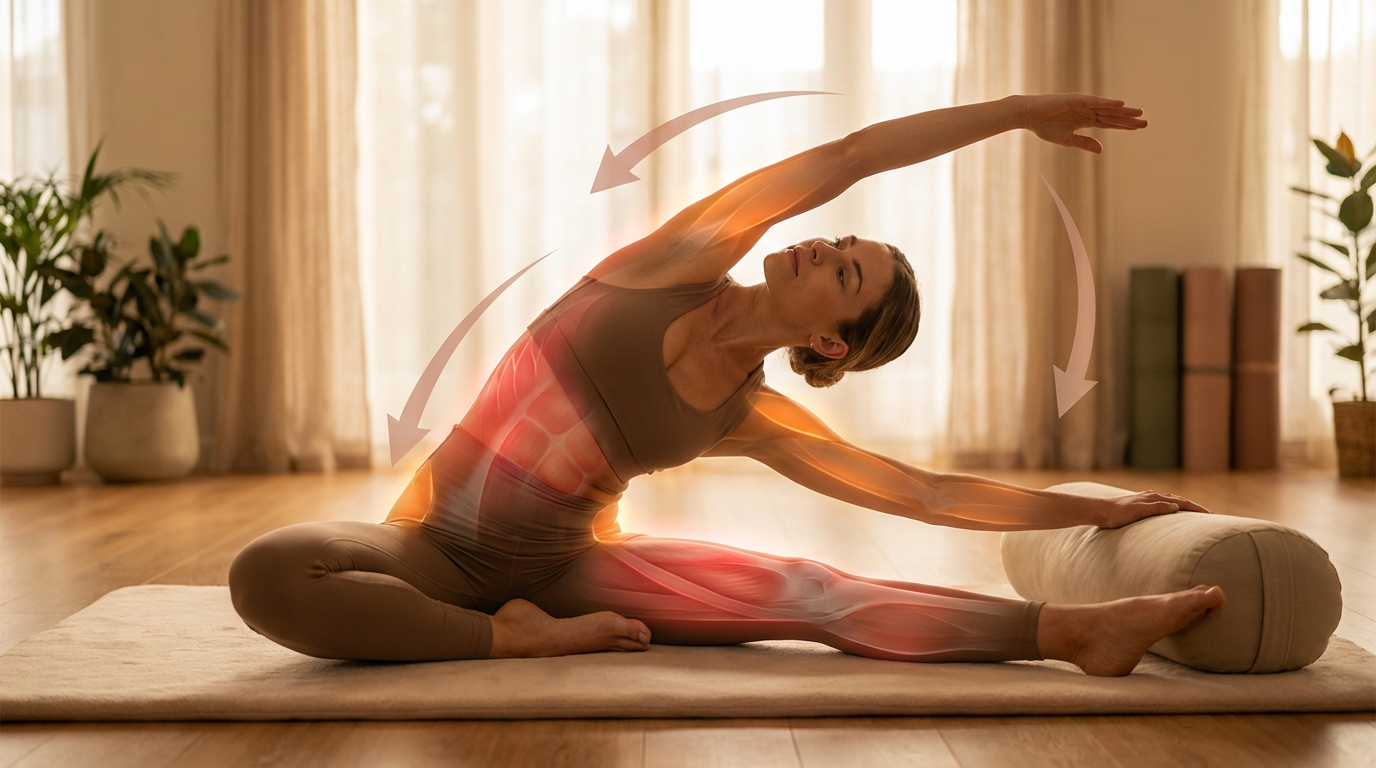
The lateral stretch opens the ribs, lengthens the obliques and latissimus dorsi, and improves breathing capacity by releasing the intercostal muscles.
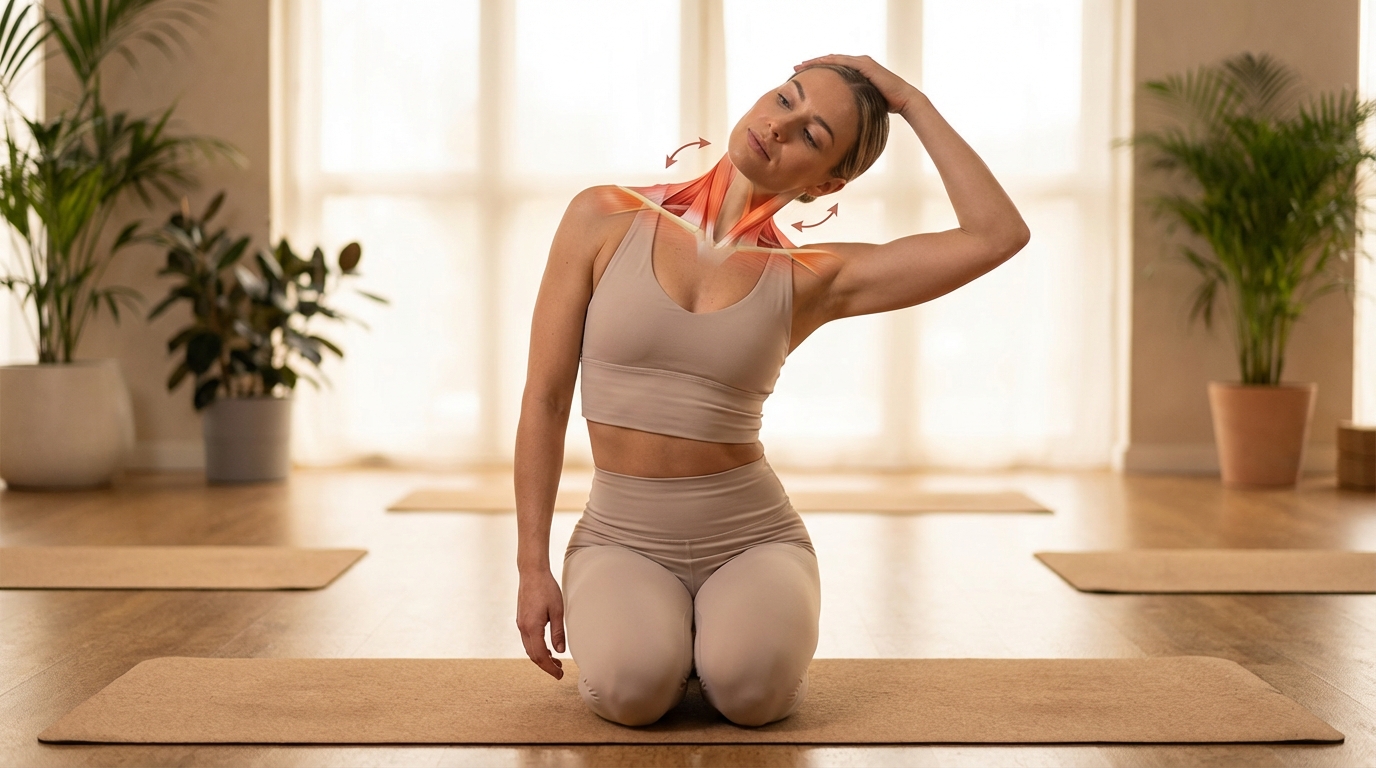
The sternocleidomastoid stretch through cervical rotation releases lateral neck tension and improves head rotation range of motion.