HVLA Thrust (High-Velocity Low-Amplitude Manipulation)
Osteopathic articular manipulation technique using high velocity and low amplitude, producing a characteristic 'crack' sound to restore joint mobility.
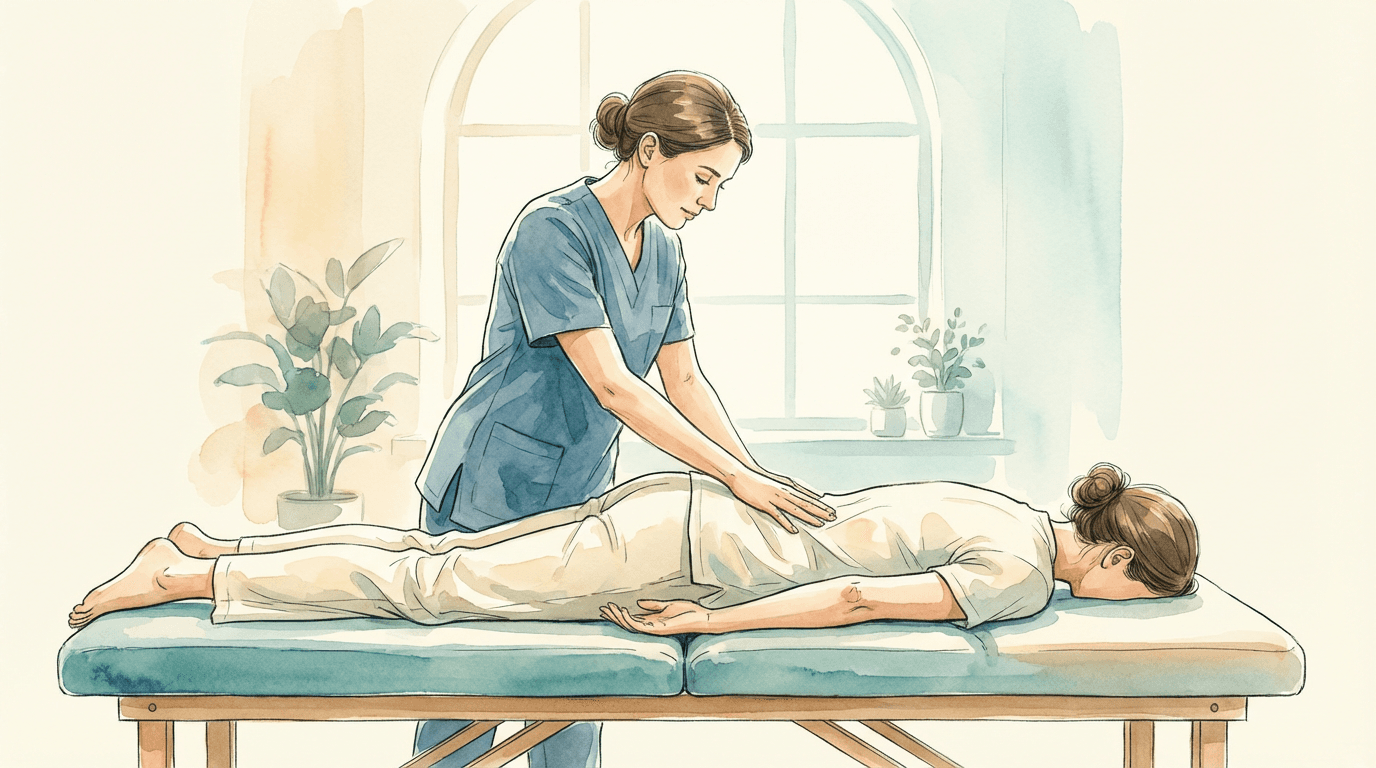
Osteopathic articular manipulation technique using high velocity and low amplitude, producing a characteristic 'crack' sound to restore joint mobility.
Presentation
HVLA (High-Velocity Low-Amplitude) thrust is the most iconic osteopathic technique. Developed in the late 19th century by Andrew Taylor Still, founder of osteopathy, it consists of a brief, rapid, low-amplitude impulse applied to a joint at the end of its motion barrier. The audible 'crack' corresponds to the formation of a CO₂ bubble in synovial fluid (cavitation phenomenon), not a fracture or bone displacement.
Creator: Andrew Taylor Still (1828–1917), founder of osteopathy
Core Principles
The technique is based on the concept of somatic dysfunction: a joint mobility restriction creates reflex, vascular and neurological disturbances. By removing this restriction with a precise thrust, the osteopath restores local and reflex physiology. Tissue preparation (progressive tensioning) is essential before the final impulse to ensure efficacy and safety.
Technical Details
- Other names
- HVLA manipulation, osteopathic adjustment, direct structural technique
- Execution speed
- Very rapid (< 150 ms)
- Amplitude
- Very small (a few millimeters)
- Application zones
- Cervical, thoracic, lumbar spine, sacroiliac, ribs, extremities
Main Indications
- Acute and chronic low back pain
- Neck pain and torticollis
- Thoracic pain
- Cervicobrachial neuralgia
- Intercostal joint blockages
- Sacroiliac dysfunctions
- Cervicogenic tension headaches
Session Overview
The osteopath begins with a postural and palpatory assessment to identify somatic dysfunction. The targeted region is positioned in pre-tension (progressive tensioning in 3 planes). Once the motion barrier is reached, a short, rapid impulse is applied. The technique may be repeated 1–3 times on the same joint. The session ends with reassessment and postural advice.
Variations and Sub-techniques
- Cervical thrust (requires specific training)
- Costal thrust (rib mobilization)
- Lumbopelvic thrust
- Side-lying thrust (most common for lumbar spine)
- Supine thrust (thoracic spine)
Contraindications
- Bone fracture or tumor
- Severe osteoporosis
- Ligamentous instability (hypermobility, Ehlers-Danlos syndrome)
- Vertebral arteries: vertebrobasilar insufficiency, arterial dissection
- Disc herniation with neurological deficit
- Advanced spondylolisthesis
- Pregnancy (lumbar and sacral spine)
- High-dose anticoagulants
Medical Disclaimer
The information presented in this article is provided for educational and informational purposes only. It does not constitute medical advice, diagnosis, or treatment prescription. If in doubt, always consult your physician or a qualified healthcare professional. The techniques described do not replace conventional medical treatment.