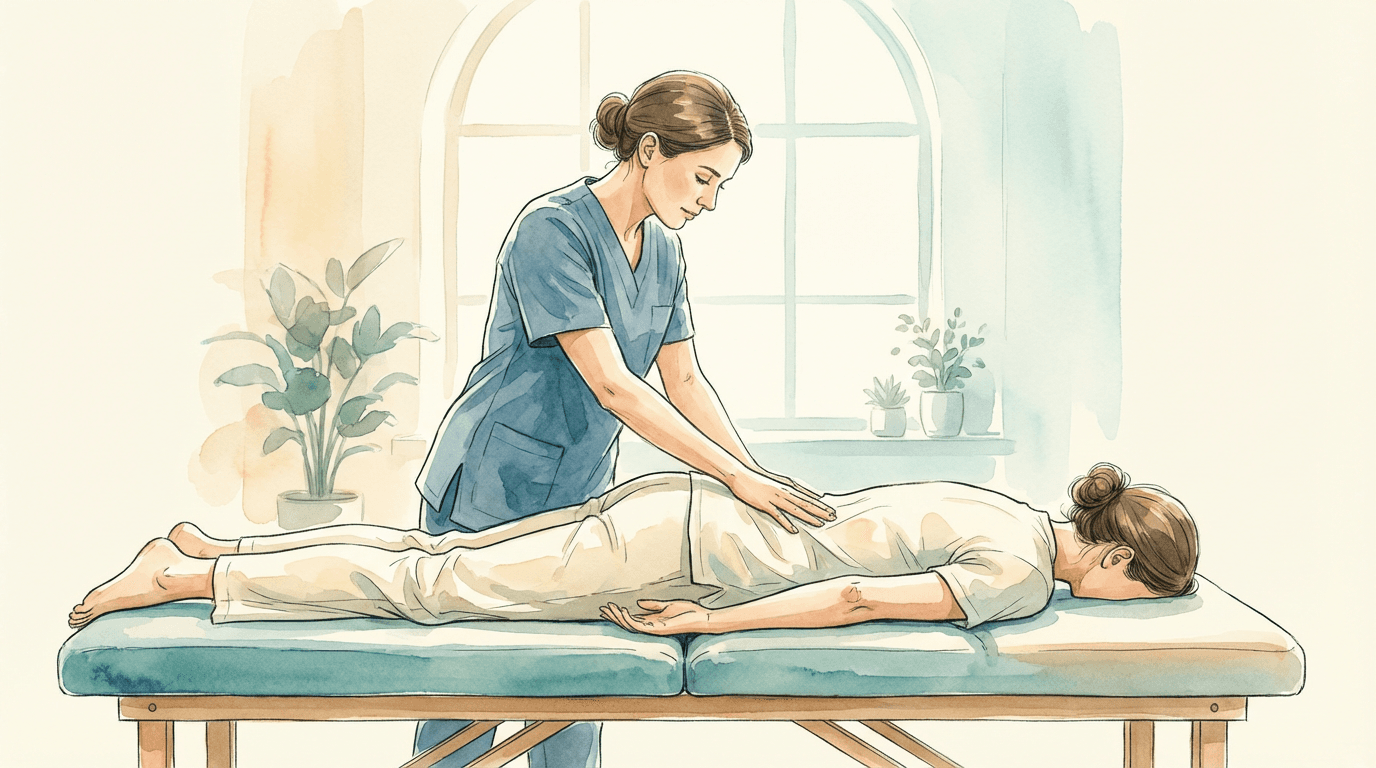
MET — Muscle Energy Technique
Gentle osteopathic technique using the patient's voluntary muscle contraction against controlled resistance to correct joint and muscle dysfunctions.
Set of cranial osteopathic techniques working directly on the reciprocal tension membranes (falx cerebri, falx cerebelli, tentorium cerebelli, diaphragma sellae) via precise bony contacts on the skull and sacrum, to normalize intracranial membranous tensions and restore the Primary Respiratory Mechanism.
Functional osteopathic technique rediscovered by Richard Van Buskirk combining direct and indirect approaches using compressive or distractive force to guide tissue toward dynamic neutral.
Indirect osteopathic technique consisting of maintaining firm, sustained pressure on a dysfunctional tissue (muscle, fascia, connective tissue) until reflex release of tensions is achieved, based on the neurophysiological phenomenon of inhibition of spinal protective reflexes.
Techniques combining the release of myofascial restrictions and deactivation of trigger points — foci of muscle hyperirritability creating characteristic referred pain patterns.
Gentle rhythmic mobilization of joints to progressively restore range of motion without thrust, using repetitive and controlled movements.
Therapeutic approach developed by John E. Upledger integrating CranioSacral Therapy with processes of releasing physical and emotional traumas memorized in body tissues (energy cysts), allowing the body to complete and integrate emotional responses initially interrupted during shock or trauma.
Osteopathic system developed by William Garner Sutherland based on rhythmic mobility of cranial bones, dura mater and sacrum within the Primary Respiratory Mechanism (PRM).
Osteopathic approaches targeting the fascial system — the connective tissue network enveloping all organs and structures — through light pressure allowing the body to spontaneously 'unwind' toward resolution of tensions.
Indirect passive osteopathic technique placing the patient in a position of maximum comfort to deactivate tender points and normalize neuromuscular spindles.
Osteopathic articular manipulation technique using high velocity and low amplitude, producing a characteristic 'crack' sound to restore joint mobility.
Gentle therapeutic approach derived from Sutherland's cranial osteopathy, popularized by John Upledger, focused on releasing restrictions of the craniosacral system.
Osteopathic system developed by Jean-Pierre Barral aimed at evaluating and normalizing the mobility and motility of internal organs to restore their physiological function.