Forearm Flexor Stretch
The wrist flexor stretch relieves forearm tension from keyboard work and gripping, and helps prevent carpal tunnel syndrome.
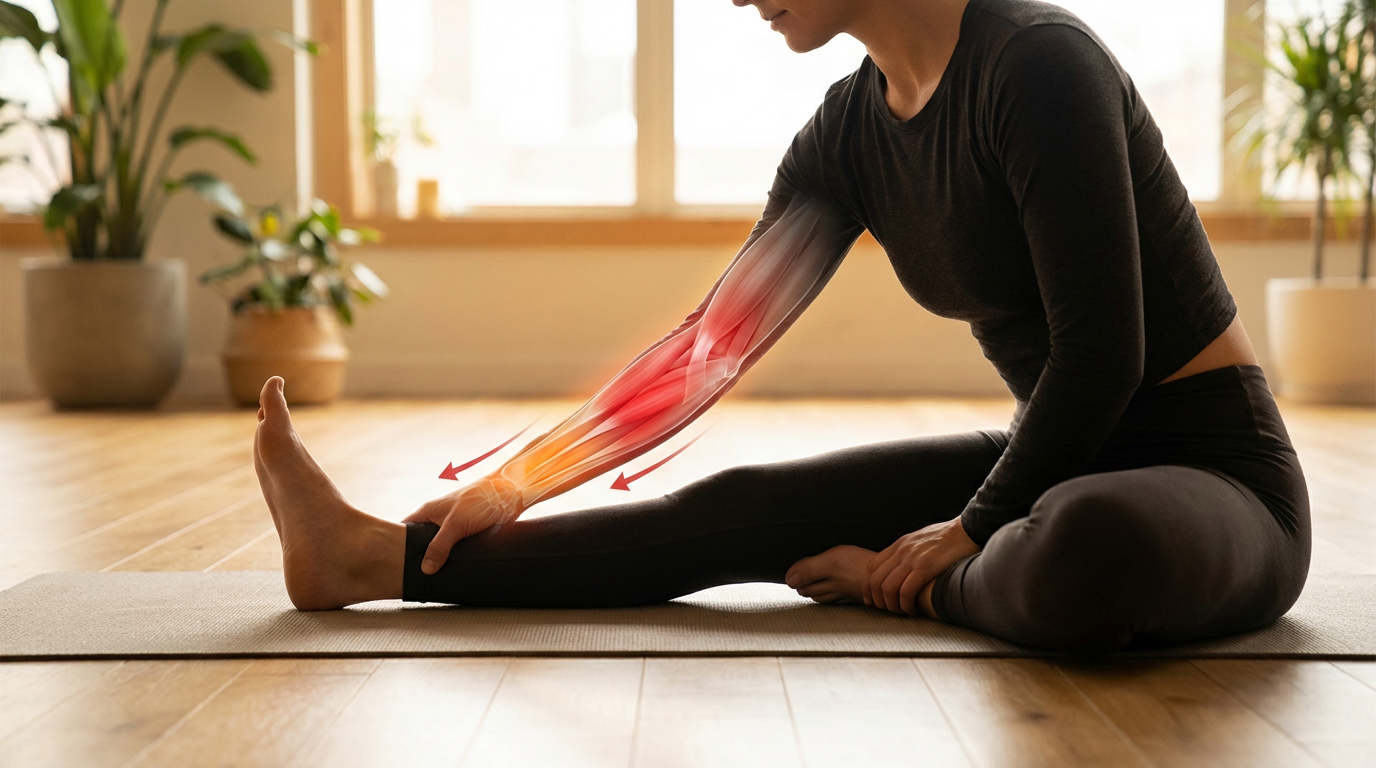
Forearm Flexor Stretch
The wrist flexors form a group of muscles on the inner forearm. They close the fist, flex the wrist and grip objects. Anyone using a keyboard, mouse, hand tools or rackets engages these muscles intensively. Chronic shortening is a major cause of wrist pain, medial epicondylitis and carpal tunnel syndrome. Regular stretching is a simple and effective preventive measure.
Targeted Anatomy
- Flexor carpi radialis — main wrist flexor on the thumb side.
- Flexor carpi ulnaris — wrist flexor on the little finger side.
- Palmaris longus — superficial flexor (absent in 14% of the population).
- Flexor digitorum superficialis — flexes the middle phalanges of the four fingers.
Step-by-Step Instructions
Step 1 — Extend the Arm
Stand or sit. Extend your right arm in front of you, palm up (supination), elbow fully extended.
Step 2 — Pull the Fingers
With the left hand, grasp the fingers of the right hand and gently pull them down (toward the floor) and toward you. The right wrist moves into extension.
Step 3 — Increase the Stretch
To increase intensity, keep the elbow fully straight and pull the fingers a bit further. You should feel a deep stretch along the inner forearm, from elbow to wrist.
Step 4 — Hold
Hold for 30 seconds. Breathe normally. Switch sides. Perform 2 to 3 sets per side.
Duration and Frequency
- Hold: 30 seconds per side
- Sets: 2-3 per side
- Frequency: every 2 hours during screen work
Safety Tips
- Do not pull abruptly — progression should be gentle and controlled.
- If you feel tingling in the fingers, reduce intensity (possible median nerve compression).
- Keep the elbow straight but not locked in hyperextension.
- If wrist pain persists, consult a healthcare professional.
Variations
- Against a table — place palms flat on a table, fingers toward you, and lean back to stretch the flexors.
- On all fours — hands on floor, fingers toward knees, shift hips backward.
- With pronation — same exercise but palm down to target the brachioradialis.
Target Audience
Essential for computer workers, musicians (pianists, guitarists), climbers, golfers, DIY enthusiasts and chefs. Suitable for all levels and an ideal active break at work.
Diagrams and illustrations
Forearm flexor stretch illustration
Wrist flexor stretch with extended arm and finger traction, 30 seconds.