Carpal Tunnel Release
Self-massage and stretching technique targeting the carpal tunnel area to relieve median nerve compression symptoms.
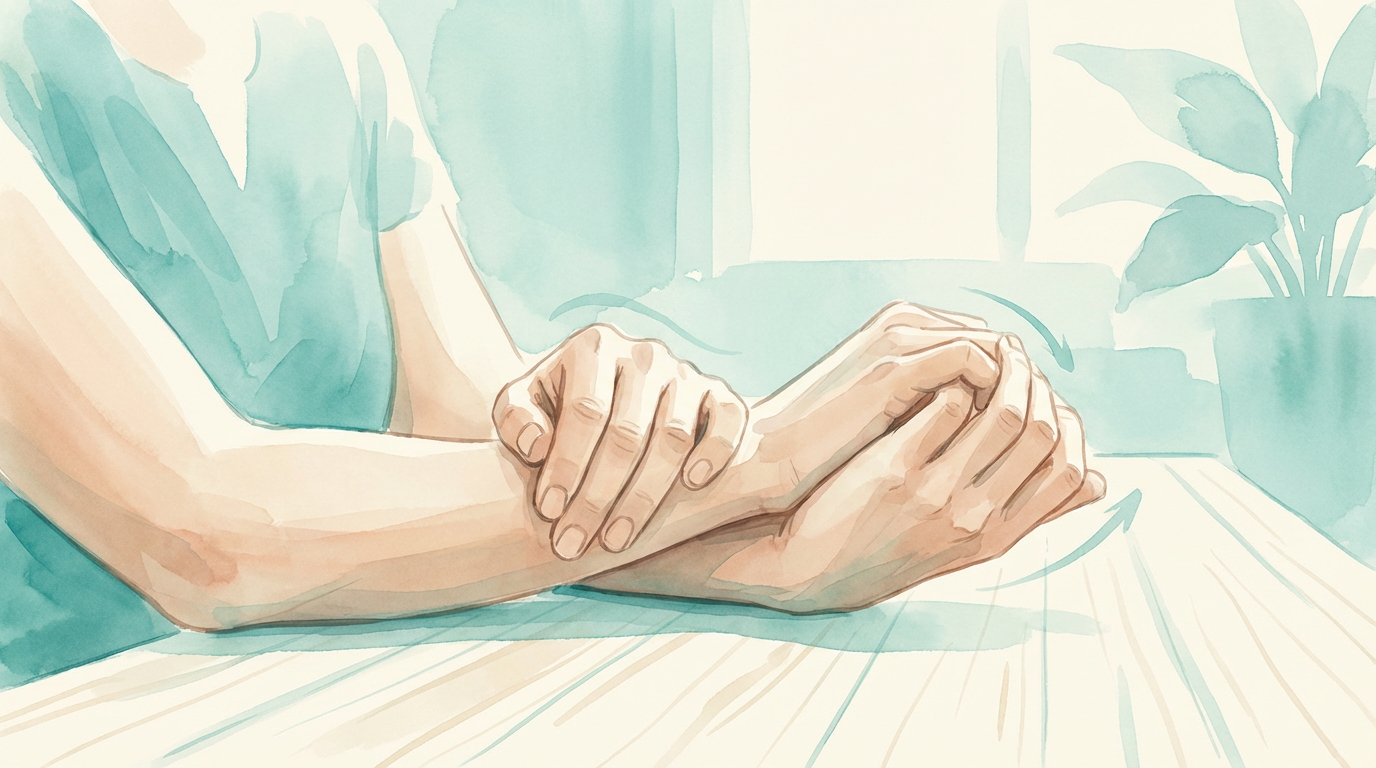
Carpal Tunnel Release — Self-Massage and Stretching
Carpal tunnel syndrome causes numbness, tingling, and sometimes pain in the thumb, index, and middle finger. This technique combines targeted self-massage of the carpal tunnel area with specific stretches of surrounding structures. When practiced regularly, it helps reduce pressure on the median nerve and alleviate symptoms without immediately resorting to surgery.
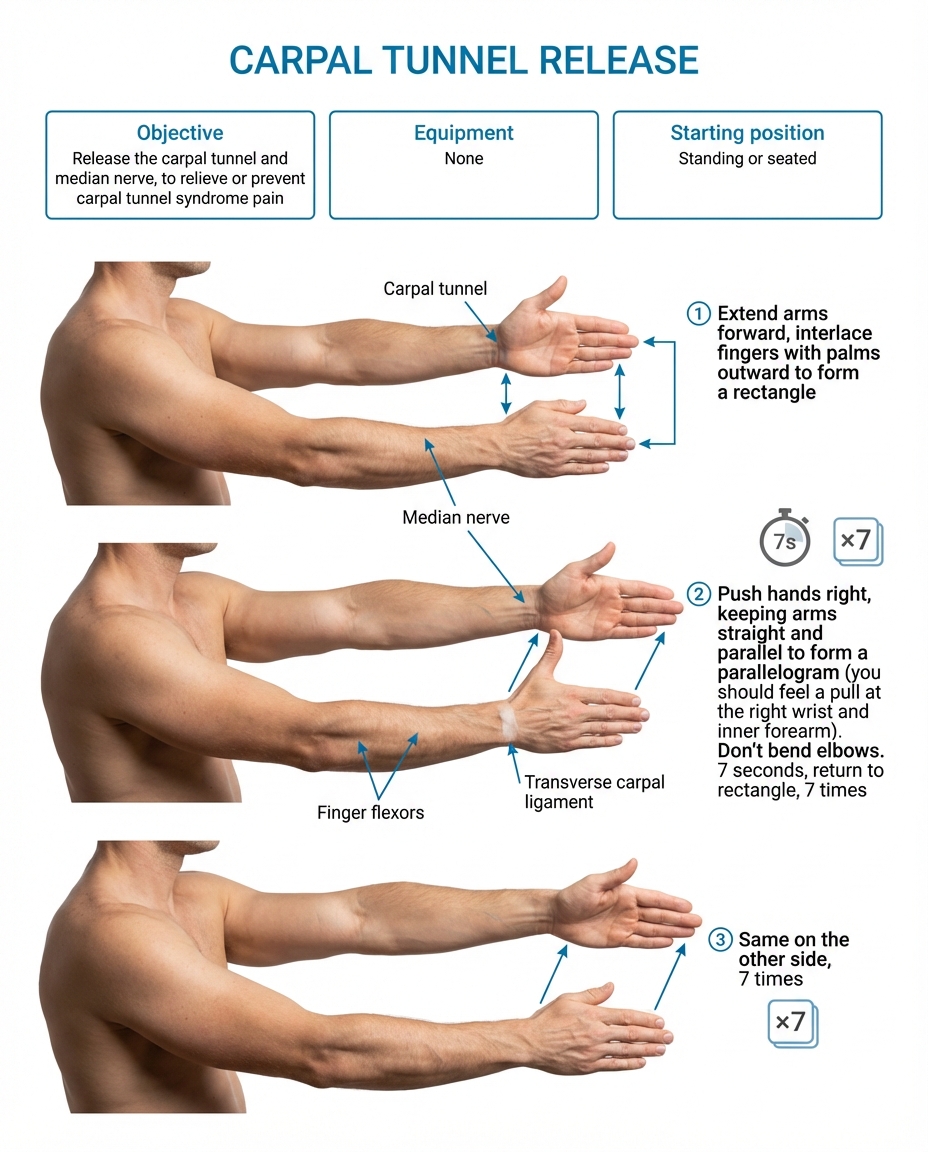
Understanding the Carpal Tunnel
The carpal tunnel is a narrow passage located on the palmar side of the wrist, formed by the carpal bones at the back and the flexor retinaculum at the front. Nine flexor tendons and the median nerve pass through it. When tendons swell or surrounding tissues become inflamed, the space narrows and the median nerve is compressed. Computer workers, pregnant women, diabetics, and those with hypothyroidism are particularly at risk.
Anatomy Involved
- Median nerve — provides sensation to the thumb, index, middle finger, and radial half of the ring finger, plus some thenar muscles.
- Flexor retinaculum — the fibrous roof of the tunnel, sometimes thickened and contributing to compression.
- Flexor tendons — the 9 tendons crossing the tunnel, whose synovial sheath swelling is the main compression cause.
- Thenar muscles — the thumb eminence muscles, which may atrophy in severe cases.
Step-by-Step Instructions
Step 1 — Locating the Area
Turn your hand palm up. The carpal tunnel is located at the center of the wrist, just below the wrist flexion crease. Identify the two prominent tendons (palmaris longus and flexor carpi radialis) — the tunnel lies between them and slightly deeper.
Step 2 — Canal Self-Massage (2 minutes)
Using the thumb of the opposite hand, apply gentle circular pressure across the entire wrist area, on both sides of the tendons. Start with light pressure and gradually increase. Cover the area from 2 cm above the wrist crease to 2 cm below. Hold each pressure point for 5 seconds before moving to the next. This massage helps loosen the retinaculum and release peritendinous adhesions.
Step 3 — Nerve Glide
Arm extended in front of you, palm facing the ceiling. Start with a closed fist, wrist in neutral. Slowly open your fingers like a fan, then extend your wrist backward (dorsal extension), and finally spread your thumb outward. Slowly return to the starting position. Perform 10 slow, controlled repetitions. This movement "glides" the median nerve in its tunnel, reducing adhesions.
Step 4 — Flexor Stretch
Arm extended in front of you, palm facing up. With the opposite hand, gently pull your fingers down and toward you (wrist extension). Hold for 20 seconds. This stretch reduces flexor tendon tension inside the tunnel.
Step 5 — Compression-Decompression
Place both hands back to back, wrists flexed at 90 degrees (reverse prayer position). Hold for 15 seconds — this (Phalen's test) reproduces tunnel compression. Release and shake your hands vigorously for 10 seconds. Repeat 3 times. The compression-decompression alternation creates a pump effect that improves local circulation.
Duration and Repetitions
- Self-massage: 2 minutes per wrist
- Nerve glide: 10 repetitions per side
- Flexor stretch: 20 seconds × 3
- Compression-decompression: 15 seconds × 3
- Total duration: approximately 10 minutes for both hands
- Frequency: 2 to 3 times daily
Safety Tips
- If self-massage causes intense tingling or radiating pain, stop and reduce pressure.
- The nerve glide should never cause pain — only slight tension.
- These techniques do not replace a medical diagnosis — if symptoms persist beyond 2 weeks, consult a professional.
- Avoid sudden movements and forced stretches of the wrist area.
- Wear a nighttime rest splint to complement these exercises.
Who Benefits from This Exercise?
This technique is intended for people with mild to moderate carpal tunnel syndrome, nighttime finger numbness, or wrist pain from repetitive motions. Office workers, cashiers, musicians, and craftspeople use it daily to maintain hand comfort.
Diagrams and illustrations
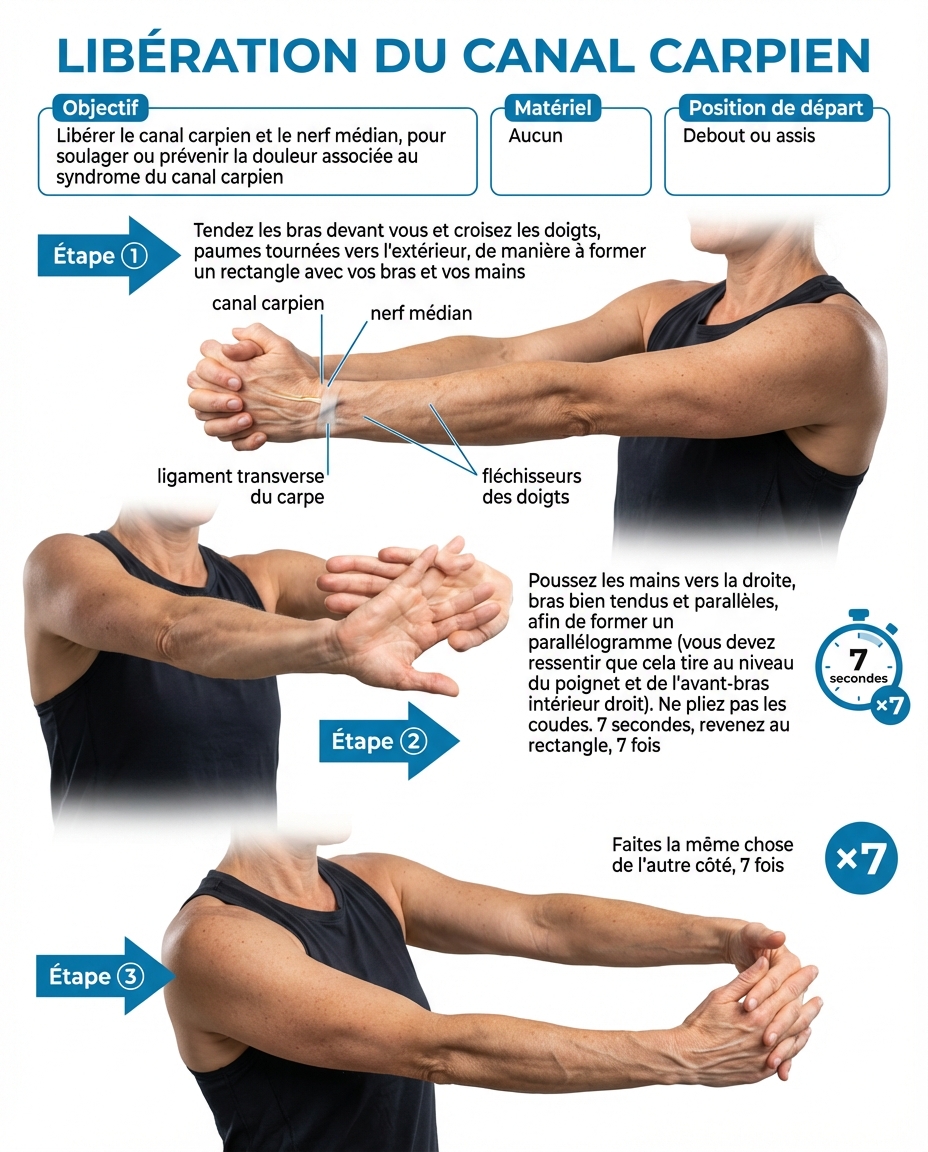
Carpal tunnel release illustration
Self-massage of the carpal tunnel area and wrist flexor stretching.