Abdominal Breathing with Relaxed Shoulders
Deep abdominal breathing technique in seated or lying position, with emphasis on shoulder relaxation for complete muscular release.
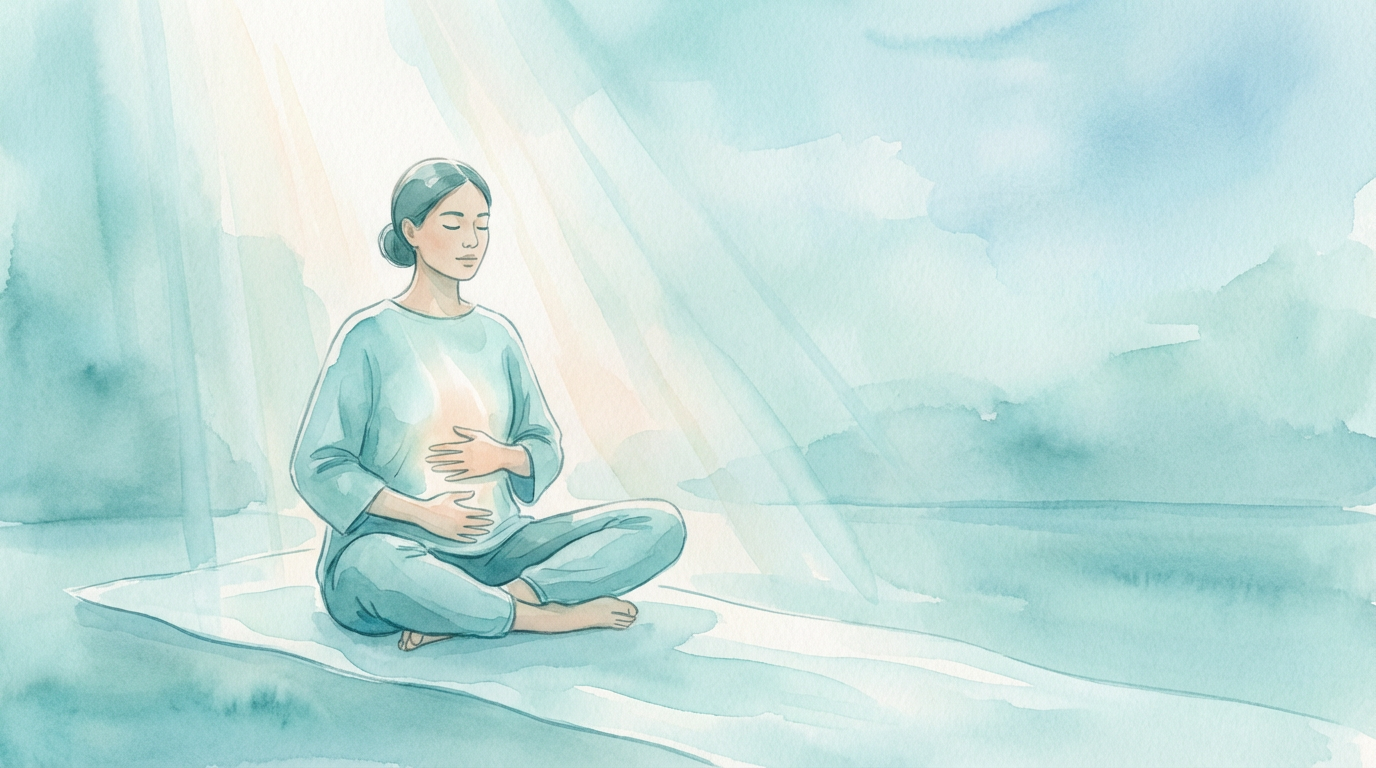
Abdominal Breathing with Relaxed Shoulders — Global Relaxation Technique
Abdominal breathing, also called diaphragmatic breathing, is the most natural and effective form of breathing for oxygenating the body and relaxing the nervous system. Yet under the influence of stress, desk posture, and daily tensions, most of us breathe shallowly with the upper chest and tense shoulders. This exercise retrains you to breathe with the diaphragm while consciously releasing the shoulders, creating a cascade of relaxation throughout the body.
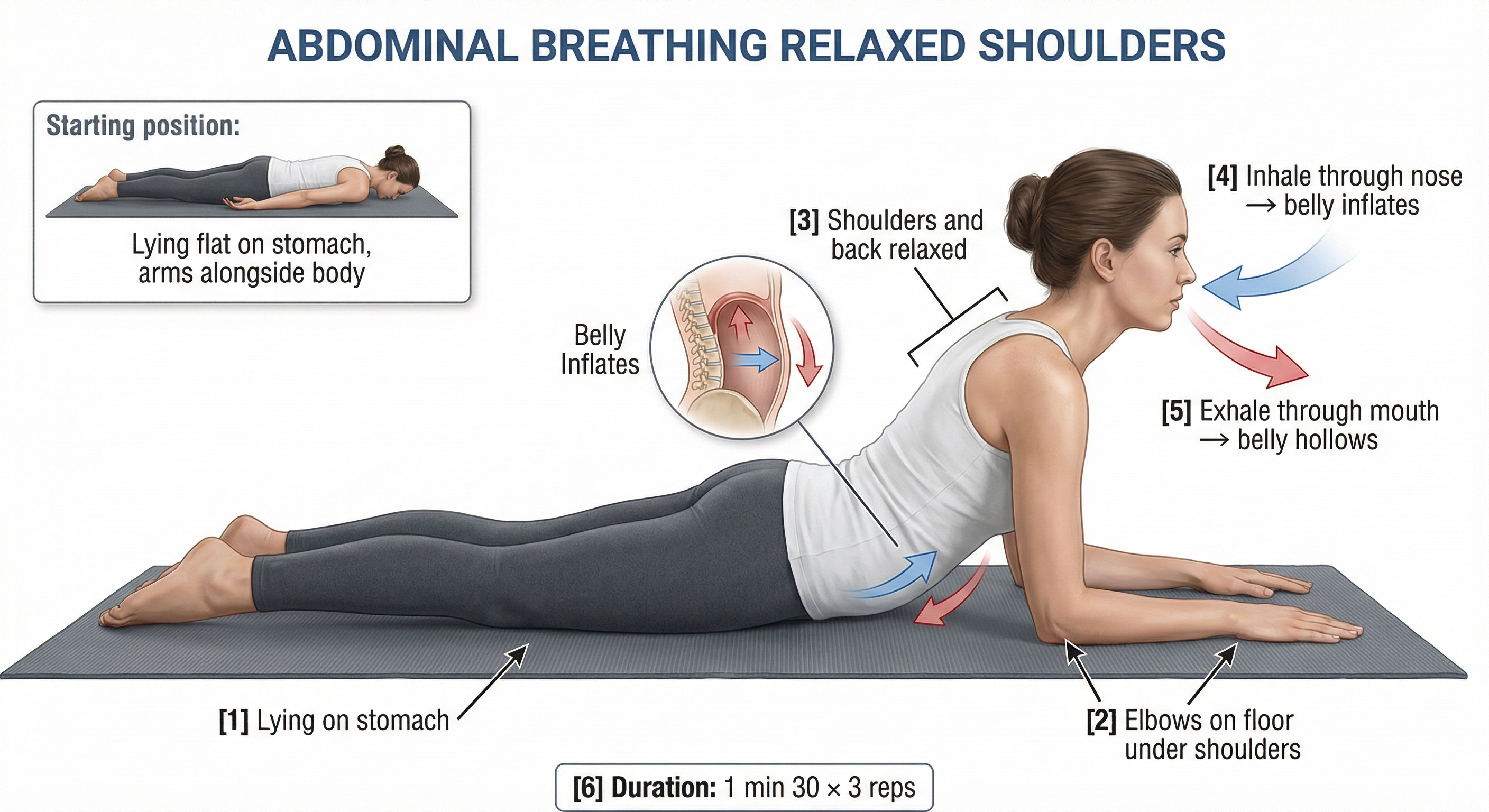
Why Is Abdominal Breathing So Important?
The diaphragm is the primary breathing muscle. When functioning properly, it descends during inhalation, creating a vacuum that draws air into the lungs while massaging abdominal organs. This deep breathing activates the parasympathetic nervous system (the "rest and digest" mode), slows the heart rate, lowers blood pressure, and reduces cortisol (stress hormone) levels. Tense shoulders are a classic sign of upper chest breathing and chronic stress. Consciously releasing the shoulders during abdominal breathing breaks this tension cycle.
Anatomy Involved
- Diaphragm — dome-shaped muscle separating the thoracic and abdominal cavities, the main breathing driver.
- Intercostal muscles — muscles between the ribs assisting thoracic expansion.
- Transverse abdominal muscles — the "natural corset" that relaxes during inhalation and contracts during deep exhalation.
- Upper trapezius and levator scapulae — shoulder muscles often chronically contracted, deliberately released in this exercise.
- Pelvic floor — relaxes during diaphragmatic inhalation and rises during exhalation.
Step-by-Step Instructions
Step 1 — Comfortable Setup
Sit comfortably on a chair with your back well supported, feet flat on the floor. You can also lie on your back with knees bent and feet on the floor. If lying down, place a small pillow under your head. Close your eyes if comfortable.
Step 2 — Body Scan and Shoulder Release
Before starting, bring attention to your shoulders. Shrug them toward your ears for 3 seconds, then let them drop heavily. Repeat twice. Feel the difference between tension and release. Your shoulders should be low, far from your ears, and completely relaxed. The jaw is unclenched, the tongue rests softly in the mouth.
Step 3 — Hand Placement
Place one hand on your chest and the other on your abdomen, just below the navel. These hands serve as sensors: the abdominal hand should move, while the chest hand should remain nearly still.
Step 4 — Abdominal Inhalation
Inhale slowly through the nose for 4 seconds. Direct the air downward, inflating the belly like a balloon. Your abdominal hand rises, your chest hand stays stable. The shoulders do not move or rise. Imagine your breath descending to the navel.
Step 5 — Controlled Exhalation
Exhale slowly through the mouth (lips slightly pursed) for 6 seconds. The belly naturally hollows, the navel draws toward the spine. Exhalation is longer than inhalation — this 4:6 ratio strongly activates the parasympathetic system.
Step 6 — Cycles and Shoulder Check
Perform 10 complete cycles of abdominal breathing. Every 3-4 breaths, mentally check that your shoulders are still relaxed. If they have risen, consciously lower them on the next exhalation.
Duration and Repetitions
- Inhalation: 4 seconds through the nose
- Exhalation: 6 seconds through the mouth
- Cycles: 10 complete cycles
- Total duration: approximately 3 to 5 minutes
- Frequency: 2 to 3 times daily, upon waking, before lunch, and before bedtime
Safety Tips
- If you feel dizzy, return to your normal breathing for a few cycles.
- Never force inhalation — breathing should remain comfortable, not strained.
- People with respiratory conditions (asthma, COPD) should adapt the rhythm to their capacity.
- This exercise may trigger yawning or tears — this is a normal sign of autonomic nervous system release.
Who Benefits from This Exercise?
Abdominal breathing with relaxed shoulders benefits everyone without exception. It is particularly recommended for stressed or anxious individuals, those with chronic neck tension, tension headaches, sleep disorders, or irritable bowel syndrome. Athletes use it for recovery, musicians for stage fright management, and meditation practitioners as the foundation of all contemplative practice.
Diagrams and illustrations
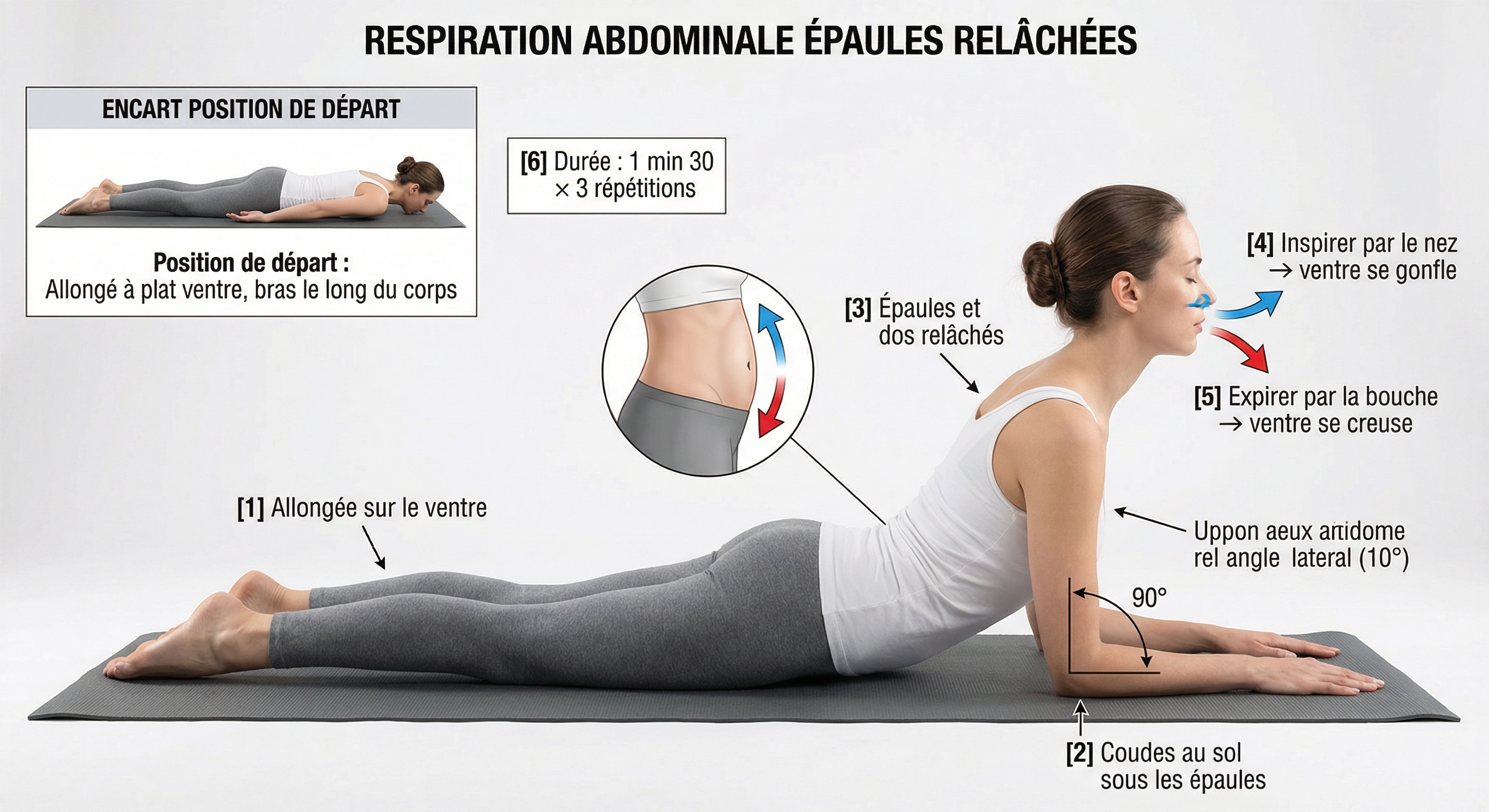
Abdominal breathing with relaxed shoulders illustration
Seated or lying position with hands on chest and abdomen for diaphragmatic breathing.