Freestanding Handstand
Unsupported handstand developing proprioception, shoulder strength and total body control.
Updated
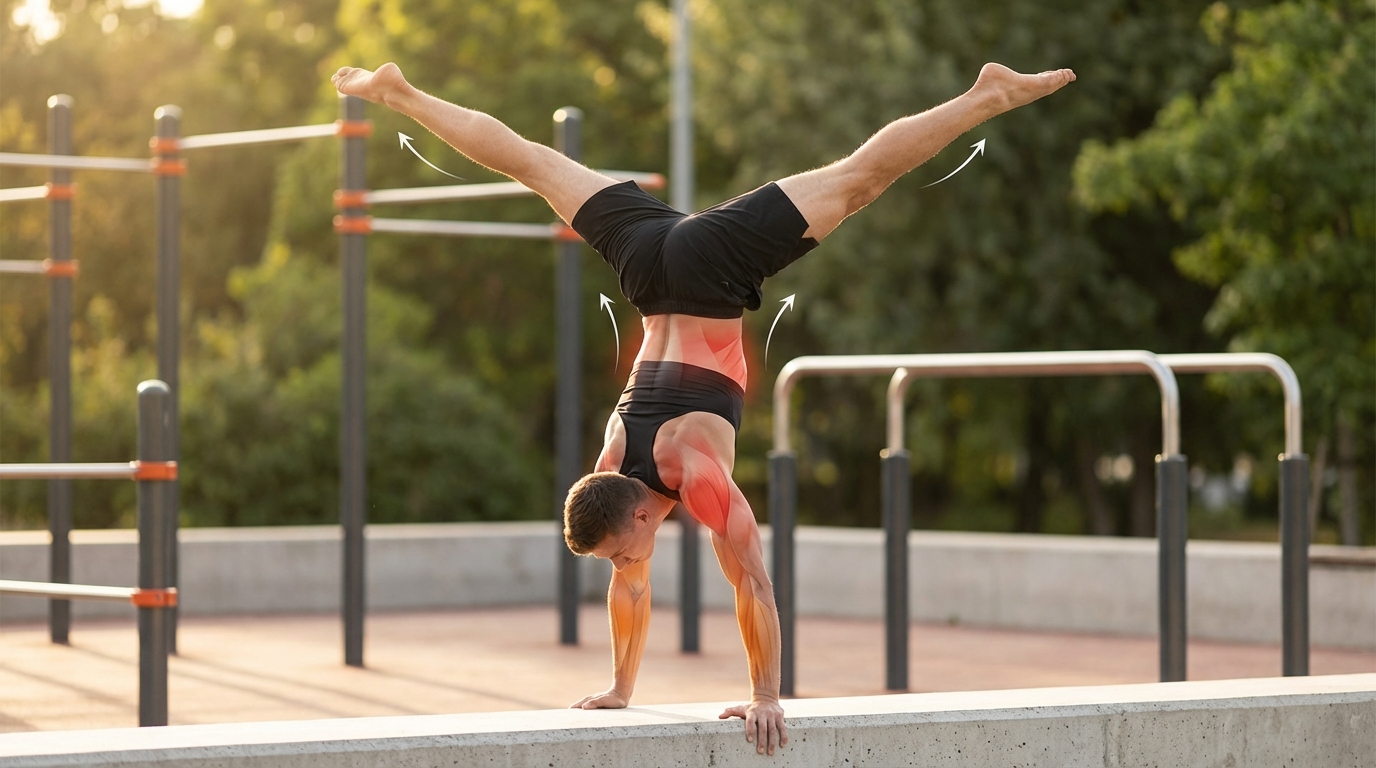
Introduction
The freestanding handstand is one of the most sought-after goals in calisthenics and gymnastics. Without wall support, balance relies entirely on finger control, palm pressure and constant micro-adjustments of the core. It is as much a strength exercise as one of patience and regular practice.
Anatomy and Muscles Worked
- Primary muscles: deltoids, trapezius, triceps
- Secondary muscles: full core (constant micro-adjustments)
- Proprioception: wrists, fingers (primary balance control)
Step-by-Step Instructions
- From standing, swing one leg forward and place hands on floor (kick-up) or mount from a press position.
- Stack joints: wrists under shoulders, shoulders under hips, hips under feet.
- Actively push the floor, shoulders open, body engaged.
- Control balance: if falling toward back, push with fingers; if toward belly, lighten fingers.
- Gaze fixed between hands, calm and regular breathing.
Recommended Sets and Reps
- Learning: 10 to 15 attempts per session, aim for 5 to 10 seconds
- Intermediate: aim for 30 seconds hold
- Advanced: 60+ seconds, transitions and figures
Common Mistakes
- Kick-up too hard: mount with control, not force.
- Soft body: maximum core engagement, pointed toes.
- Looking elsewhere: always look between hands.
Safety
Practice on a flat, clear surface. Learn pirouette bail out and forward roll as emergency exits. Progression takes weeks to months: be patient.
Variations
- Straddle handstand (legs apart, easier)
- Press to handstand
- Handstand walking
Target Audience
Intermediate practitioners who have mastered wall handstand for 60 seconds. Patience and consistency are key.
Diagrams and illustrations
Freestanding Handstand — Illustration
Technical illustration for freestanding handstand.