Tuck Jump
Vertical jump bringing knees to chest to develop explosive power and aerial coordination.
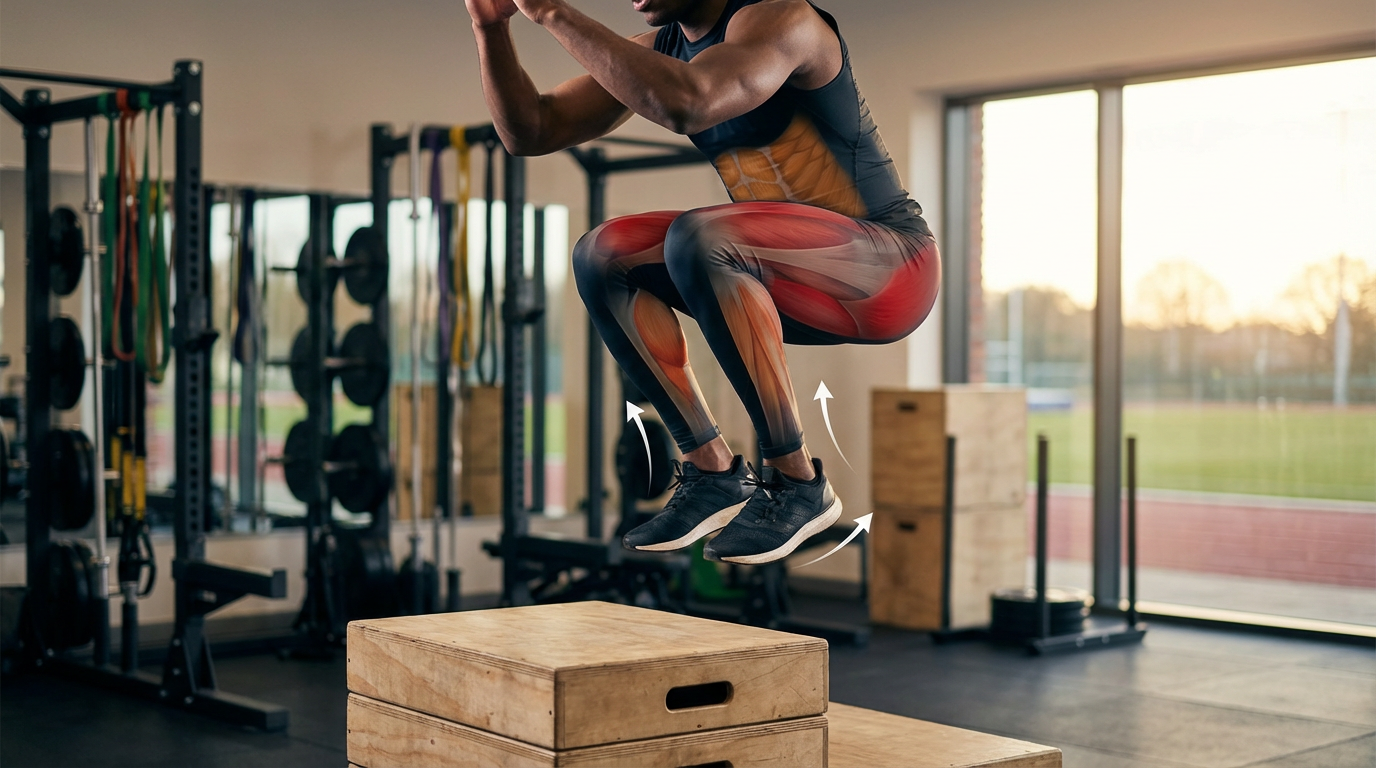
Tuck Jump
The tuck jump is a high-intensity plyometric exercise that requires jumping as high as possible while bringing the knees to the chest in the air. This movement develops explosive leg power, core strength, and aerial neuromuscular coordination. Its hip flexion component during the aerial phase differentiates it from simple jumps.
Anatomy Targeted
The quadriceps, glutes, and calves provide vertical propulsion. The iliopsoas and rectus femoris powerfully flex the hips to drive the knees upward. The abdominals (rectus abdominis, transverse) contract to bring the pelvis toward the knees during flight. The hamstrings absorb impact during landing.
Step-by-Step Execution
- Stand with feet shoulder-width apart, arms at your sides.
- Slightly flex the knees and jump vertically as high as possible.
- In the air, actively drive the knees toward the chest by contracting the abdominals.
- Release the legs before landing to prepare for the reception.
- Land softly on the forefoot, knees flexed, in a partial squat position.
- Immediately chain into the next jump with minimal ground contact time.
Sets and Reps
4 sets of 8 reps. Rest 90 seconds to 2 minutes between sets. The quality of the tuck in the air is more important than the number of reps.
Safety Warnings
- Never sacrifice jump height to bring the knees higher. Jump high first, then tuck.
- Always land on a soft surface (mat, grass).
- Avoid this exercise with lower back pain: the rapid hip flexion can stress the lumbar spine.
- Specifically warm up the hip flexors before starting.
- Maintain a steady rhythm. Do not rush repetitions.
- Stop if jump height decreases significantly (sign of fatigue).
Progressions
- Level 1: Simple vertical jump, focus on height.
- Level 2: Tuck jump with partial tuck (knees to waist height).
- Level 3: Full tuck jump (knees to chest).
- Level 4: Rapid reactive tuck jumps or tuck jumps with rotation.
Target Audience
Intermediate athletes with a solid plyometric foundation. Particularly beneficial for gymnasts, martial artists, and combat sport practitioners. Excellent for developing the aerial tuck ability needed in many sport disciplines.