Uttanasana — Standing Forward Bend
Uttanasana (standing forward bend) deeply stretches the hamstrings and calves while calming the nervous system and soothing the mind.
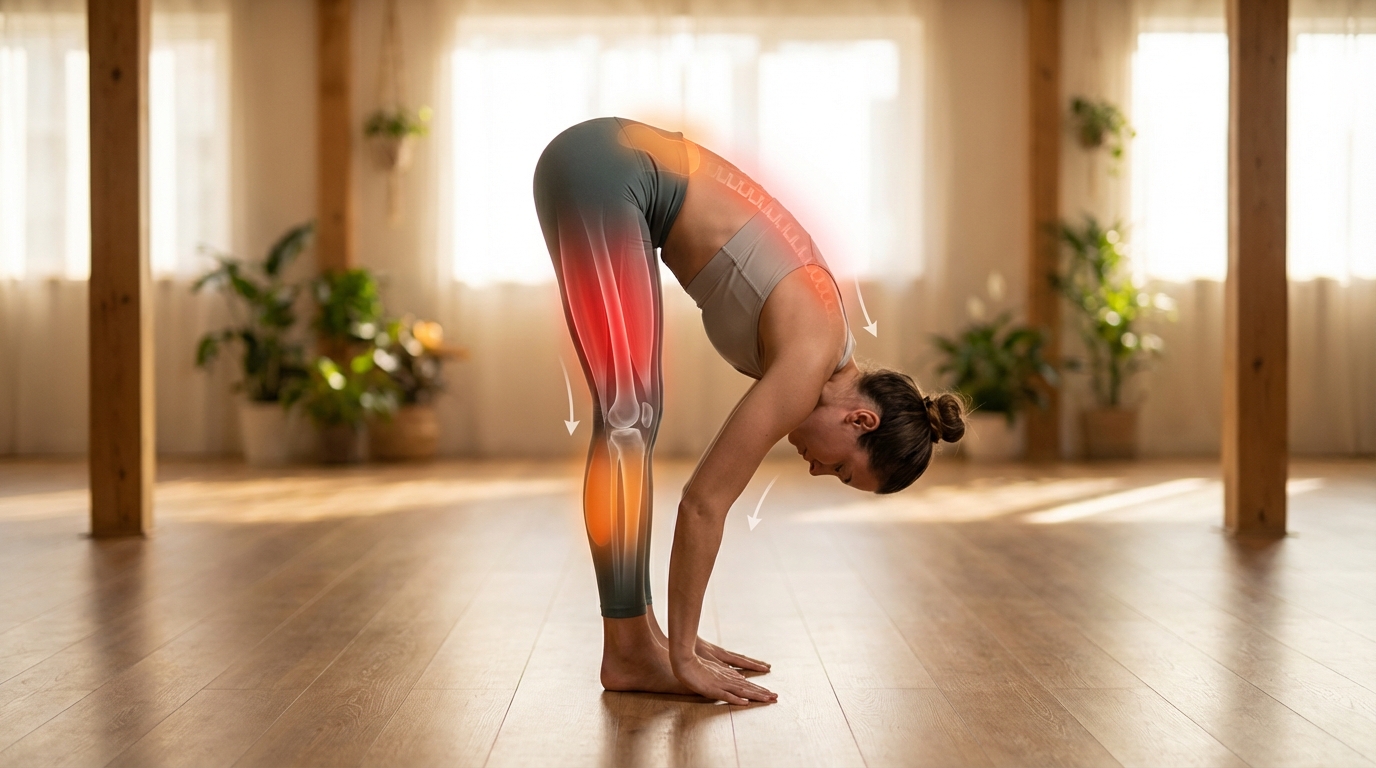
Uttanasana — Standing Forward Bend (उत्तानासन)
Uttanasana, from the Sanskrit ut (intense) and tan (to stretch), literally means "intense stretch." This forward fold is one of the most practiced poses in yoga, present in every sun salutation. It offers a deep stretch of the entire posterior chain while providing a remarkable calming effect on the nervous system.
Therapeutic Benefits
- Posterior chain stretch — hamstrings, calves, paraspinal muscles and thoracolumbar fascia.
- Nervous system calming — the partial head inversion activates the parasympathetic system.
- Improved digestion — gentle abdominal compression stimulates digestive organs.
- Tension headache relief — releasing the neck and trapezius reduces accumulated tension.
Anatomy Involved
The hamstrings (biceps femoris, semitendinosus, semimembranosus) are the primary muscles stretched. The spinal erectors lengthen progressively. The gastrocnemius and soleus of the calves are engaged. The quadriceps work eccentrically to control the descent, while the psoas and hip flexors facilitate the fold.
Step-by-Step Instructions
Step 1 — Starting Position
From Tadasana, feet together or hip-width apart. Inhale and lengthen the spine upward. Place hands on the hips.
Step 2 — Hinging from the Hips
As you exhale, fold forward from the hip joint (not from the waist). Keep the back long as long as possible during the descent. Imagine bringing the navel toward the thighs.
Step 3 — Final Position
Let the hands rest on the floor, on the shins, or hold opposite elbows. Completely release the head and neck. Let the weight of the head create a gentle traction on the cervical spine.
Breathing and Duration
Hold for 5 to 8 deep breaths. With each inhale, slightly lengthen the spine; with each exhale, gently deepen the fold. Never force — let gravity do the work.
Contraindications
- Acute lumbar disc herniation
- Intracranial hypertension
- Active sciatica (practice with bent knees)
- Glaucoma
Modifications
- Beginner: generously bend the knees to protect the lower back and allow the torso to come closer to the thighs. Use blocks under the hands.
- Advanced: slide hands under the feet (Padahastasana), or hold the big toes (Padangusthasana).
Target Audience
Uttanasana is suitable for all practitioners with appropriate adaptations. It is particularly recommended for athletes with tight hamstrings, stressed individuals seeking a quick calming effect, and as a transition pose in vinyasa sequences.
Diagrams and illustrations

Uttanasana illustration
Standing forward bend with long back and released head.