Vrksasana — Tree Pose
Vrksasana (tree) develops balance, focus and strengthens ankles by standing on one leg with the opposite foot against the thigh.
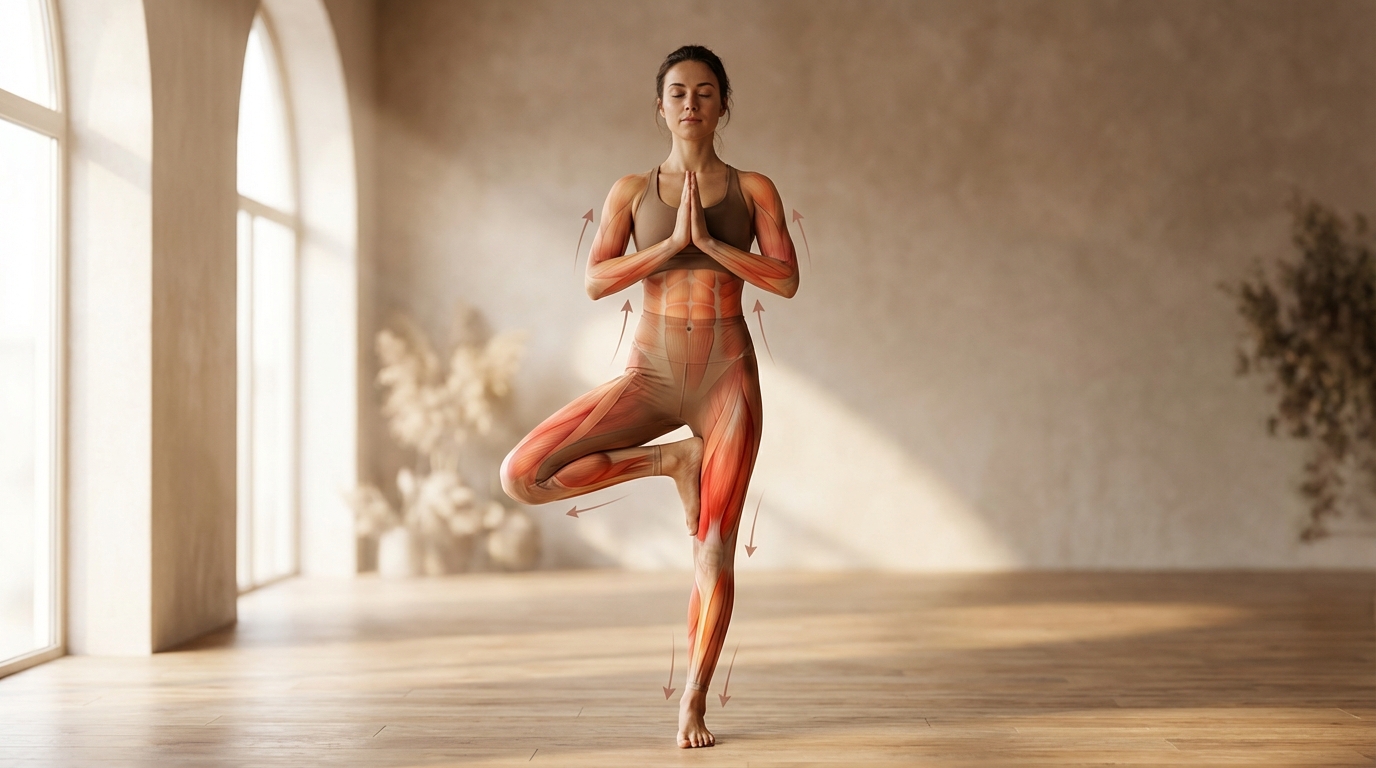
Vrksasana — Tree Pose (वृक्षासन)
Vrksasana, from the Sanskrit vrksa (tree), is probably yoga's most recognized balance pose. Rooted on one leg like a tree, the practitioner develops physical and mental stability, concentration and patience. This seemingly simple pose reveals the quality of our grounding and presence.
Therapeutic Benefits
- Balance and proprioception — develops single-leg stability and equilibrium reflexes.
- Ankle strengthening — intrinsic foot muscles and peroneals actively stabilize the ankle.
- Hip opening — external rotation of the bent leg opens the hip joint.
- Focus and calm — the drishti (fixed focal point) trains mental focus and tranquility.
- Posture and alignment — reinforces awareness of the body's vertical axis.
Anatomy Involved
Intrinsic standing foot muscles (interossei, lumbricals) make micro-balance adjustments. Peroneal muscles stabilize the ankle. The standing leg's gluteus medius prevents lateral pelvic drop. External hip rotators (piriformis, obturators) of the bent leg maintain rotation. Deep abdominals center the trunk.
Step-by-Step Instructions
Step 1 — Grounding
Stand in Tadasana, root the standing foot into the floor. Feel all four corners of the foot. Fix a still point ahead (drishti) at eye level.
Step 2 — Foot Placement
Lift one foot and place the sole against the inner thigh of the standing leg, above the knee. NEVER against the knee (joint risk). The bent knee points outward.
Step 3 — Hips and Pelvis
Hips stay facing forward and level. The pelvis does not tilt. Foot and thigh press reciprocally for stability.
Step 4 — Hand Position
Hands in prayer (Anjali Mudra) at chest center, or arms raised overhead like tree branches.
Breathing and Duration
Hold for 5 to 10 breaths per side. Breathing is calm and steady. If you lose balance, simply return and resume without judgment.
Contraindications
- Ankle or knee injury in the standing leg
- Severe vertigo — practice near a wall
- Hypertension — keep arms in prayer rather than raised
Modifications
- Beginner: foot against calf (not knee), hand on wall for support, or heel against ankle with toes on floor.
- Advanced: close eyes, rise onto standing foot's ball, or practice on a balance cushion.
Target Audience
Vrksasana is accessible to all ages and levels. Particularly recommended for older adults (fall prevention), athletes (proprioception), and anyone seeking a moment of calm and centering in their practice.
