Paschimottanasana — Seated Forward Bend
Paschimottanasana (seated forward bend) deeply stretches the entire posterior chain from back to calves, calming the mind and fostering introspection.
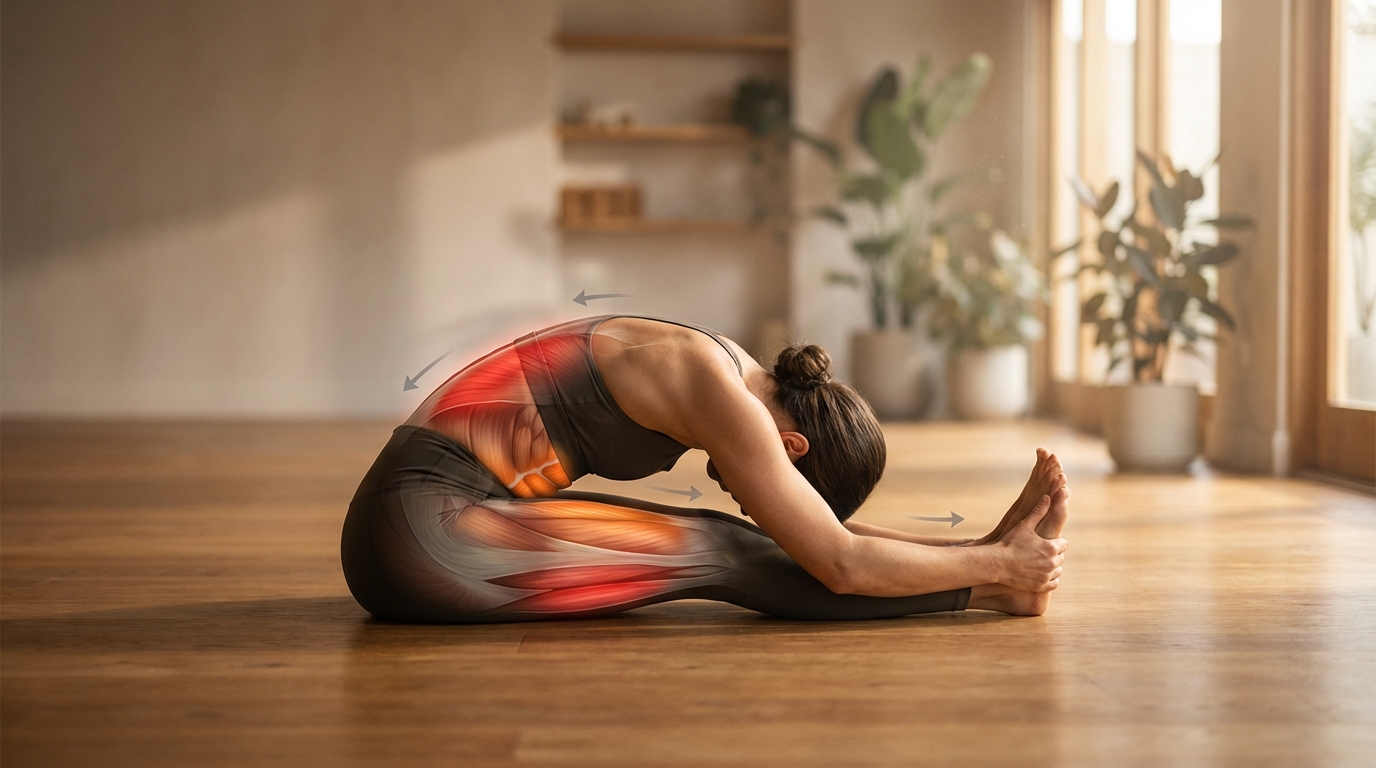
Paschimottanasana — Seated Forward Bend (पश्चिमोत्तानासन)
Paschimottanasana, from the Sanskrit paschima (west, the back of the body) and uttana (intense stretch), is the fundamental seated forward fold. Seated with legs extended, the practitioner folds forward from the hips to stretch the entire posterior chain. Considered one of classical Hatha Yoga's most important poses, it symbolizes patience and letting go.
Therapeutic Benefits
- Complete posterior chain stretch — hamstrings, calves, spinal erectors, latissimus dorsi.
- Deep mental calm — the forward fold activates the parasympathetic system.
- Abdominal organ stimulation — gentle compression promotes digestion.
- Stress and anxiety relief — introspective pose that draws attention inward.
Anatomy Involved
Hamstrings are the primary muscles stretched. Gastrocnemius and soleus lengthen. Spinal erectors stretch passively. Latissimus dorsi opens. Hip flexors (psoas, rectus femoris) work to deepen the fold.
Step-by-Step Instructions
Step 1 — Seated Position
Seated, legs extended, feet flexed (toes toward you). Sit bones well grounded. Spine straight.
Step 2 — Lengthening
Inhale and lengthen the spine toward the ceiling.
Step 3 — Folding
Exhale and fold forward from the hips (not the waist). Keep the back long as long as possible. Hold feet, ankles or shins depending on flexibility.
Step 4 — Release
Let the back round naturally once in the pose. Release the head toward the legs. Belly seeks thighs, not nose to knees.
Breathing and Duration
Hold for 8 to 10 breaths. In yin yoga, hold 3 to 5 minutes.
Contraindications
- Acute lumbar disc herniation
- Active sciatica
- Advanced pregnancy
Modifications
- Beginner: bend knees, use a strap around feet, sit on a folded blanket.
- Advanced: hold toes or place hands beyond feet, forehead to shins.
Target Audience
Fundamental for all practitioners. Particularly recommended for athletes with tight hamstrings and stressed individuals seeking deep calming.
Diagrams and illustrations

Paschimottanasana illustration
Paschimottanasana — Seated Forward Bend with alignment.