Breathing with Extended Arms
Dynamic standing breathing exercise combining arm raise on inhalation and lowering on exhalation for complete thoracic expansion.

Breathing with Extended Arms — Movement and Breath Synchronization
Breathing with extended arms is a dynamic breathing exercise that synchronizes arm movement with the respiratory cycle. By raising the arms on inhalation and lowering them on exhalation, you physically open the rib cage and increase lung capacity. This is an energizing exercise combining the benefits of deep breathing with gentle mobilization of the shoulders and thoracic spine.
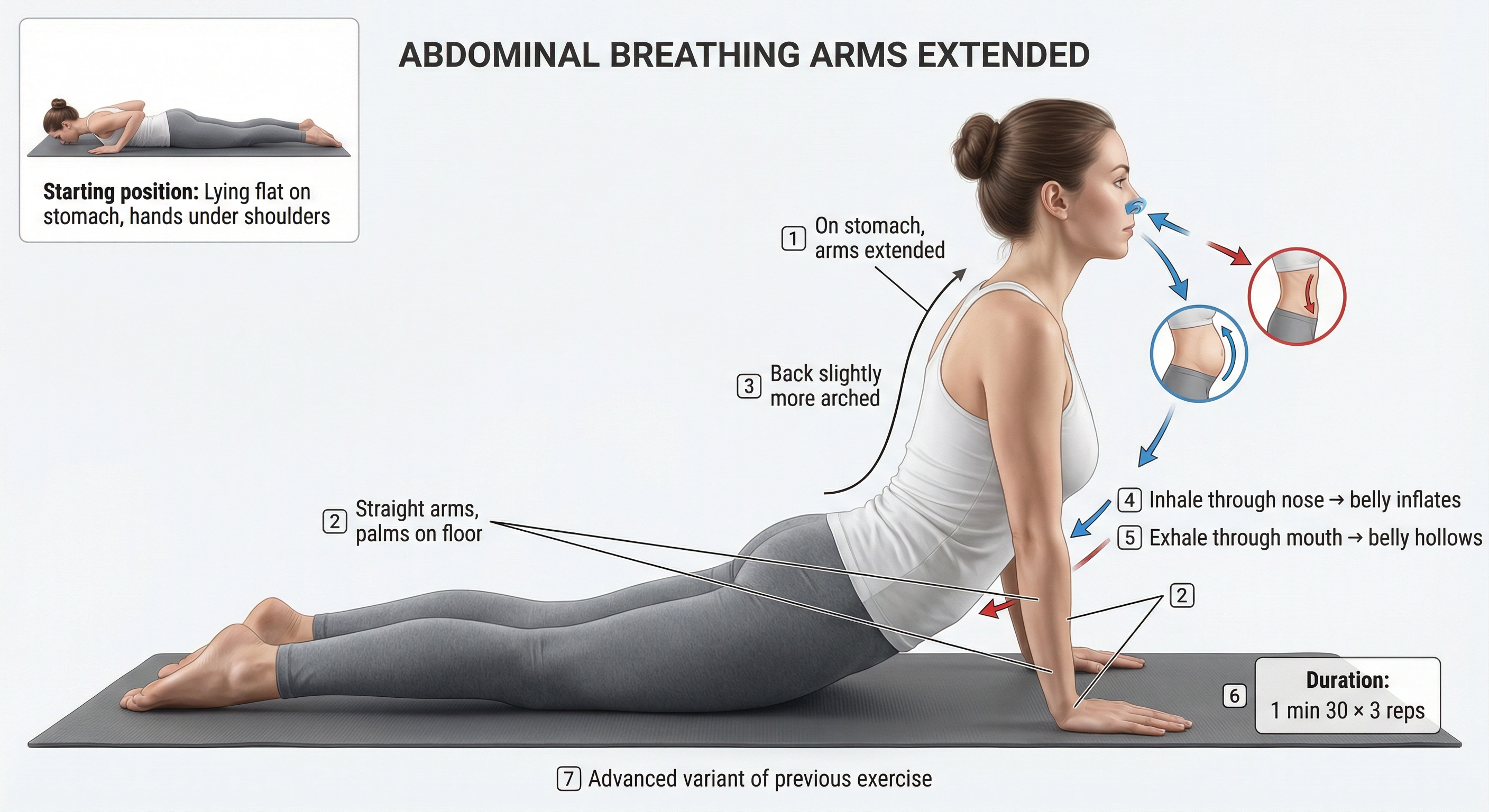
Why Combine Arm Movement with Breathing?
The rib cage is not a rigid structure — it is designed to expand in three dimensions with each breath. However, daily hunched posture, muscle tension, and stress limit this expansion. By raising arms above the head during inhalation, you stretch the intercostal muscles, open the ribs laterally, and elevate the sternum. This mechanical opening increases inspired air volume by 15 to 20% compared to static breathing. Additionally, the rhythmic arm movement stimulates lymphatic circulation in the upper limbs and relaxes the often-contracted upper back muscles.
Anatomy Involved
- Diaphragm — primary inhalation driver, its range is amplified by the thoracic opening created by arm elevation.
- External intercostal muscles — elevate the ribs during inhalation, stretched and activated by the arm raise.
- Pectoralis major and minor — accessory inhalation muscles, stretched in the arms-raised position.
- Deltoid and trapezius — responsible for arm elevation, engaged gently and rhythmically.
- Thoracic erector spinae — participate in thoracic extension accompanying the arm raise.
- Serratus anterior — stabilizes the scapula and contributes to lateral rib expansion.
Step-by-Step Instructions
Step 1 — Starting Position
Stand with feet hip-width apart, knees slightly unlocked (not hyperextended). Arms hang naturally at your sides, palms facing your thighs. Chin is parallel to the floor, gaze straight ahead.
Step 2 — Inhalation with Arm Raise
Inhale slowly through the nose for 4 to 5 seconds. Simultaneously, raise both arms laterally (like wings) in a wide arc until hands meet above the head, palms facing each other. The movement is slow, fluid, and perfectly synchronized with inhalation. Feel your chest open, ribs spread, and lungs fill completely.
Step 3 — Pause at the Top
At the top of the movement, hold the arms-extended position above the head for 2 seconds, lungs full. Stretch toward the sky as if trying to grow 2 centimeters taller. This suspension moment maximizes thoracic opening and gas exchange.
Step 4 — Exhalation with Arm Descent
Exhale slowly through the mouth for 5 to 6 seconds. Simultaneously, lower the arms along the same arc, slowly and controlled, back to the starting position. Feel your shoulders relax, your rib cage gently close, and air completely leave your lungs.
Step 5 — Complete Cycles
Perform 8 to 10 complete cycles without interruption. The rhythm should remain constant and the movement fluid — avoid jerky motions. Each cycle lasts about 12 seconds (4-5s inhalation + 2s pause + 5-6s exhalation).
Duration and Repetitions
- Inhalation + raise: 4 to 5 seconds
- Pause at top: 2 seconds
- Exhalation + descent: 5 to 6 seconds
- Cycles: 8 to 10
- Total duration: approximately 2 to 3 minutes
- Frequency: 1 to 3 times daily, ideally morning for energy and evening for relaxation
Safety Tips
- If you have a shoulder condition (tendinitis, capsulitis), limit arm raise amplitude to a comfortable angle.
- Do not forcefully hold your breath — the 2-second pause at the top should remain natural and relaxed.
- If dizziness occurs, reduce the number of cycles or decrease breathing amplitude.
- People with uncontrolled hypertension should avoid breath-hold pauses and keep breathing fluid.
- Practice on a stable surface, away from objects that might interfere with arm movement.
Who Benefits from This Exercise?
Breathing with extended arms suits all audiences, from teenagers to the elderly. It is particularly beneficial for people working seated (compensatory thoracic opening), those with hunched posture (kyphosis), athletes warming up their respiratory system, and anyone seeking an energizing morning exercise. Its simplicity and brevity make it an ideal ritual to integrate into the daily routine.
Diagrams and illustrations
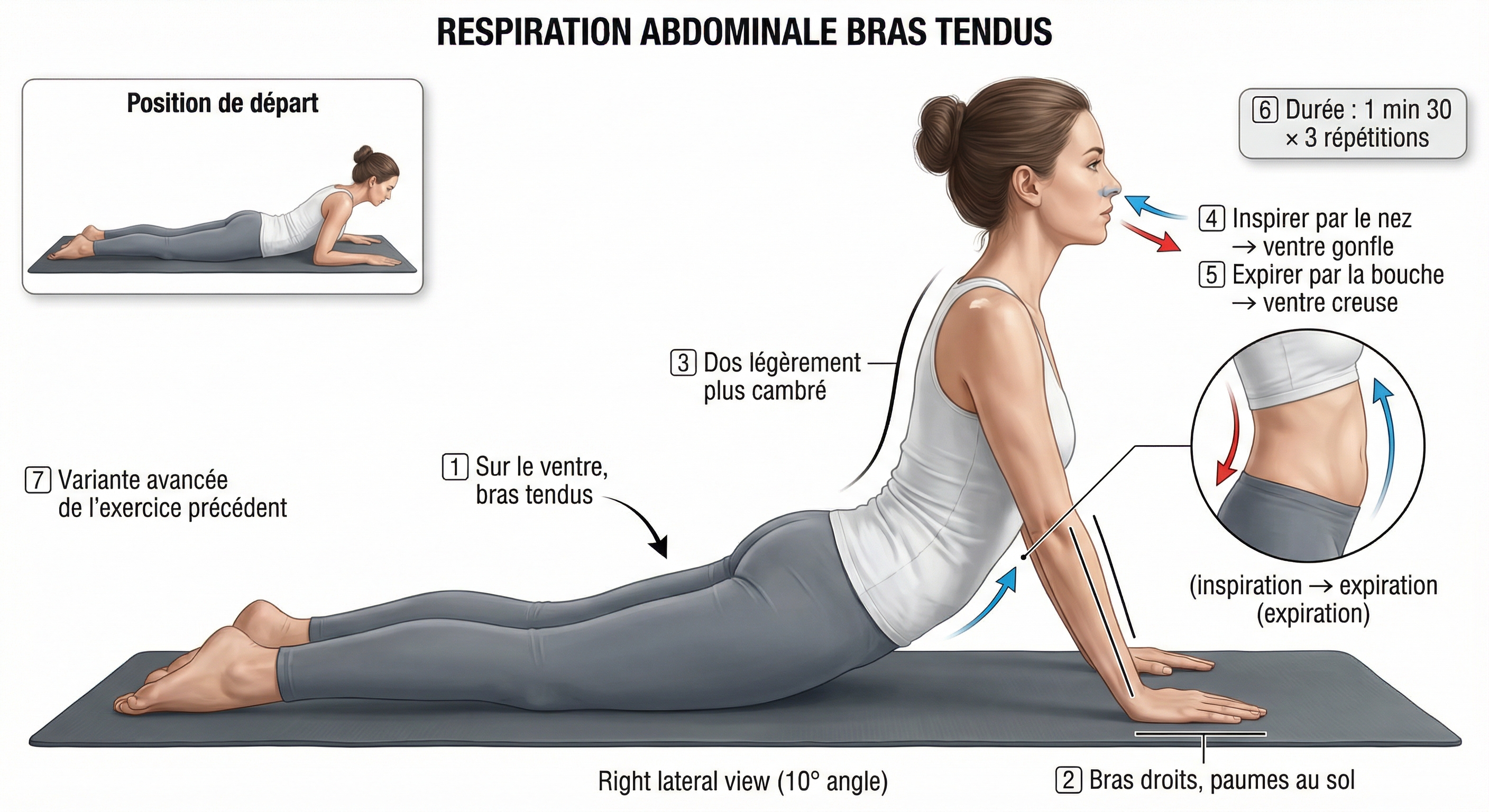
Breathing with extended arms illustration
Standing position with arm raise in an arc synchronized with inhalation.