Gymnastic Planche
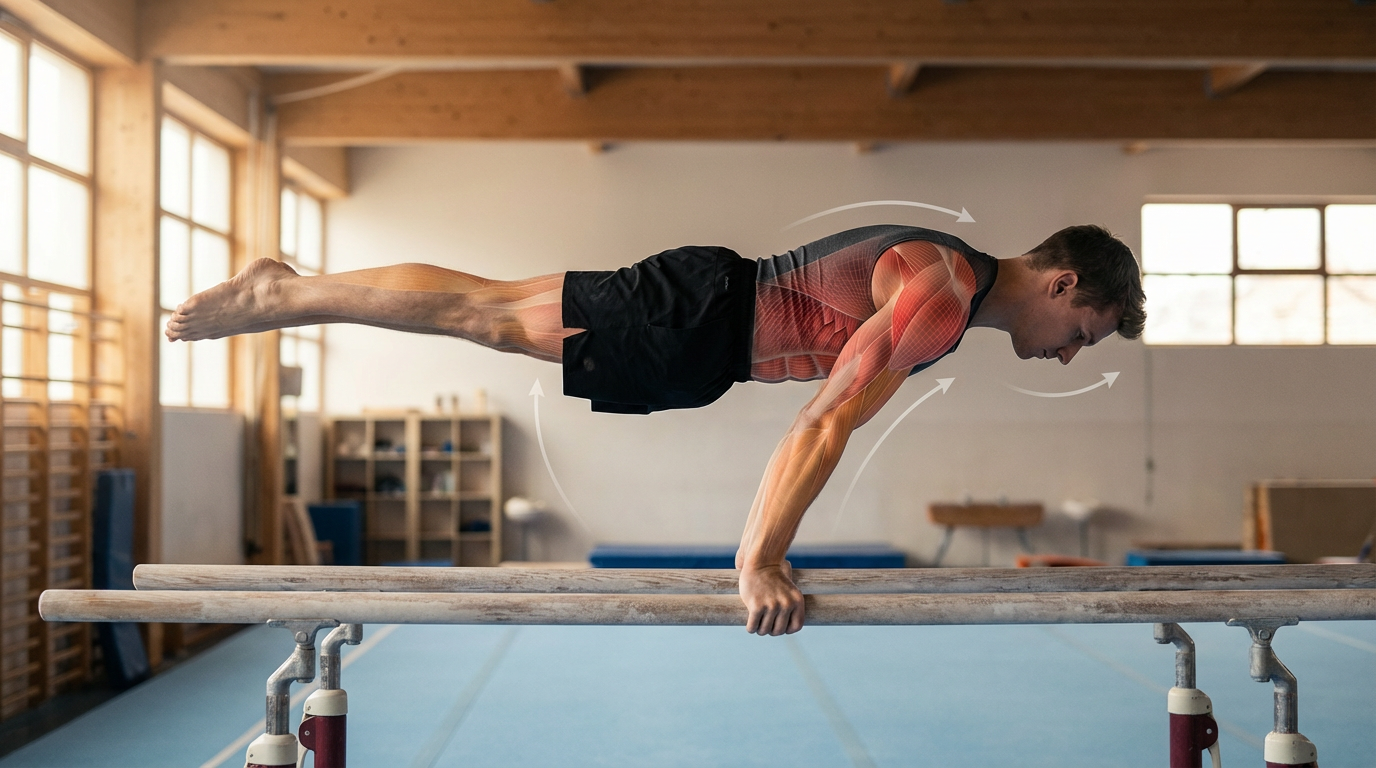
Elite gymnastics figure: body horizontal floating on hands, arms straight.
Updated
Introduction
The planche is considered one of the most difficult figures in gymnastics and calisthenics. The practitioner holds the body perfectly horizontal facing the ground, arms straight, with no contact point other than the hands. This elite exercise requires years of progression and exceptional deltoid and core strength.
Anatomy and Muscles Worked
- Primary muscles: anterior deltoids (extreme load), full core
- Secondary muscles: pectorals, triceps, wrists
- Stabilizers: biceps, forearms, scapular muscles
Step-by-Step Instructions
- Begin with progressions: tuck planche (knees bent to body).
- Hands on floor or parallettes, lean forward.
- Lift feet off floor and hold body in compact position (tuck).
- Progress to advanced tuck, straddle, then full planche.
- Full planche: horizontal body, straight legs, straight arms.
Recommended Sets and Reps
- Progressions: Tuck (5-15s) → Advanced tuck → Straddle → Full
- Each stage: 5 sets of 5 to 15 seconds
Common Mistakes
- Hips too high: body must be perfectly horizontal.
- Bent arms: always keep arms straight.
- Progressing too fast: respect months at each stage.
Safety
Stress on wrists and shoulders is extreme. Use parallettes to protect wrists. Injury risk is high if progression is too rapid. Consult a specialized coach.
Variations
- Tuck planche (knees to body)
- Straddle planche (legs apart)
- Planche push-ups (dynamic)
Target Audience
Very long-term goal for dedicated practitioners. May require 2 to 5 years of progressive work.
Diagrams and illustrations
Gymnastic Planche — Illustration
Technical illustration for gymnastic planche.