Floor Poses — Forward Bends
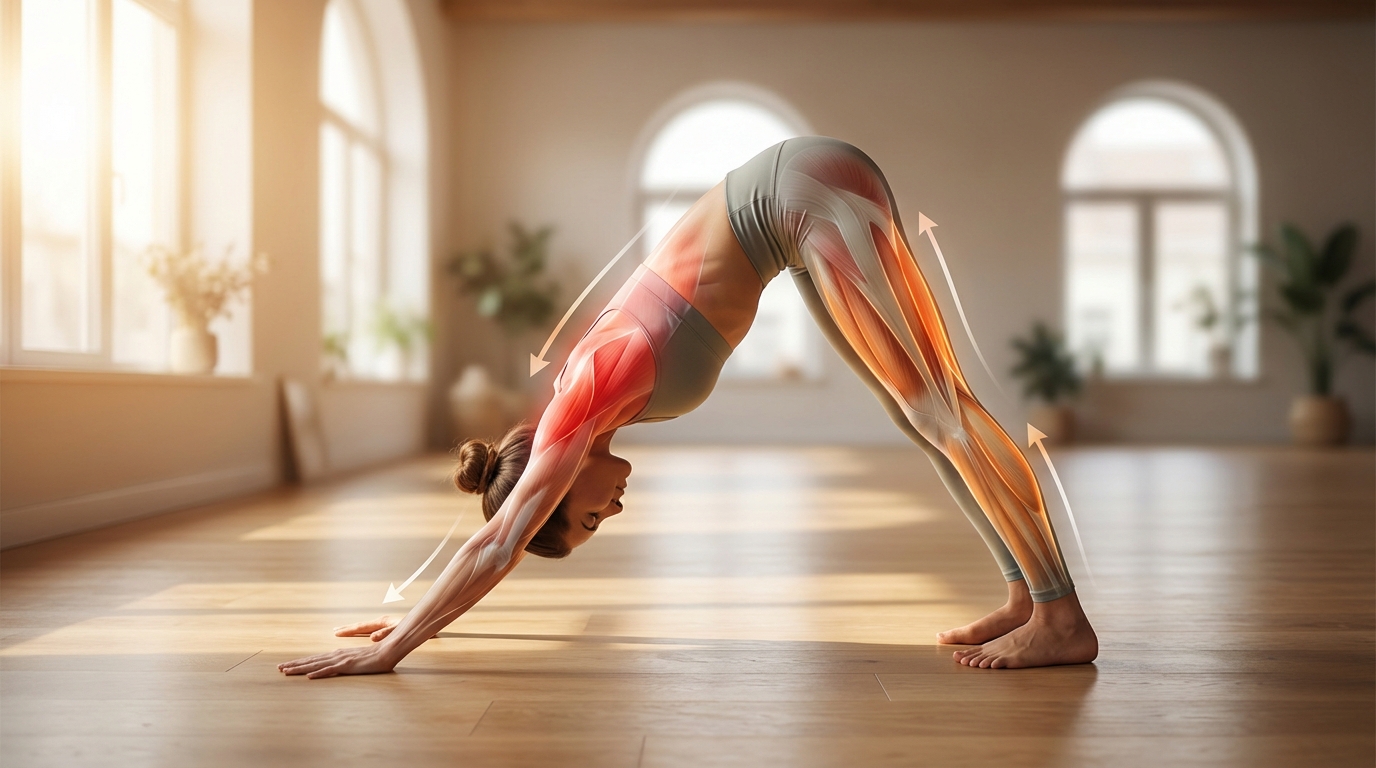
Adho Mukha Svanasana — Downward-Facing Dog
Adho Mukha Svanasana (downward-facing dog) is the most practiced yoga pose, stretching hamstrings, calves and back while strengthening the arms.
Read more
166 articles
Adho Mukha Svanasana (downward-facing dog) is the most practiced yoga pose, stretching hamstrings, calves and back while strengthening the arms.
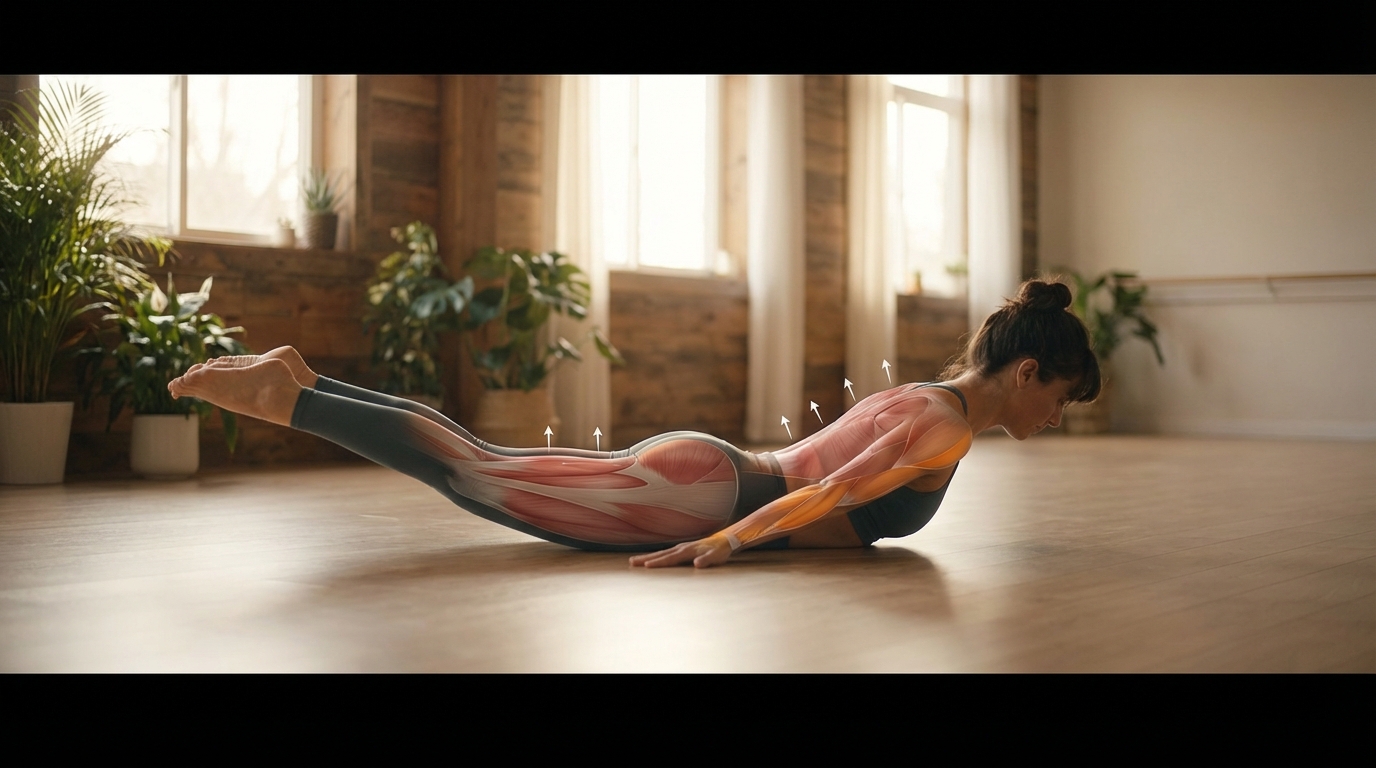
Salabhasana (locust) strengthens the entire posterior chain by simultaneously lifting chest, arms and legs off the floor.
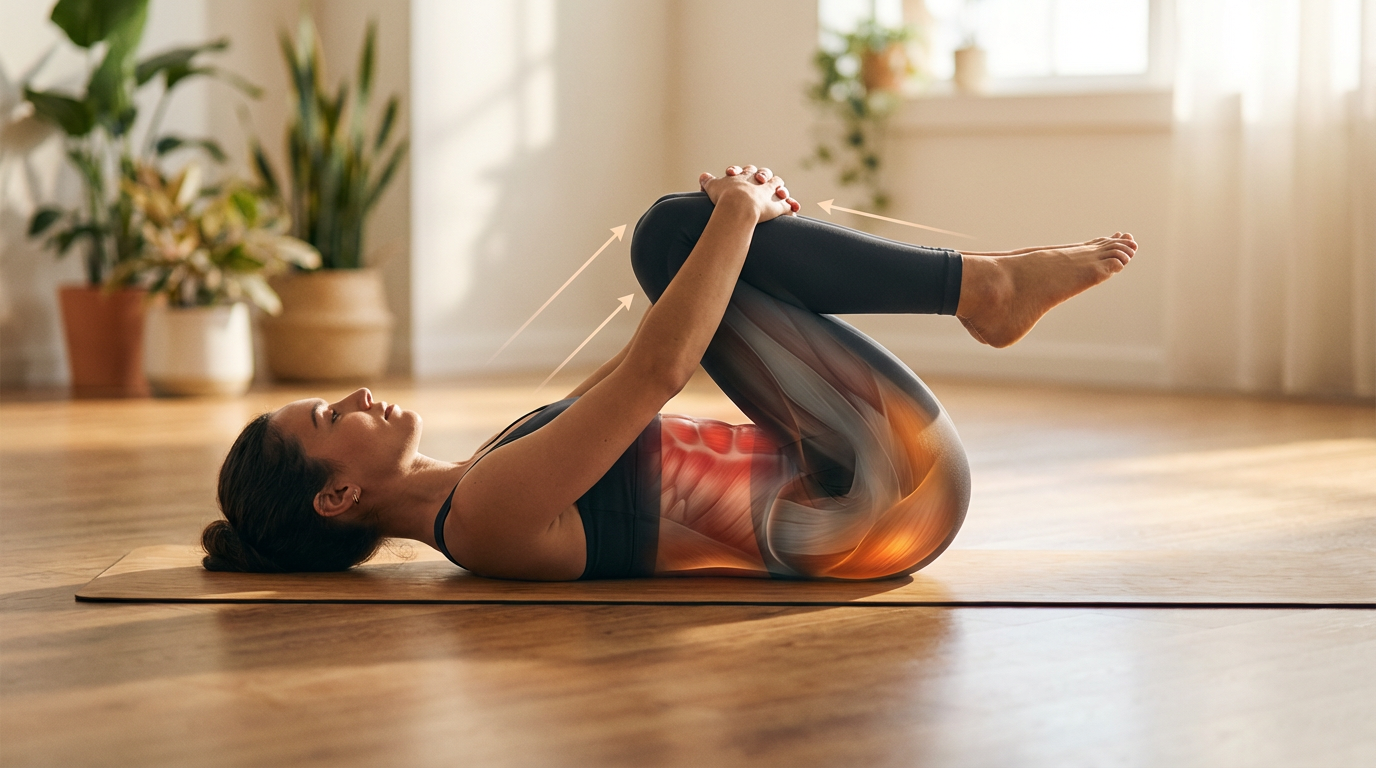
Apanasana (knees to chest) releases the lower back and massages abdominal organs in a soothing rocking motion.
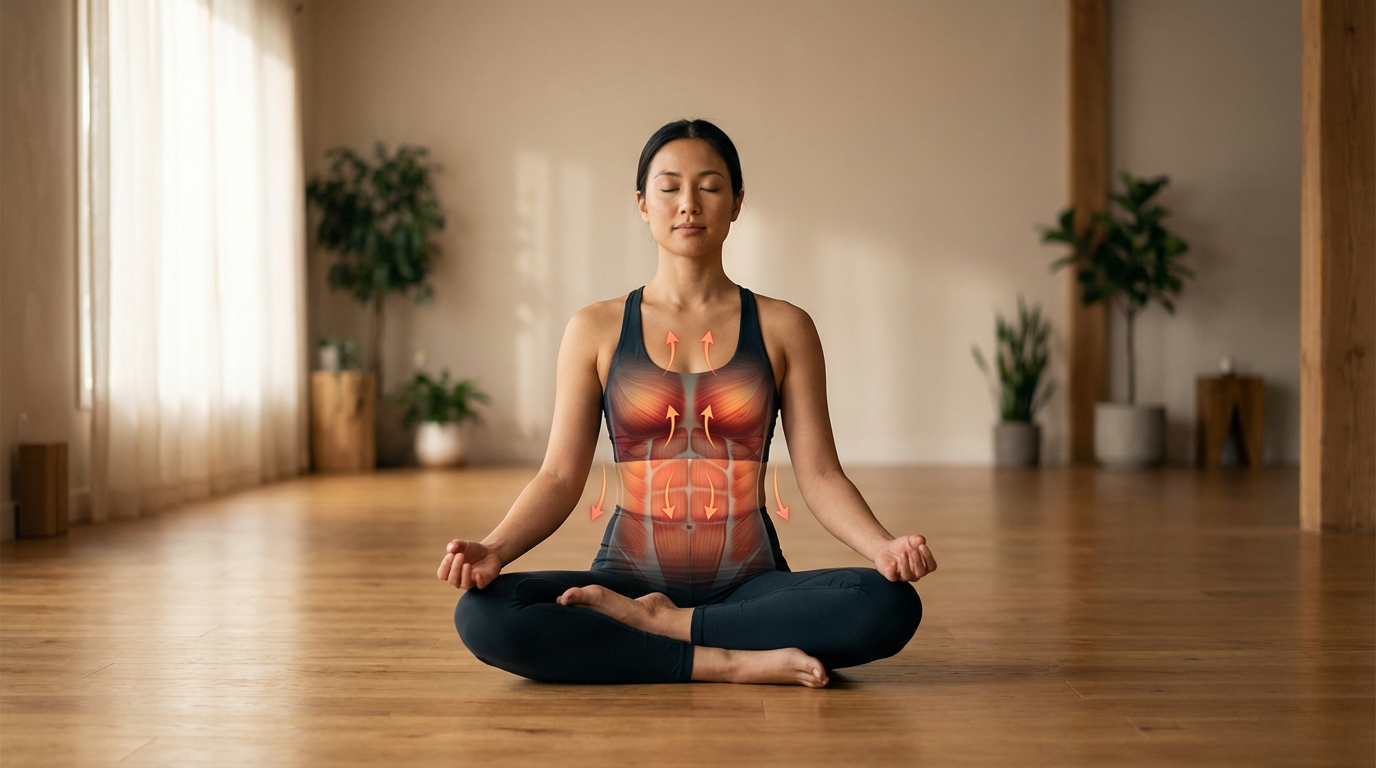
Ujjayi (victorious breath) is the foundational yogic breathing technique, producing a soothing ocean sound that regulates airflow and calms the mind.
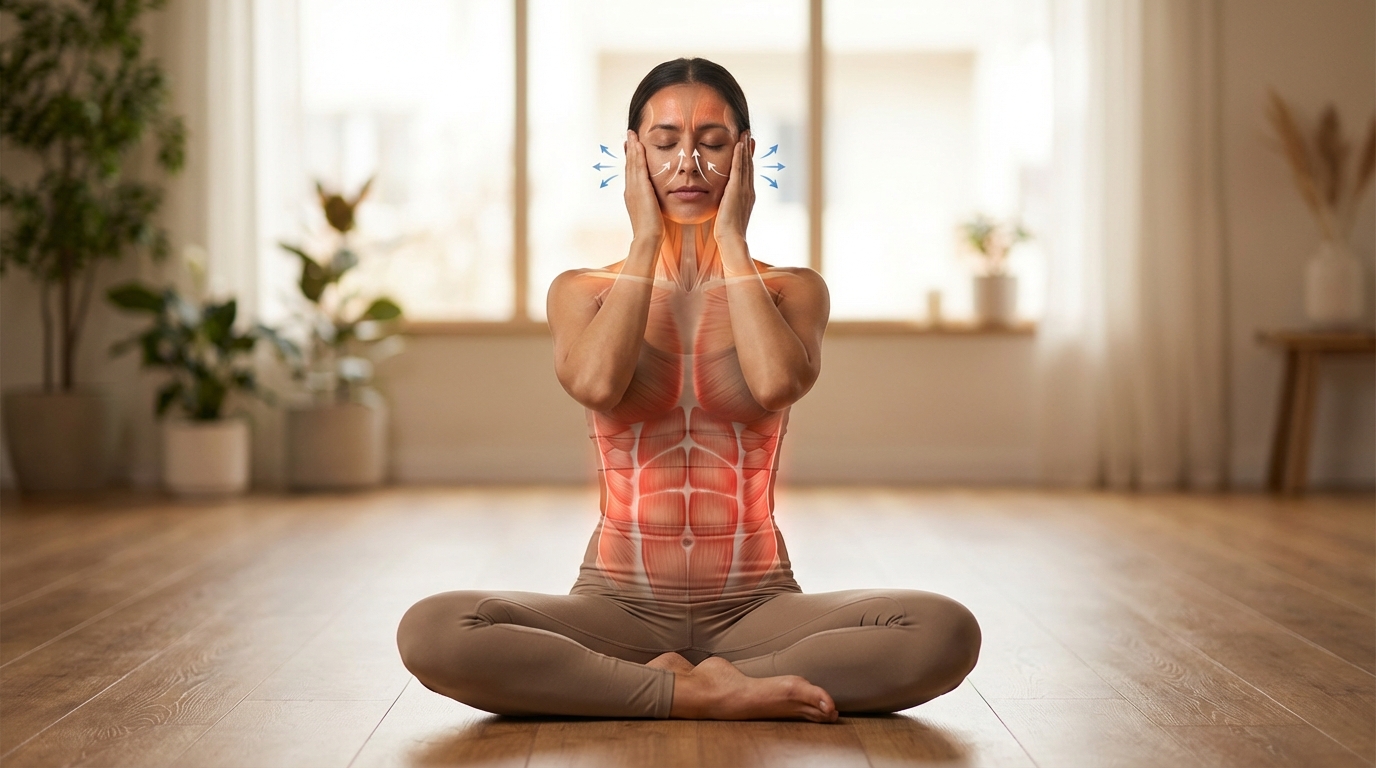
Bhramari (humming bee) produces a vibratory humming on exhale that instantly calms the mind, reduces anxiety and promotes inner focus.
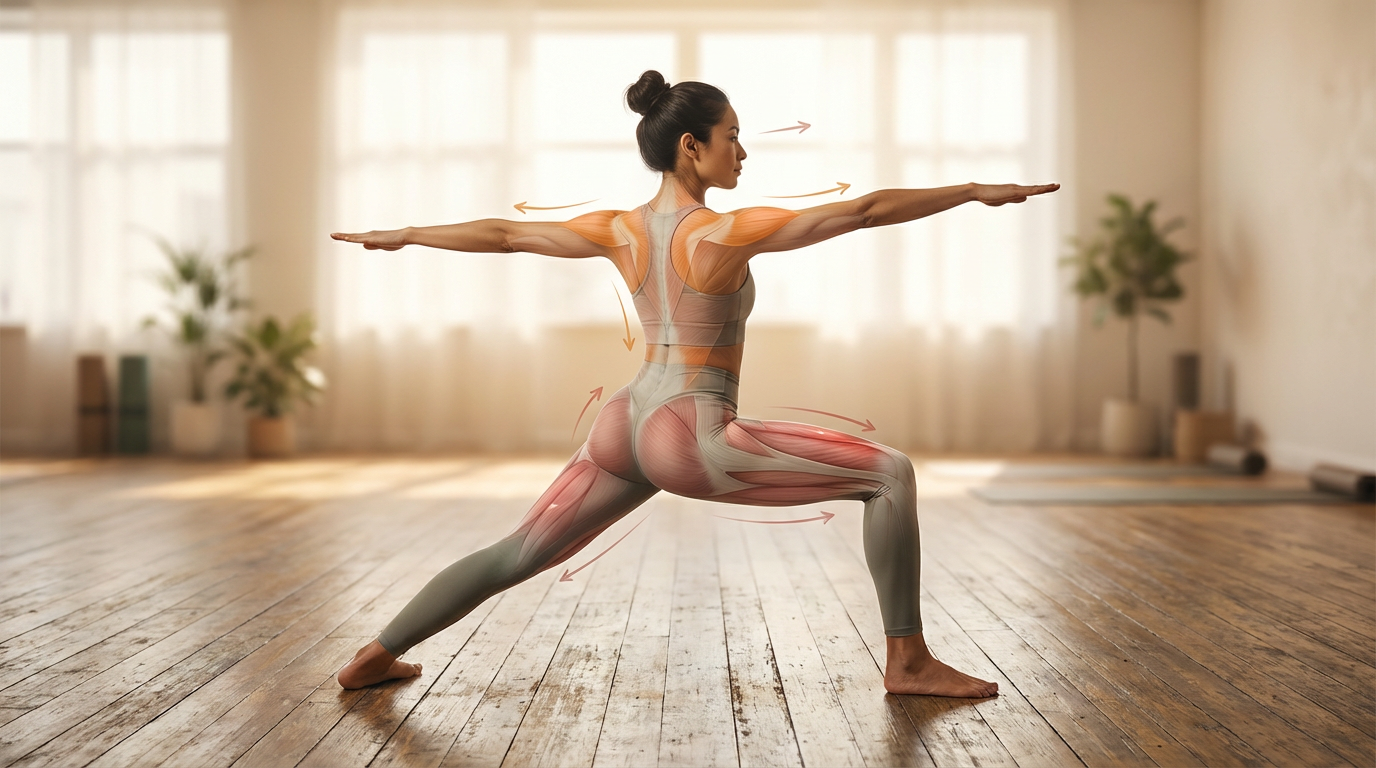
Virabhadrasana II (Warrior II) strengthens the legs, opens the hips laterally and builds endurance with arms extended wide.
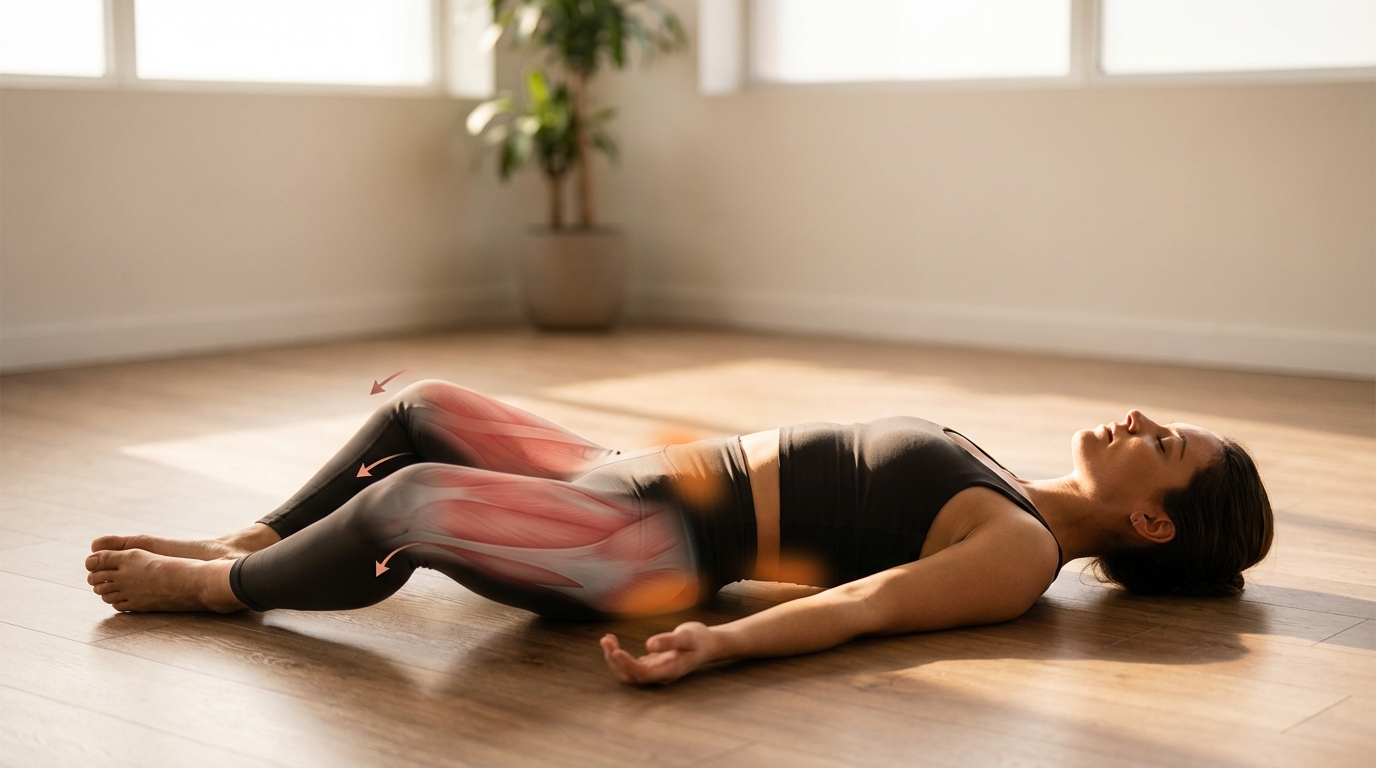
Supta Baddha Konasana (reclined butterfly) opens hips and groin in a resting position, offering deep pelvic and abdominal relaxation.
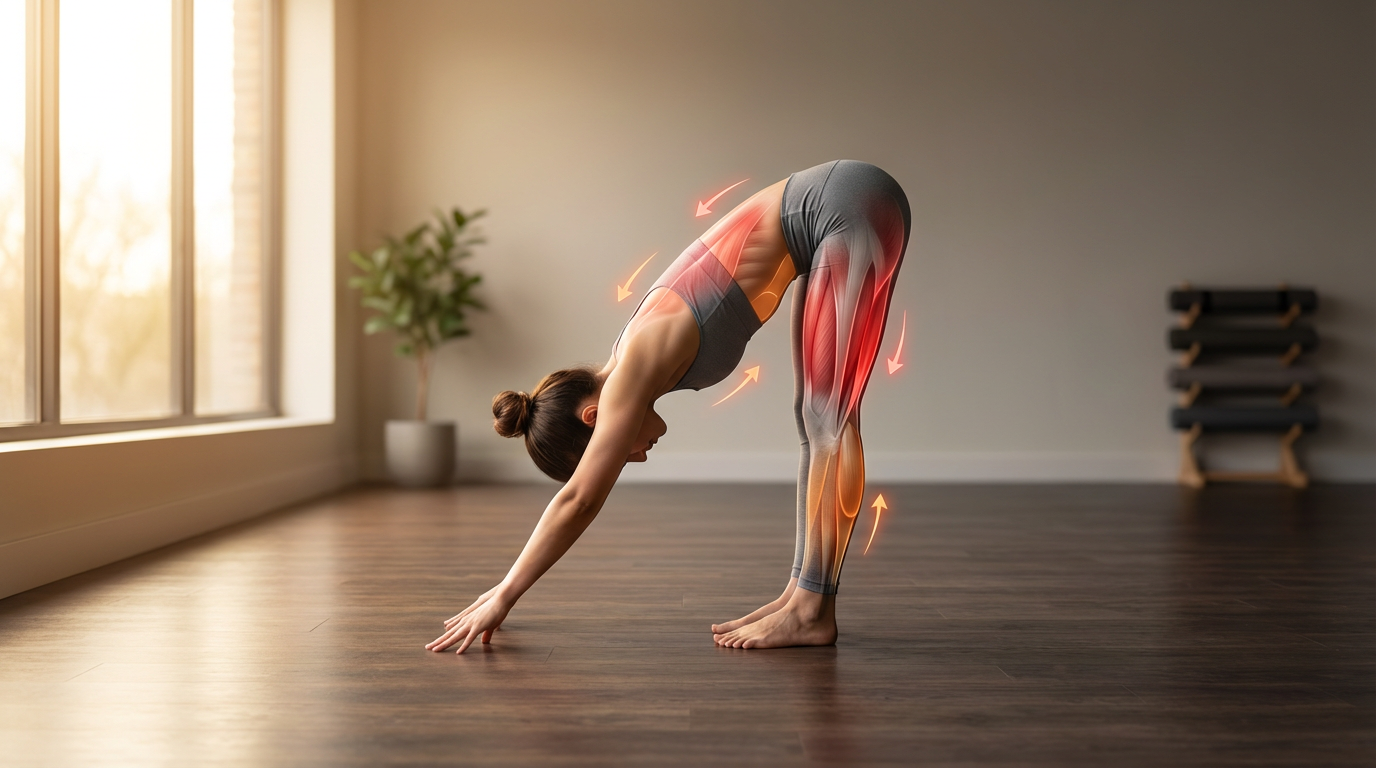
Ardha Uttanasana (half forward bend) lengthens the spine and strengthens the back while stretching the hamstrings, a key pose in sun salutations.
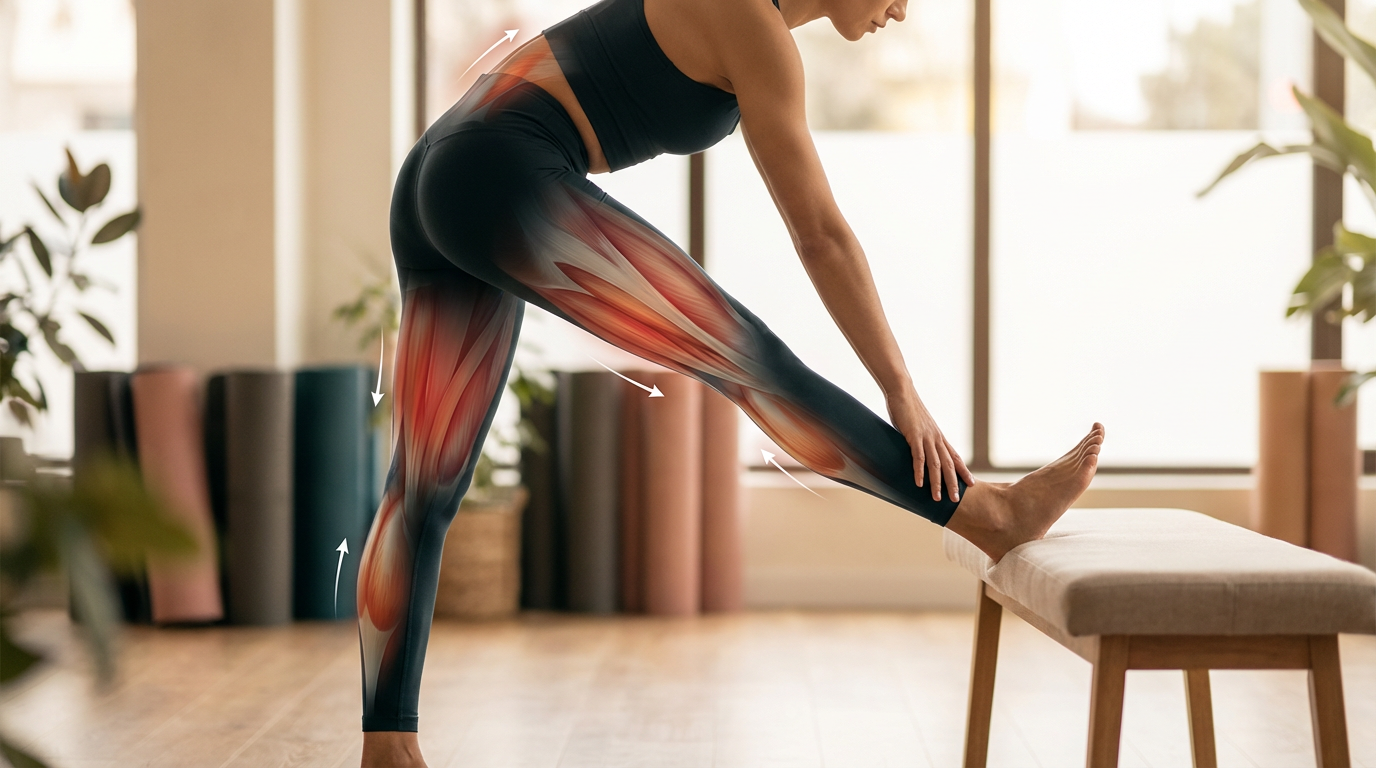
The elevated foot hamstring stretch lengthens the posterior thigh chain, improving hip flexion and preventing lower back pain.
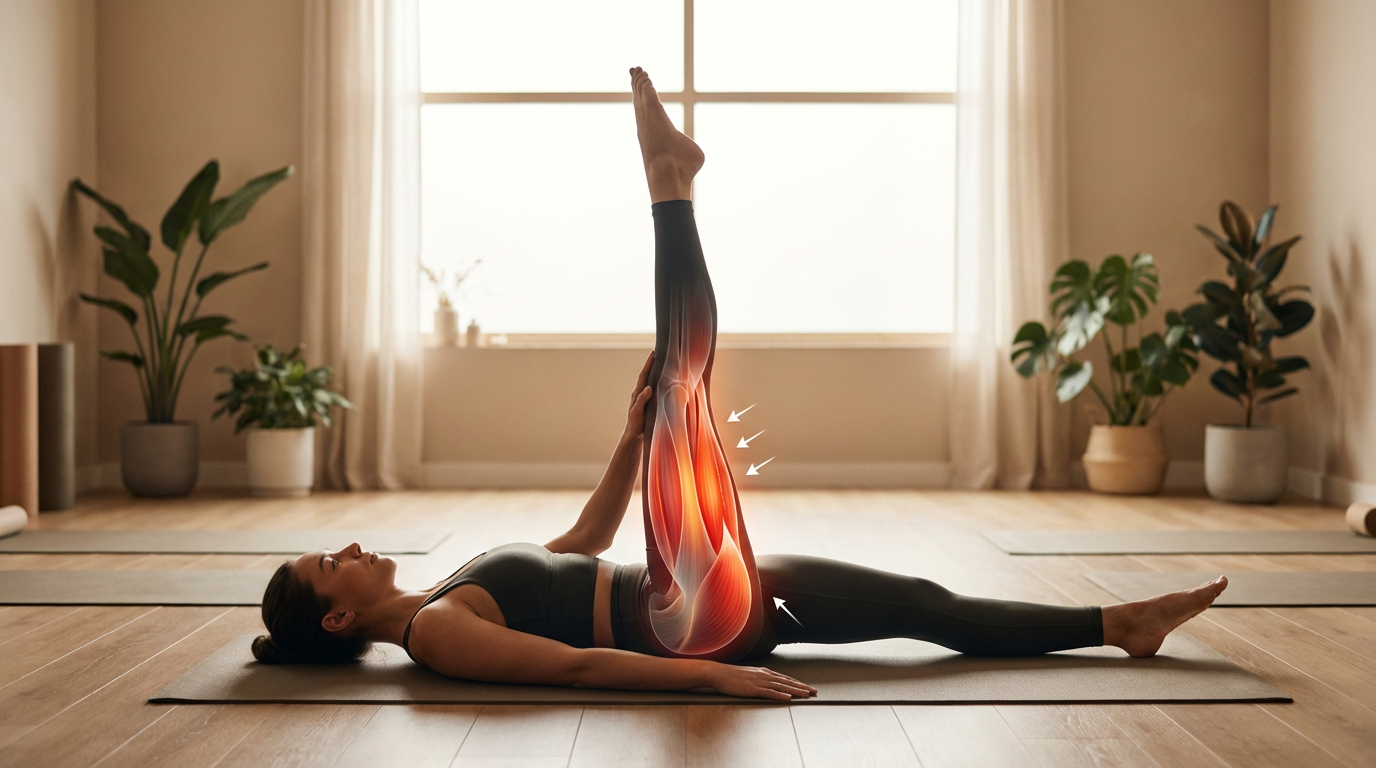
Seated floor hamstring stretch to lengthen the posterior chain with optimal back control.
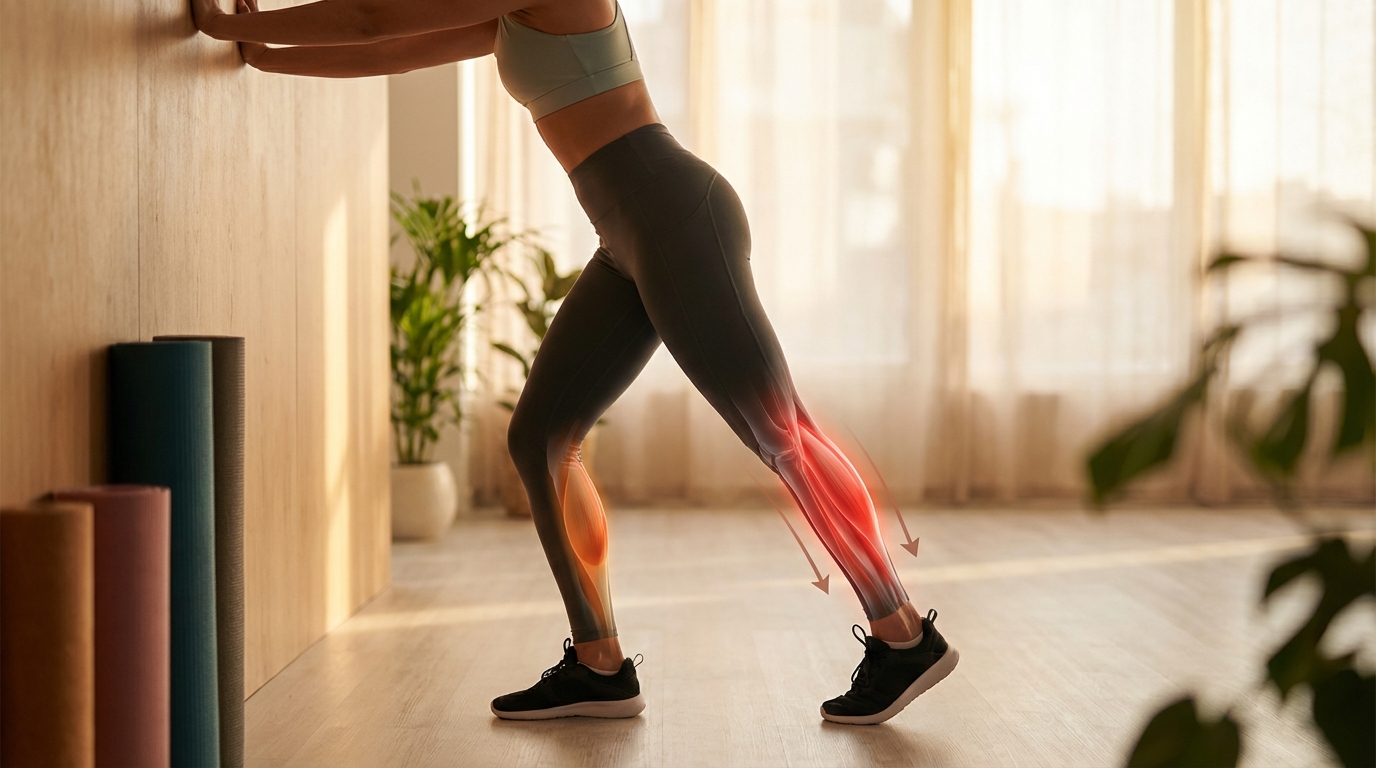
Wall calf stretch targeting the gastrocnemius to lengthen the calf and prevent Achilles tendon injuries.
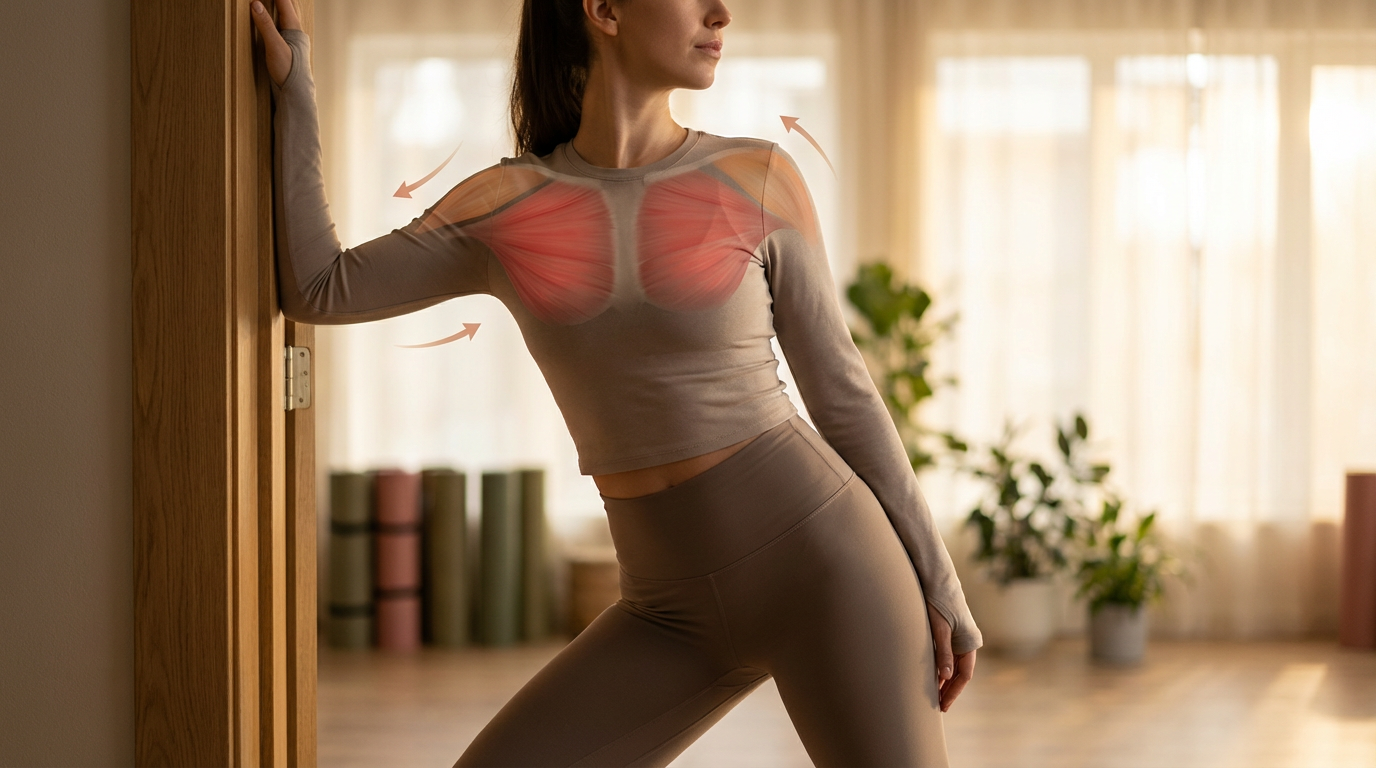
The doorway pectoral stretch opens the chest, corrects rounded shoulders and restores shoulder mobility impaired by prolonged sitting.
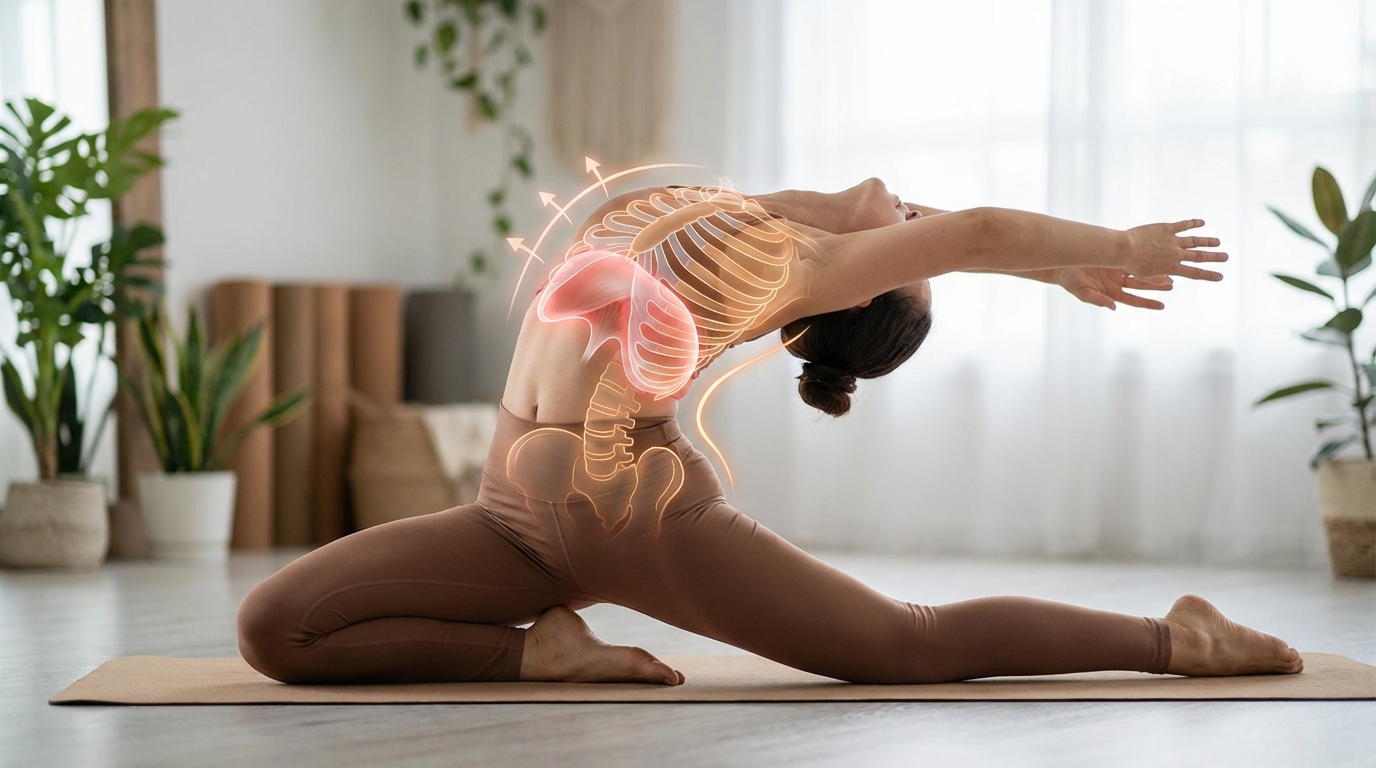
Diaphragmatic breathing activates the parasympathetic system, reduces stress and optimizes oxygenation by fully engaging the diaphragm.
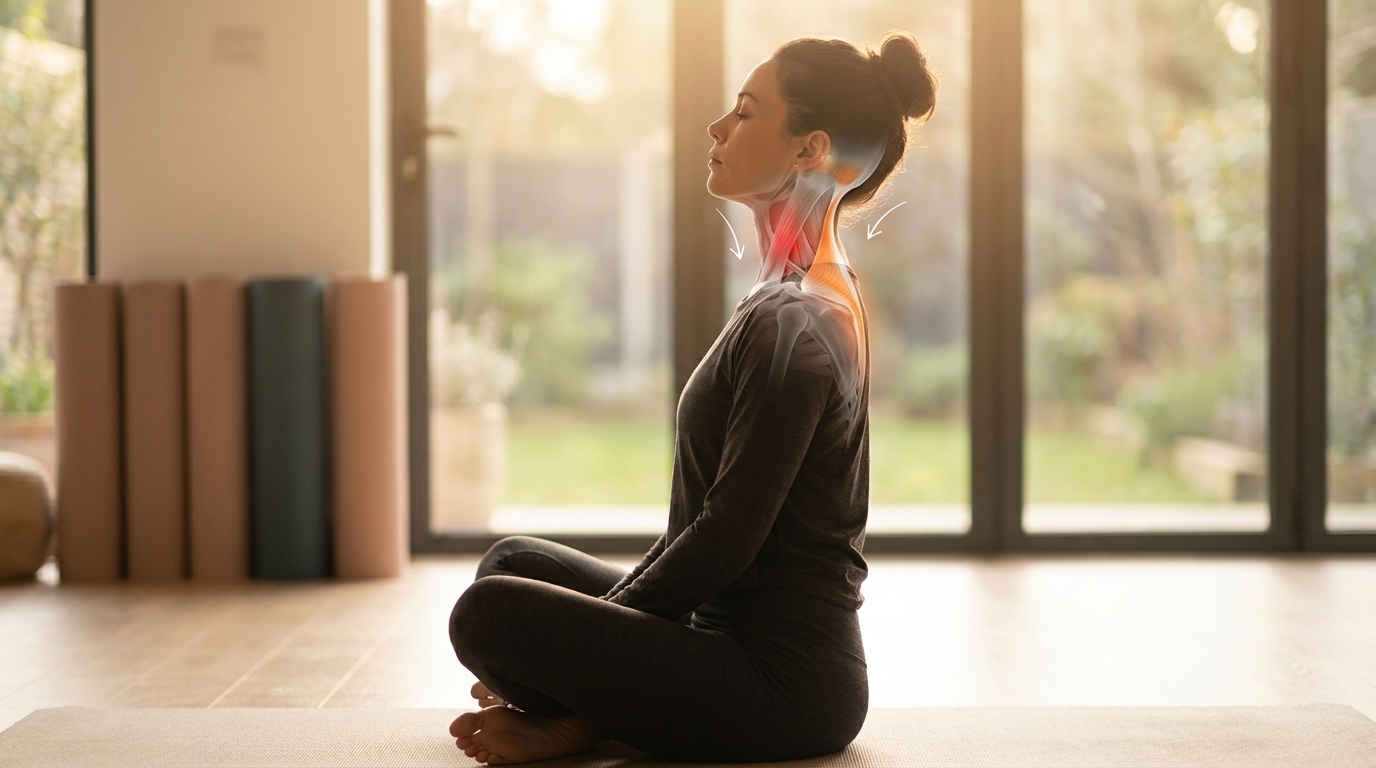
The chin tuck strengthens deep cervical flexors and corrects forward head posture.
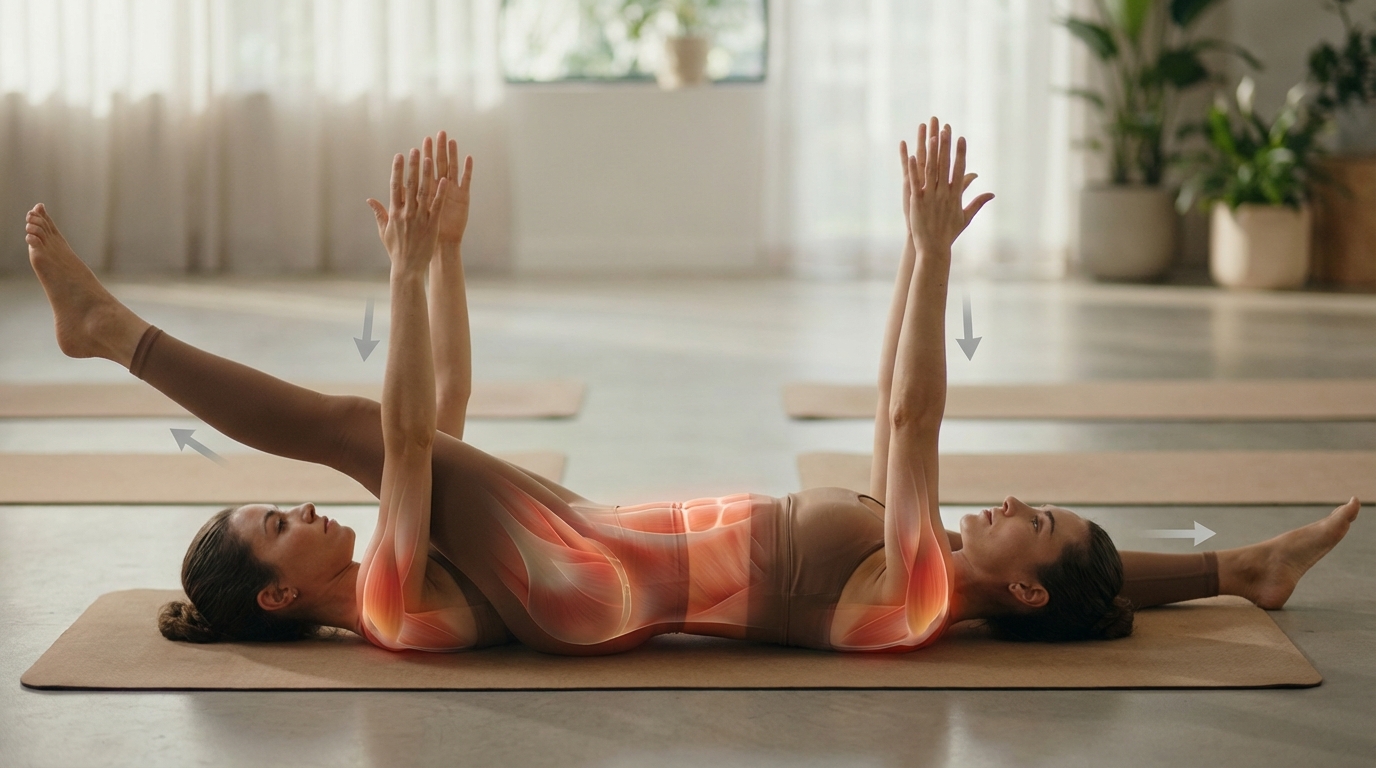
The dead bug develops lumbo-pelvic control and anti-extension stability, fundamental for healthy posture and a protected back.
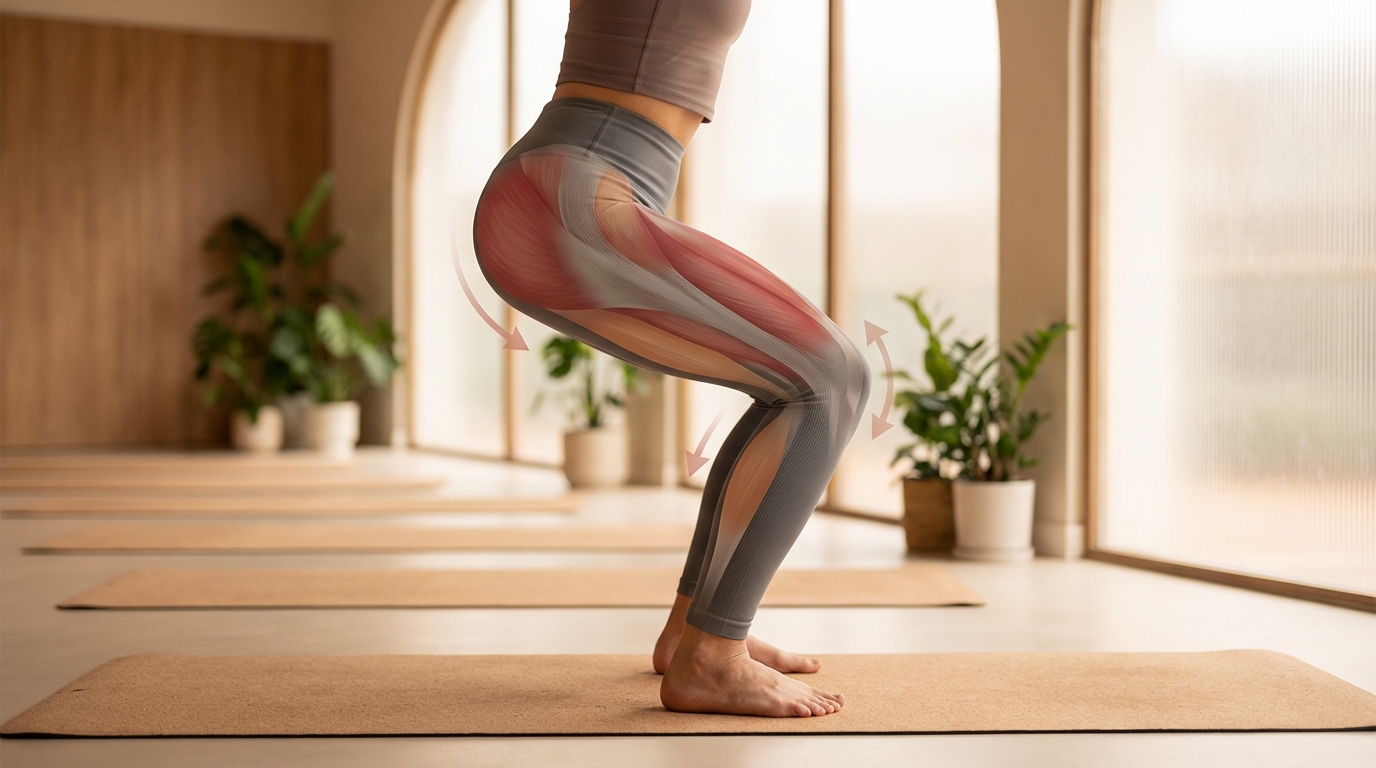
The deep squat is the ancestral resting position that simultaneously mobilizes hips, ankles and thoracic spine.
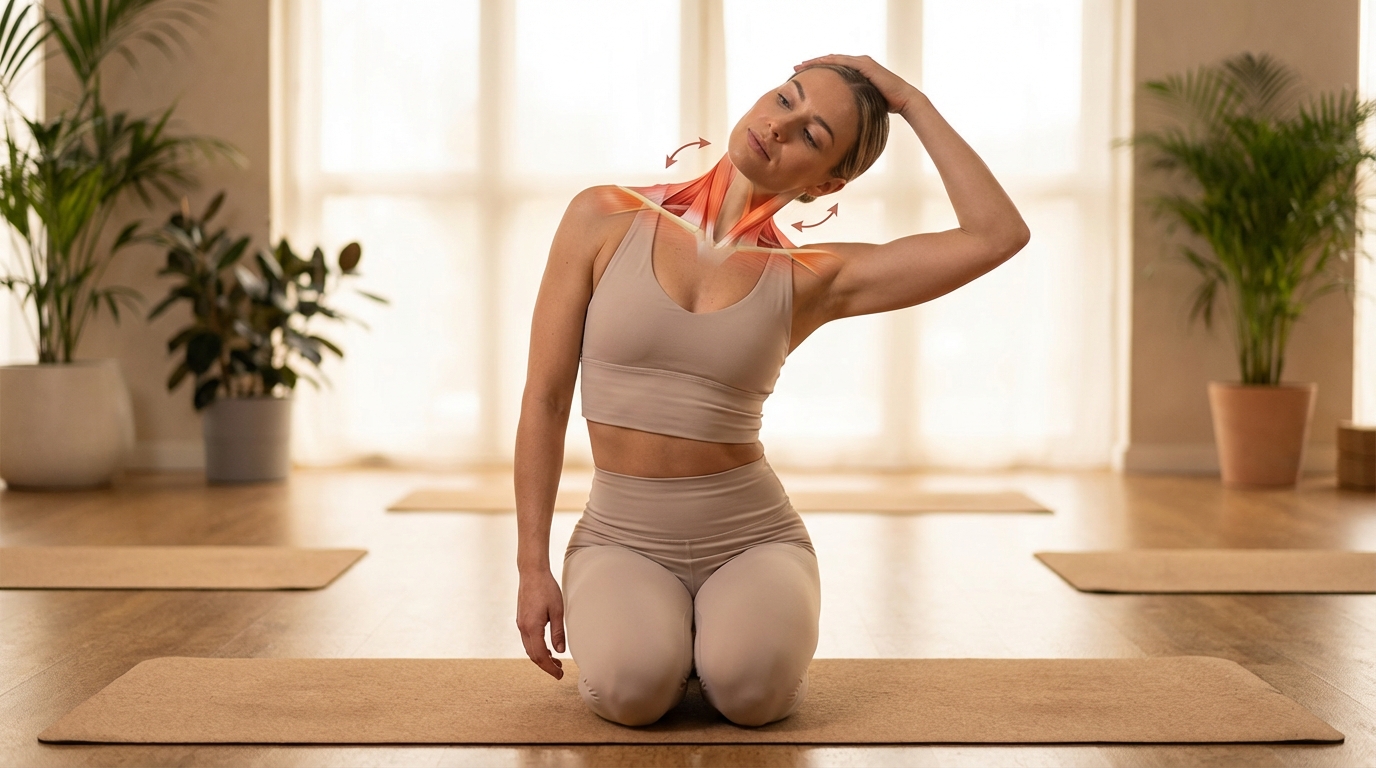
The sternocleidomastoid stretch through cervical rotation releases lateral neck tension and improves head rotation range of motion.
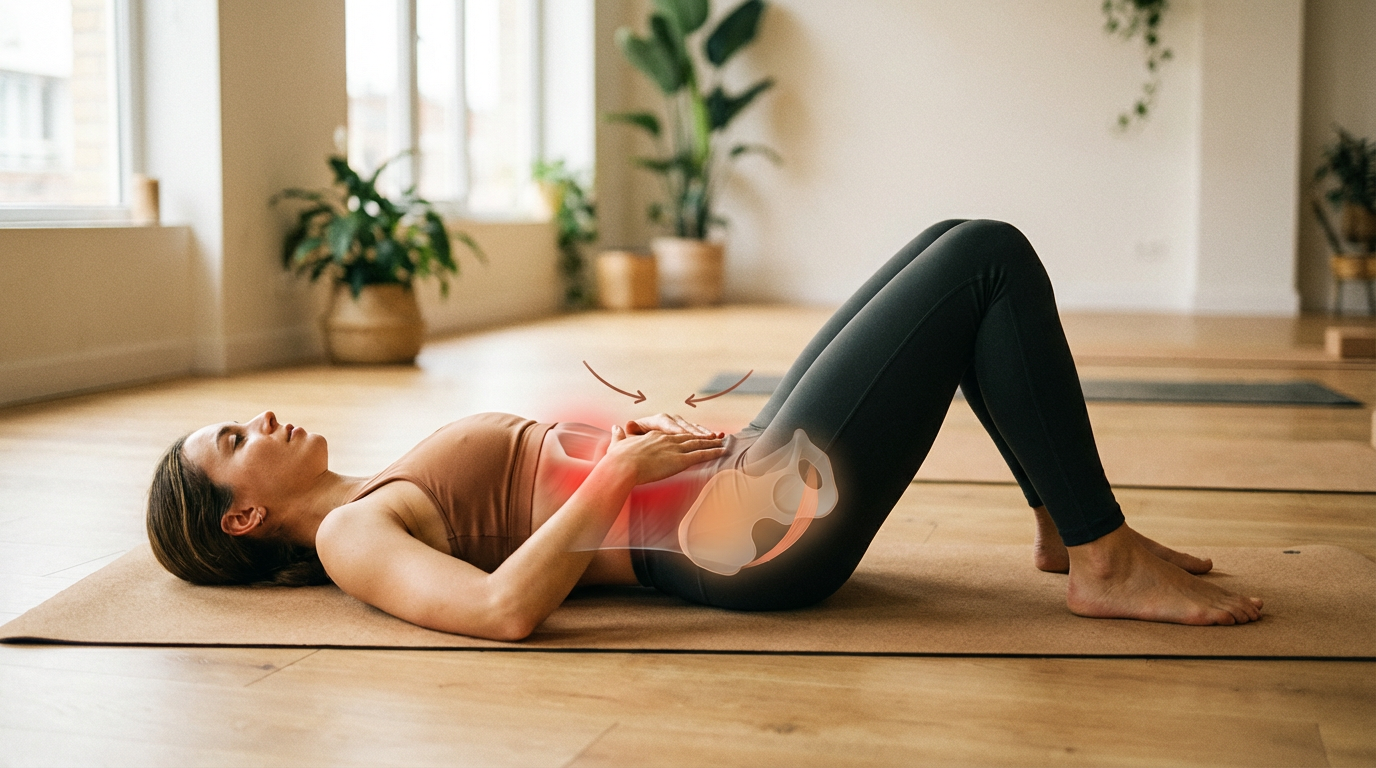
Transverse abdominis activation strengthens the trunk's natural corset, stabilizing the spine and preventing lower back pain.