Lumbar Hyperlordosis Correction
Daily corrective program combining psoas and quadriceps stretches with abdominal and glute strengthening to reduce excessive lumbar curvature.
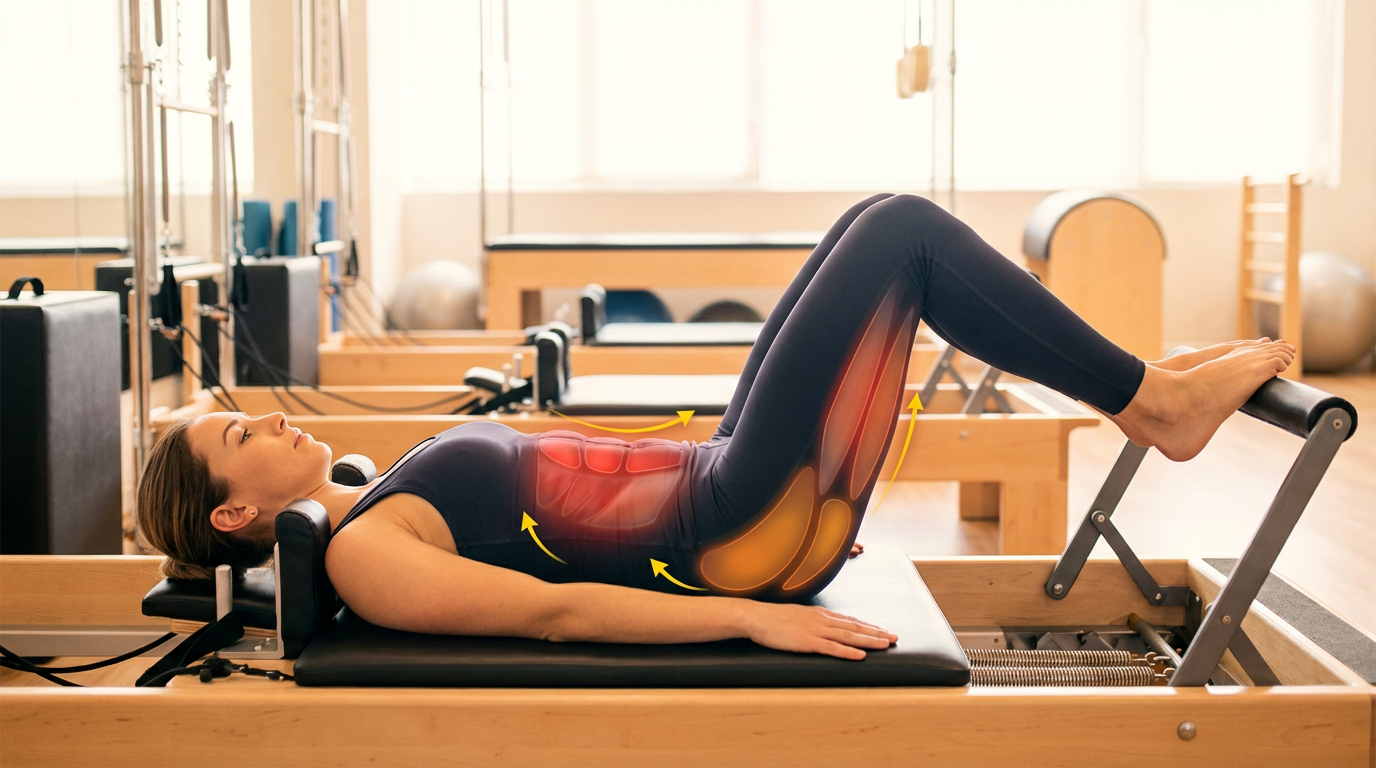
Lumbar Hyperlordosis Correction
Lumbar hyperlordosis is an excessive accentuation of the natural lower back curvature. This postural imbalance typically results from shortened hip flexors (psoas-iliacus) and quadriceps, combined with weak abdominals and glutes. This daily corrective program aims to restore muscular balance around the pelvis.
Anatomy and Correction Principles
Hyperlordosis is caused by an anterior pelvic tilt. Shortened muscles: psoas-iliacus, rectus femoris, lumbar erector spinae. Weakened muscles: rectus abdominis, transversus abdominis, gluteus maximus, hamstrings. The program corrects this through four axes: flexor stretching, abdominal strengthening, glute activation, and pelvic retroversion work.
Complete Program
1. Psoas Stretch — Low Lunge
Rear knee on floor, front foot in lunge. Push hips forward while staying vertical. Squeeze rear-side glute. 60 seconds per side.
2. Quadriceps Stretch — Couch Stretch
Knee on floor against a wall, shin vertical along wall. Front foot in lunge. Gradually straighten torso. 60 seconds per side.
3. Abdominal Strengthening — Dead Bug
Lie on back, arms to ceiling, knees at 90 degrees. Alternately extend one arm and opposite leg without back leaving floor. 3 sets of 10 per side.
4. Glute Strengthening — Glute Bridge
Lying, feet on floor. Rise into bridge squeezing glutes. Hold 3 seconds at top. 3 sets of 15.
5. Pelvic Retroversion
Lying, knees bent. Flatten lower back against floor by tilting pelvis backward. 10 reps of 10-second holds.
Frequency
- Daily, morning and/or evening. 15-20 minutes per session.
Contraindications
- Symptomatic spondylolisthesis.
- Acute disc herniation.
- Acute pain: consult professional first.
Target Audience
Anyone with visible or diagnosed lumbar hyperlordosis. Particularly recommended for sedentary individuals, postpartum women, dancers, and gymnasts.