
Visceral Techniques
Visceral Manipulation — Barral Method
Osteopathic system developed by Jean-Pierre Barral aimed at evaluating and normalizing the mobility and motility of internal organs to restore their physiological function.
Read more
27 articles
Osteopathic system developed by Jean-Pierre Barral aimed at evaluating and normalizing the mobility and motility of internal organs to restore their physiological function.

Gentle therapeutic approach derived from Sutherland's cranial osteopathy, popularized by John Upledger, focused on releasing restrictions of the craniosacral system.

Indirect osteopathic technique consisting of maintaining firm, sustained pressure on a dysfunctional tissue (muscle, fascia, connective tissue) until reflex release of tensions is achieved, based on the neurophysiological phenomenon of inhibition of spinal protective reflexes.

Functional osteopathic technique rediscovered by Richard Van Buskirk combining direct and indirect approaches using compressive or distractive force to guide tissue toward dynamic neutral.

Osteopathic approaches targeting the fascial system — the connective tissue network enveloping all organs and structures — through light pressure allowing the body to spontaneously 'unwind' toward resolution of tensions.

Gentle osteopathic technique using the patient's voluntary muscle contraction against controlled resistance to correct joint and muscle dysfunctions.

Indirect passive osteopathic technique placing the patient in a position of maximum comfort to deactivate tender points and normalize neuromuscular spindles.

Gentle rhythmic mobilization of joints to progressively restore range of motion without thrust, using repetitive and controlled movements.

Gentle massage technique developed by Emil Vodder to stimulate lymphatic circulation, drain edema and strengthen the immune system through very light rhythmic circular movements.

Wellness massage developed in California in the 1970s, characterized by long enveloping effleurages and a mind-body approach promoting body reconnection and deep relaxation.

Traditional Thai therapeutic practice 2500 years old, combining rhythmic compressions, passive joint mobilizations and yoga-inspired assisted stretches to rebalance energy lines (Sen).
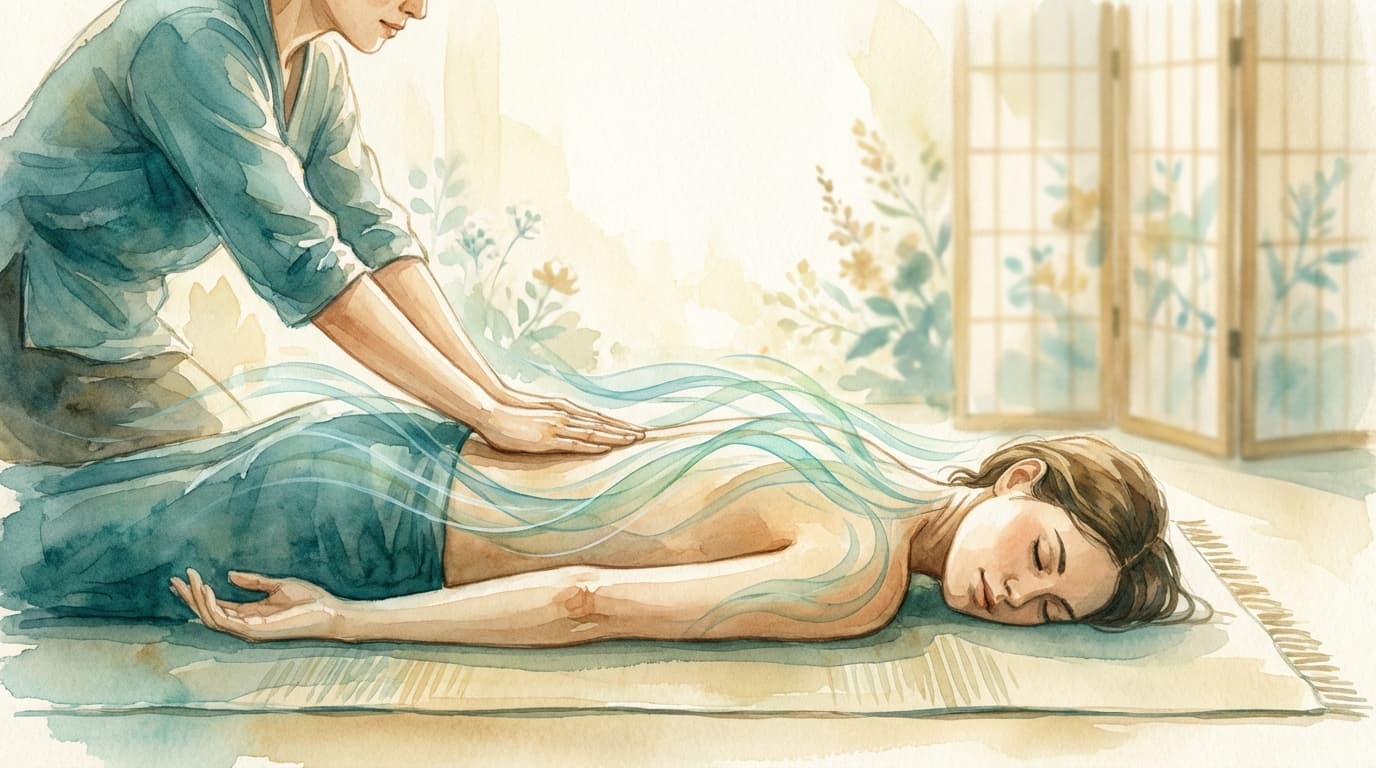
Japanese finger pressure technique on meridians and acupressure points aimed at rebalancing the flow of vital energy (Ki) in the body according to Oriental medicine principles.
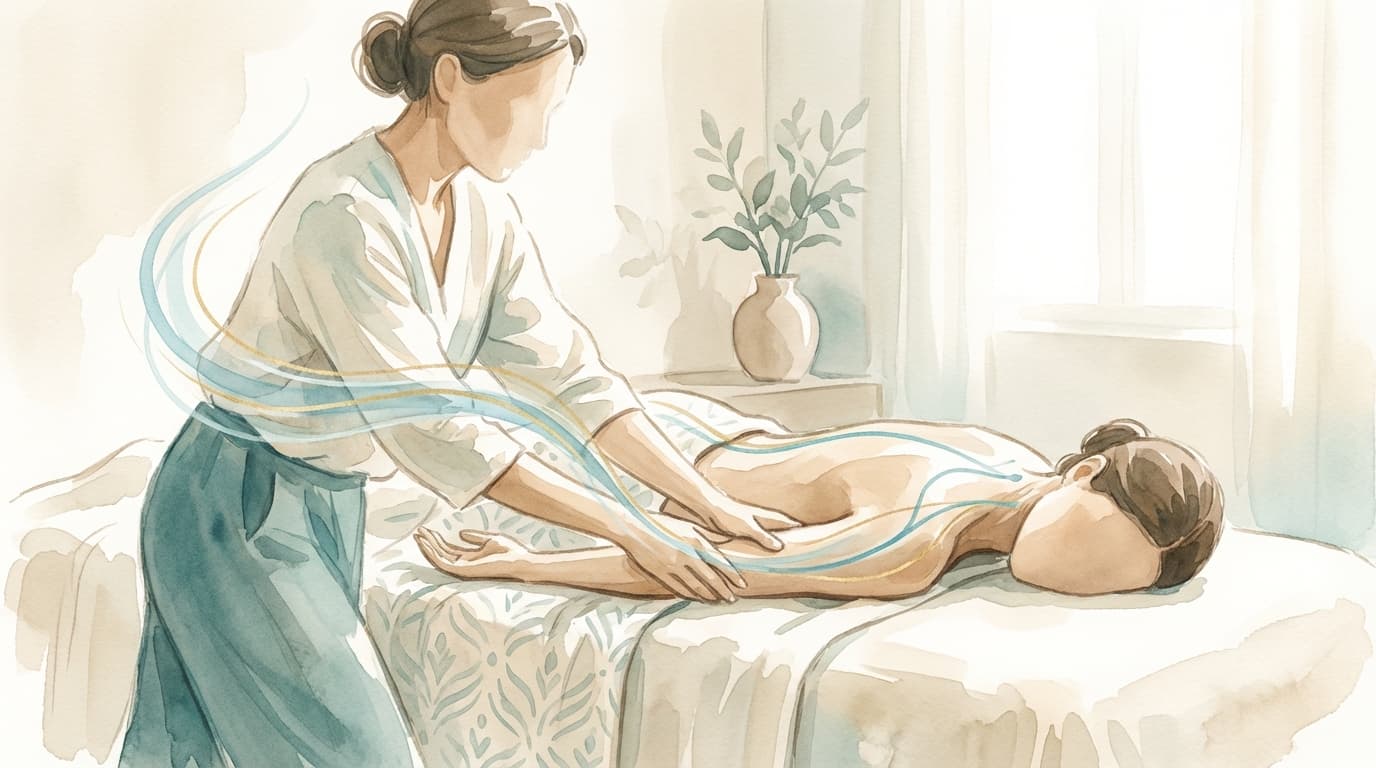
Form of medical massage derived from Traditional Chinese Medicine using pressure, friction, kneading and joint manipulations on meridians and acupuncture points to treat musculoskeletal and visceral conditions.

Therapeutic and pedagogical approach developed by Danis Bois combining very gentle manual contact on fascia with listening to the body's internal movement (sensorial movement) to treat chronic pain and somatopsychic disorders.

Sacred traditional massage of Hawaiian healers (Kahunas) using long fluid forearm and hand movements, often to musical rhythm, to dissolve physical and emotional tensions.
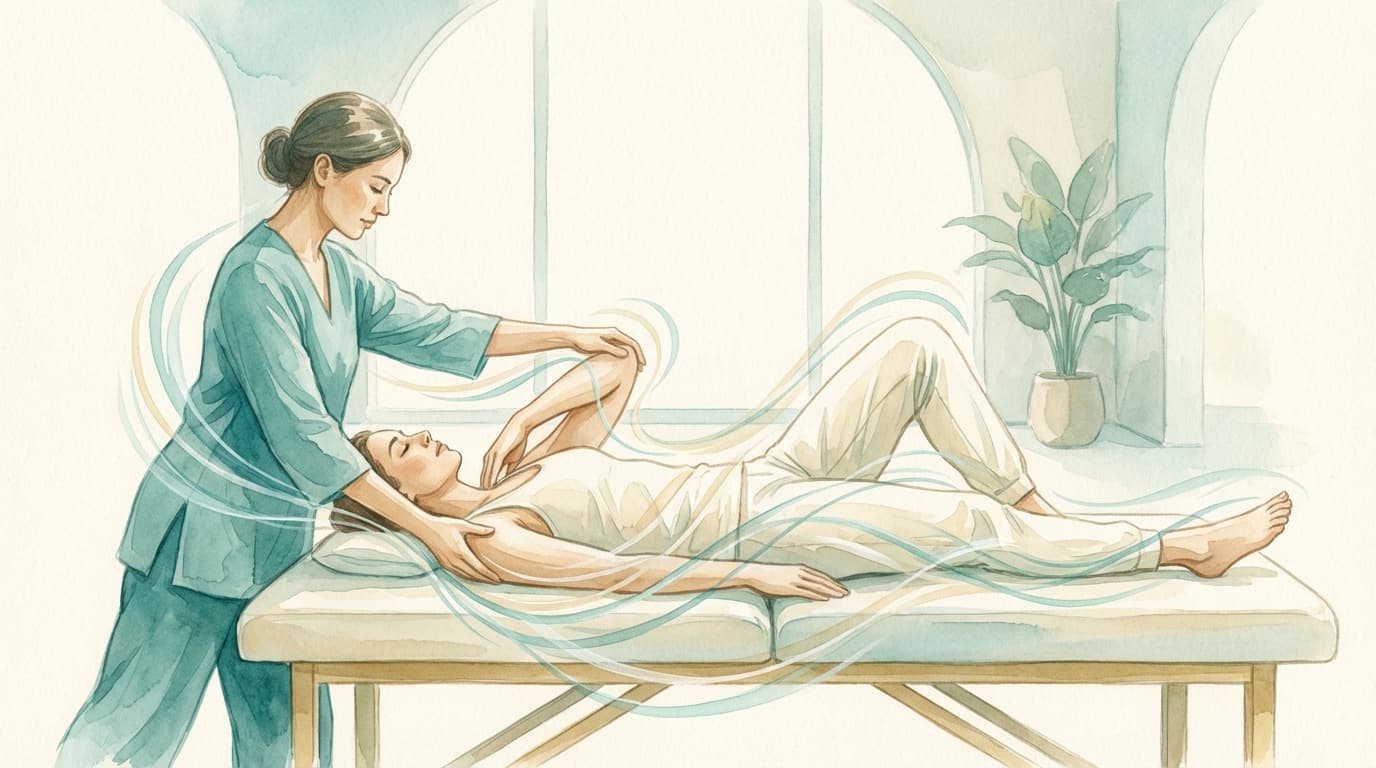
Somatic educational approach developed by Moshé Feldenkrais aimed at improving body awareness and movement efficiency by reprogramming motor habits through the nervous system.

Fascial manipulation system developed by Ida Rolf aimed at realigning the body in the gravitational field by working on connective tissue restrictions over 10 progressive sessions.

Gentle Australian therapeutic approach developed by Tom Bowen, using precise rolling movements on muscles, tendons and fascia, followed by essential pauses to allow the nervous system to initiate self-healing.