Yoga Nidra
Yoga Nidra, or "yogic sleep," is a guided deep relaxation technique practiced lying down. It induces a state between waking and sleep allowing physical and mental regeneration equivalent to several hours of rest.
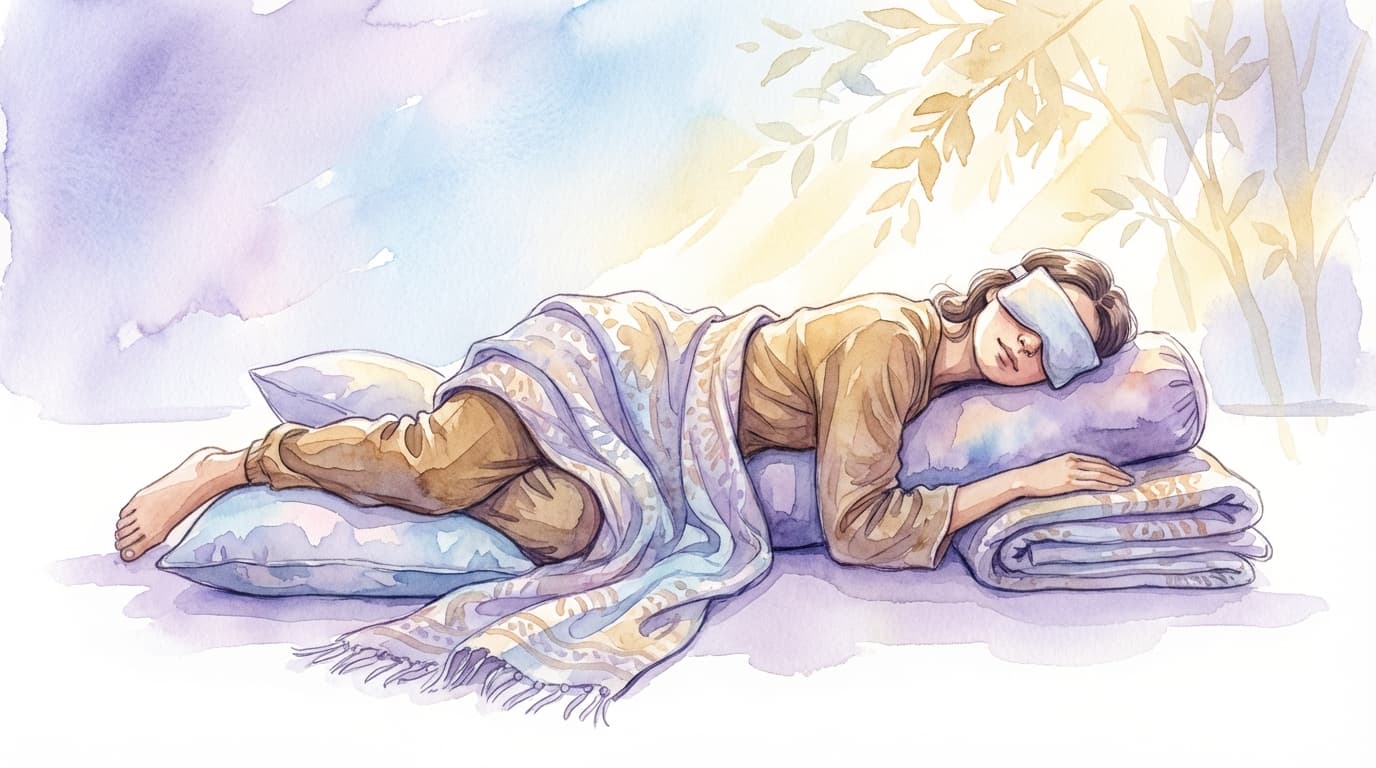
Yoga Nidra, or "yogic sleep," is a guided deep relaxation technique practiced lying down. It induces a state between waking and sleep allowing physical and mental regeneration equivalent to several hours of rest.
Overview
Yoga Nidra ("yogic sleep") is a deep relaxation technique systematized by Swami Satyananda Saraswati in the 1960s. It induces an alpha/theta brainwave state between waking and sleeping. Studies show 30 minutes equals 2-4 hours of sleep for nervous system recovery.
Core Principles
- Sankalpa: positive intention planted in the receptive subconscious
- Rotation of consciousness: systematic attention through body parts
- Breath awareness: passive observation without modification
- Pairs of opposites: contrasting sensations for nervous system flexibility
- Visualization: guided imagery accessing unconscious content
Main Indications
- Insomnia and sleep disorders
- Chronic stress and burnout
- Anxiety and panic attacks
- Chronic fatigue
- PTSD (US military studies)
- Memory enhancement
Session Structure
20-45 minutes lying in Shavasana, through preparation, Sankalpa, body rotation, breath awareness, opposite pairs, visualization, final Sankalpa, and return.
Contraindications
- Very few — one of the safest practices
- Active psychosis with hallucinations
- Severe depression with intense rumination
- Recent unstabilized trauma
Medical Disclaimer
The information presented in this article is provided for educational and informational purposes only. It does not constitute medical advice, diagnosis, or treatment prescription. If in doubt, always consult your physician or a qualified healthcare professional. The techniques described do not replace conventional medical treatment.